
Over the past decade, the backcountry has taught me more than any guidebook ever could. The reality is, our early backpacking and multi-day paddling adventures were full of missteps. And we’re not certainly not perfect now!
Alongside the scenic views and amazing moments have been a few questionable decisions, some forgotten essentials and several lessons learned the hard way when small oversights became big problems.

Ultimately, preparation is what makes these problems far easier to handle. This is one reason why I am so passionate about creating detailed outdoor guides – to help others avoid the same pitfalls and enjoy their adventures more. I always write about what I wish I knew when I first started.
The following experiences are the ones that shaped my knowledge and enabled me to become more confident in the backcountry. While some were tough in the moment (and others are on the silly side), most have since turned into great stories.
This post is a behind-the-scenes look at over 70 backcountry trips, featuring the mistakes and unexpected events that have taught us what really matters on the trail.

An earthquake at the end of the world
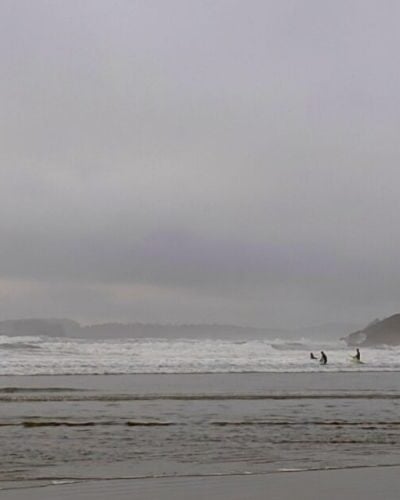
Our very first backpacking experience was the Cape Scott Trail on northwestern Vancouver Island. It was mid April – damp, muddy and quiet. Only one other vehicle in the parking lot. We expected challenges, but never an earthquake.
After navigating through what felt like endless pools of rainwater and mud, we were exhausted by the time we reached Nissen Bight beach. Crawling into the tent to sleep, we’d already made a few mistakes – leaving too late (11am), not enough food (so hungry!), too much sand in the tent (carelessness with our boots).
The next morning, we woke up to wolf prints outside. And that wasn’t the only surprise. A few days later at Nels Bight beach, we were both sorting things in the tent when it felt like someone started shaking the fly. My first thought was “a bear!”
Actually, it was a 6.6 magnitude earthquake. And while we were camping on a beach in front of the Pacific Ocean, 16km from our vehicle. Thankfully, we had reassurance quickly. Just 20 minutes before, a family from had arrived (also the first people we’d seen in days) and the father just happened to be a local fire chief, with a satellite phone.
BC Parks rangers also came around. Not usually on duty so early in the season, they were building a new ranger cabin nearby. They advised us that no tsunami warning had been issued. But if we saw them running down the beach, we should run too (!) It wasn’t my best night of sleep, to say the least.
Lesson learned: Even if you do plan for everything, some things are simply out of your control. These days, we always carry a satellite device so we can verify the situation firsthand.

Learning the value of packing light
By the time we’d stepped foot on the Cape Scott Trail, we’d already tackled several multi-day paddling trips. That’s something I’d highly recommend to anyone looking to get into backpacking – go paddling first. It gives you a chance to figure out what gear you really need and test your comfort levels before carrying it all on your back.
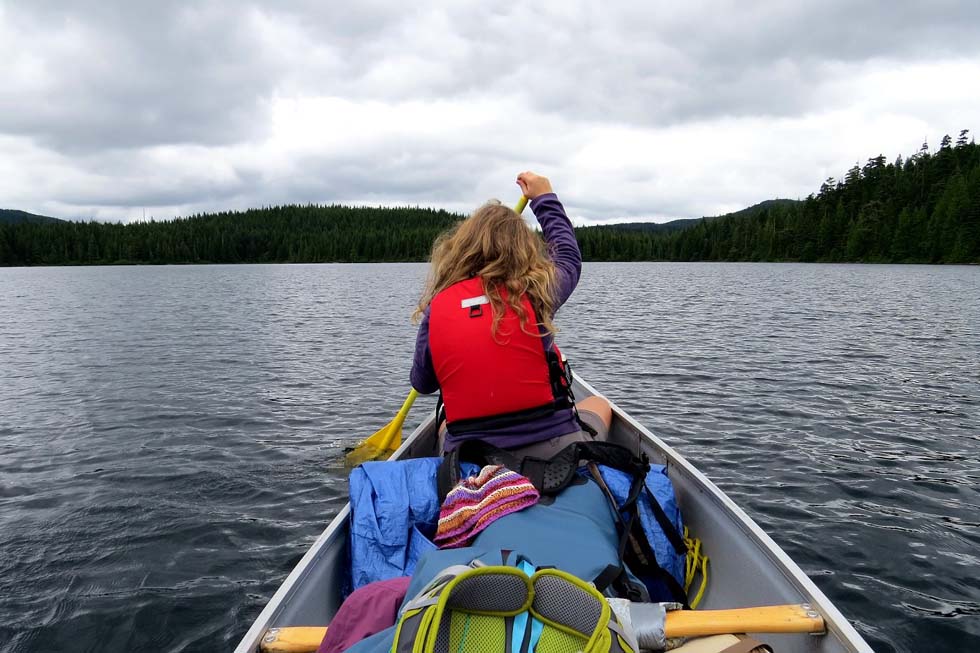
The Sayward Forest Canoe Circuit wasn’t our first paddling trip but it was the one that taught me the most. We’d planned for a three night, four day traverse of this 47km loop near Campbell River, Vancouver Island.
Featuring 39km of paddling and 8km of portages, I fell in love with the challenge and experience of transporting ourselves and all of our gear through the backcountry. But it was also really hard.
First of all (and most importantly), we packed way too much food and gear. We had so many unnecessary items and enough food to feed a party of ten. It forced us to double portage and even then, our loads were incredible heavy.
To add to that, JR was portaging our 75lb canoe the traditional way with a cart. Add a day of pouring rain and we were completely worn down. It felt like we’d unknowingly chosen the hard mode.
On the positive side, the paddling side of things was incredible. We traversed a river for the first time, successfully battled wind and waves, managed to keep most things dry and had a lot of fun every evening at the campgrounds.
Lesson learned: Never underestimate how tough portaging can be. Find the right balance between essentials and comforts before tackling harder trips.
Forgotten gear comes at a cost
Over time, we’ve forgotten countless items. And it’s never once happened on the trail. Somehow, it’s always before we even start.
One of the most memorable was back in 2020, at Lake O’Hara in Yoho National Park. This destination is a dream for so many and we were so excited to secure campground spots during the January launch. Of course, everything changed in March with pandemic restrictions.
While we were still able to go, the shuttle bus was not running. So we hiked the 11km access road instead – no big deal. Problem was, we realised on our first evening that I had left the stove part of our Jetboil at home (about 500km away).
In a regular year, we would have been able to ask other campers for help. Trouble was, most other people had cancelled due to the bus situation and no new reservations could be made. So we ended up cold-soaking all our meals – not ideal in the mountains during what was a chilly early July.
I felt a little better when our good friends also forgot their stove on the Nootka Trail a year later! It happens to the best of us. Luckily for them, campfires were allowed, so they were still able to make hot food.
Other items we’ve forgotten include paddles for a canoe trip, hiking boots for a multi day trek and a sleeping bag for a 10 day backpacking adventure in the Rockies.
Lesson learned: Using a checklist makes all the difference (you can get ours by signing up to our newsletter). And don’t forget communication. The sleeping bag incident was a classic ‘I thought you put it in the van!’ moment.

Why a keeping a clean camp matters
Like I said, if we forget anything on a trip, it’s always before we hit the trail, not along the way. We’re strict when it comes to Leave No Trace principles and we almost always come out with more items than we came in with!
If we do see trash, it gets picked up. We’ve also collected tent pegs, spoons and all sorts of items left behind at backcountry campgrounds.
As our experience has grown, we’ve become much more careful about keeping a clean and tidy camp – all smelly items remain in the bear cache/hang when not in use and everything else in the tent. That includes backpacks, shoes and hiking poles.
Yes, hiking poles. One time, quite a few years ago, we accidently left one set of hiking poles learning against a tree. Overnight, JR thought he heard an animal moving around. And he was absolutely right. The foam grip on our poles had been completely chewed up, probably by ground squirrels.
It’s a story we tell anyone we see who leaves anything out overnight. We never risk it! And it’s likely why we haven’t lost anything in a very long time or had any negative animal encounters.
Weathering the storms – adventures in rain, snow, fog and wind
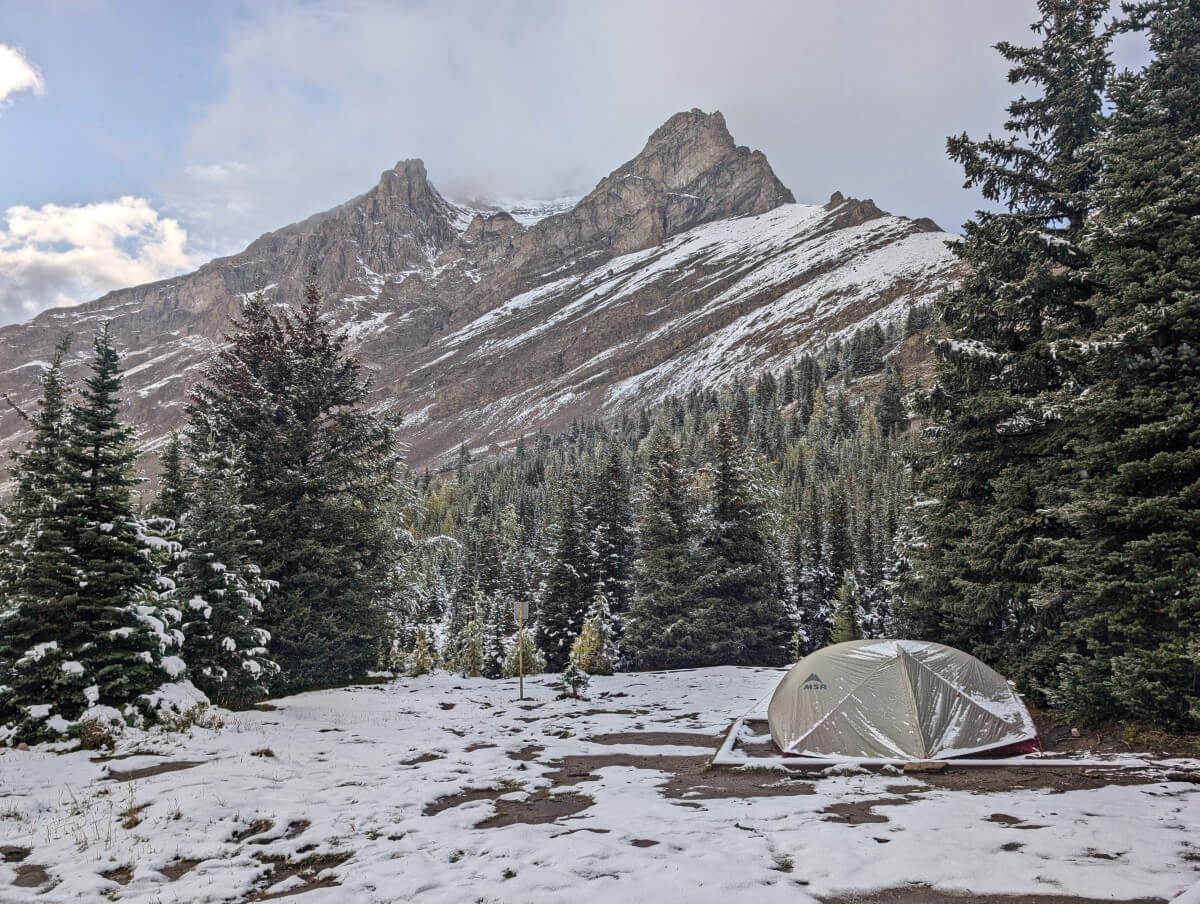
We’ve experienced the full range of weather conditions on our adventures, particularly in the mountains. A lot of new hikers and paddlers assume that summer trips will always bring good weather. We quickly learned that you have to be prepared for anything.
Some examples include:
- 8°C temperatures and five days of heavy rain on the Bowron Lake Canoe Circuit in mid August
- Being trapped in coastal fog for five days on the West Coast Trail in July
- Getting clouded in at Tin Hat Mountain on the Sunshine Coast Trail for 30+ hours
- Heavy snow on the way into Mount Assiniboine in July
- Battling high wind and waves on Okanagan Lake, the most unpredictable conditions we’ve ever faced
- Four days of thick fog on the 100 Wild Islands in Nova Scotia – we couldn’t see further than 50m
The most dramatic weather changes we encountered on a trip was at Maligne Lake in Jasper National Park. It was mid August and the day before had been around 20°C. We launched in heavy snow and arrived at the backcountry campground five hours later with a hint of hypothermia.
We practically ran into camp and spent the rest of the day around the fire with only a short break to put the tent up. In hindsight, we were pushing it and should have waited. The next day? 25°C and sunny.
Over the years, we’ve also been pleasantly surprised by good weather outside of the main season. May has often been a winner – Wallace Island, Desolation Sound, the Juan de Fuca Trail and more.
Lesson learned: Bring clothing suitable for the worst possible conditions. Expect every kind of weather and you’ll be ready for anything thrown at you. Having said that, know your limits and don’t be afraid to stick to them.

When wildfires change the plan
In the backcountry, wildfires are part of nature. A couple of our recent experiences illustrate the need to learn how to prepare and navigate around them.
Clearwater Lake and Azure Lake in Wells Gray Provincial Park had been on my list for a multi-day paddling trip for almost a decade before we finally arrived at the boat launch. The previous year, we’d had to cancel our trip due to local wildfires. As luck would have it, the wildfires ignited the very night we set out on our adventure.
A few years before that, we were hiking the HBC Heritage Trail between Hope and Tulameen when large fires started nearby. We ended up hiking the remaining 28km to finish the trail the next day, the longest distance I had ever backpacked before.
Over in Ontario in Quetico Provincial Park, we experienced the most difficult canoe portage we have ever encountered due to wildfire damage. It took us almost four hours to double portage all of our gear over and under the hundreds of downed trees along a relatively short 1.38km distance.
Lesson learned: For this and many other reasons, tell someone your itinerary, expected return and how to check wildfire alerts. As mentioned, we carry a satellite device to communciate our exact location. We plan exit routes as appropriate and make changes as necessary.
Other posts you may find helpful
The 10 Essentials for the Backcountry
How to Leave No Trace While Exploring the Outdoors
Bear Safety in Canada
How to Stay Safe Outdoors
Backpacking 101: A Beginner’s Guide to Overnight Hiking
Backpacking Gear List: Packing Guide for Multi-Day Hikes
Check out these recently published articles next

One half of the Canadian/British couple behind Off Track Travel, Gemma is happiest when hiking on the trail or planning the next big travel adventure. JR and Gemma are currently based in the beautiful Okanagan Valley, British Columbia, Canada. Consider buying us a coffee if you have find any of our guides helpful!