
Yoho National Park is the most underrated in the Canadian Rockies. Located in British Columbia, just over the provincial border from Banff, Yoho is full of everything that makes the Rockies so spectacular – huge mountains, turquoise lakes, lush valleys, impressive waterfalls and more.
Highway 1 passes directly through the park, making the main attractions and trails easy to reach. Those who are comfortable venturing into the backcountry will be rewarded with quieter hiking trails and even more stunning scenery.

JR and I live in BC and visit Yoho at least once every year. We’ve hiked nearly every trail, stayed at almost all the campgrounds and explored the park throughout the seasons.
This post showcases the best things to do in Yoho National Park in the summer months, the main visiting season. At this time, the lakes are unfrozen, the majority of trails are snowfree and wildflowers dot the meadows. It’s the most wonderful season to be in the mountains!
At the end of the post, I’ll share recommendations about where to stay and some suggestions for one, two and three day itineraries.
This post includes affiliate links. If you make a purchase through one of them, we may receive a percentage of the sale.
Yoho National Park
Before I get into it, here are a few pointers about the park.
Established in 1886, Yoho National Park is situated on the on the traditional lands of the Ktunaxa and Shuswap First Nations as well as the Niitsitapi, Michif Piyii (Métis), Tsuut’ina and Ĩyãħé Nakón mąkóce (Stoney).
The name ‘yoho’ comes from a Cree expression (yôhô) that means ‘awe and wonder.’
My favourite time to visit is mid/late July to early October. The weather is warmest at this time and the hiking trails are at their best. I say ‘mid/late’ July as it depends on the winter snowpack. If the winer is harsh, trails will retain snow for longer.

Yoho is operated by Parks Canada. All visitors must have a valid park pass. Being part of the Canadian Rocky Mountain Parks group, a parks pass from Banff or Jasper is also valid in Yoho.
From 19th June to 7th September 2026, the ‘Canada Strong’ program entitles all visitors to free entry, no park pass needed. There are still fees for camping, guided tours and other additional services.
Outside of this period, you can buy a park pass at the Visitor Centre in Field or in the other Canadian Rockies national parks. If you’re visiting for 7 days or more, it is better value to buy a Discovery Pass (annual pass).

Best things to do in Yoho National Park
Let’s get started with the list! It starts with the most accessible places to go.
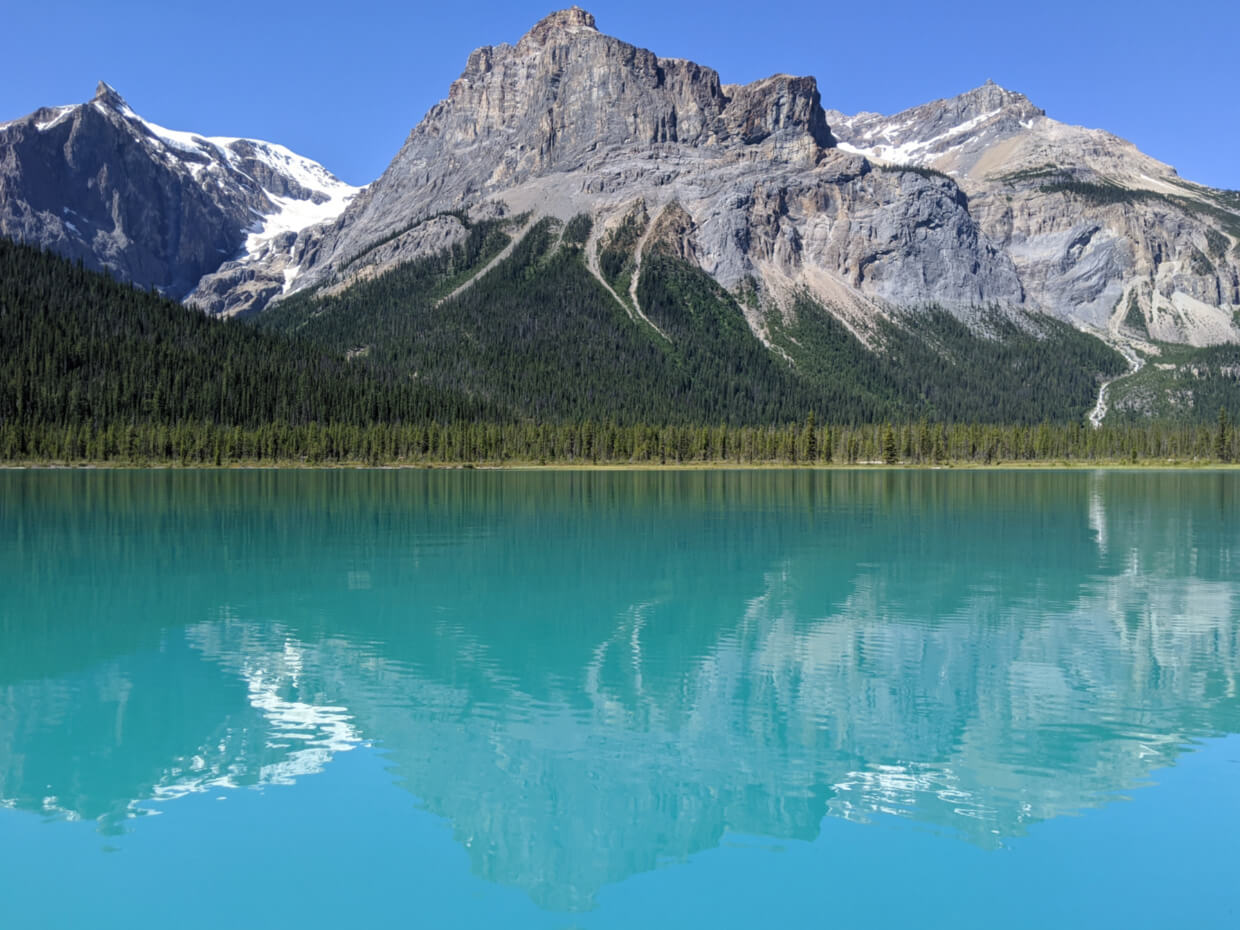
Emerald Lake
Emerald Lake is a must see when in Yoho National Park. Its beautiful turquoise colour comes from the rock flour (fine glacial silt) that is carried into the lake from the Emerald Glacier.
Some argue that Emerald Lake is more beautiful than Lake Louise and I would agree! I much prefer the visiting experience too. There is a hiking trail that circles the lake (5km), which makes it easy to get away from the congestion by the parking lot. Canoe rentals are available ($100/hour).
Emerald Lake is not quite as busy as Lake Louise and Moraine Lake in Banff, but it’s still very popular. The parking lot isn’t very big and most visitors end up parking alongside the approach road. In my opinion, it is best to visit before 9.30am or after 4pm.

Natural Bridge
On the way back to Highway 1 from Emerald Lake, stop by the Natural Bridge. This scenic rock bridge over the Kicking Horse River is spectacular, not just for the impressive feature but also for the turquoise river and mountain backdrop.
Please be very careful around the river at this location. I see visitors tripping and almost falling in every time I go. The river is icy cold and runs very fast – it would be very hard to get out if you fell in.

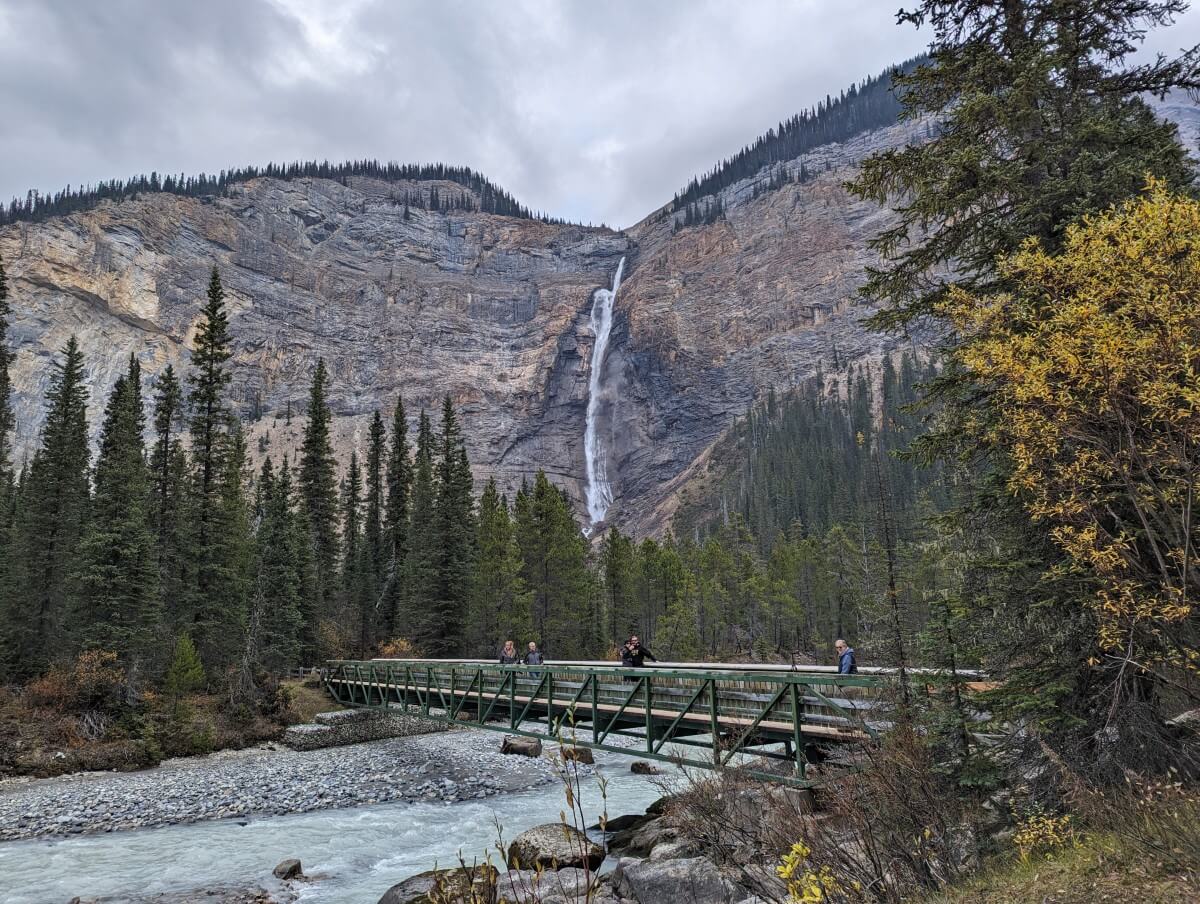
Takakkaw Falls
Takakkaw Falls, British Columbia’s second-tallest waterfall, is located at the end of Yoho Valley Road. Bursting out from the top of an almost vertical rockface, it is absolutely worth the 28km return drive to see this waterfall.
The main viewing area is 10-15 minute walk from the parking area on a flat, wide paved path. Families with children should be very careful around the river as it is very cold. Takakkaw Falls is the starting point for many popular hikes, including the Iceline, Whaleback, Laughing Falls and Twin Falls.
Yoho Valley Road is only open from late June to early October. No large RVs or trailers are allowed, due to one very sharp switchback turn along the route. There is an area to park trailers at the start of the road.
The Village of Field and Truffle Pigs
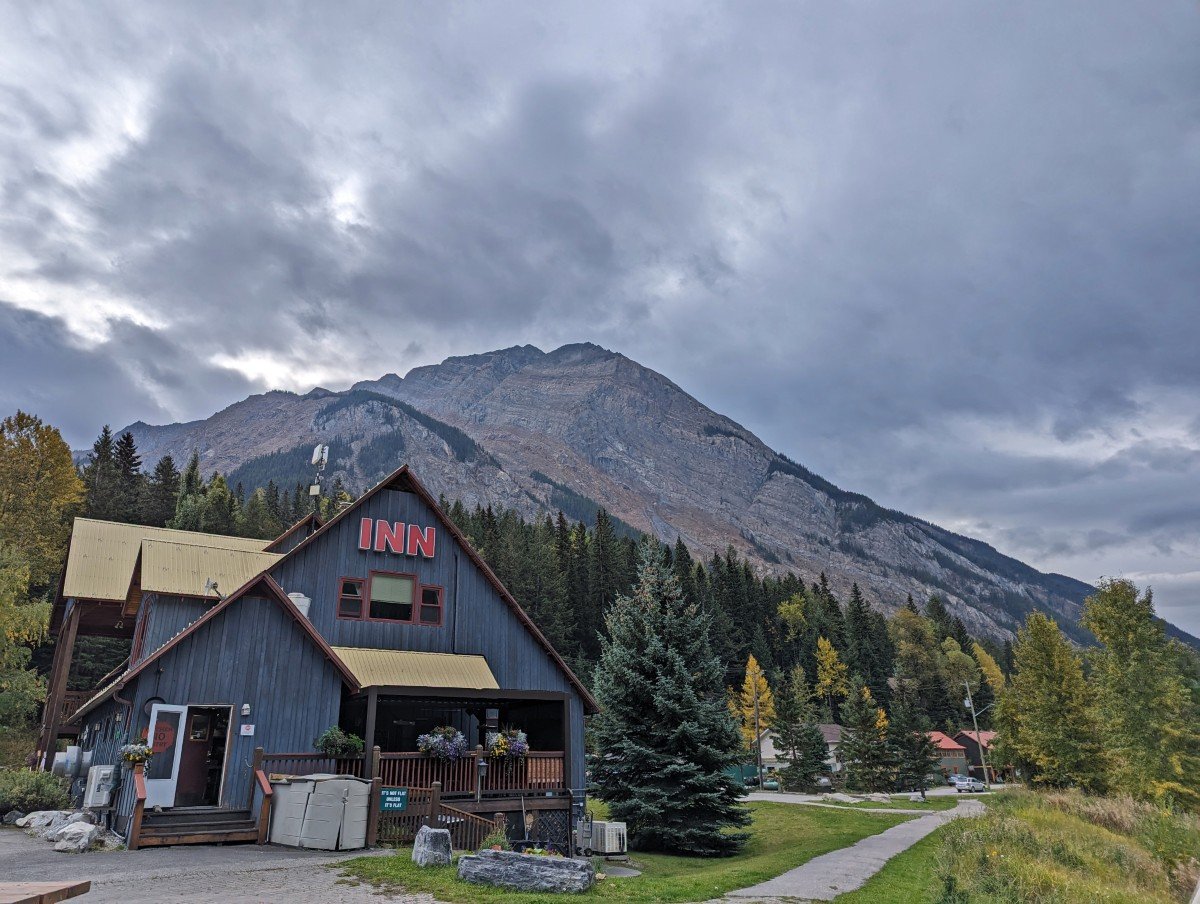
Field is the only community located inside Yoho National Park. Founded in the 1880s during construction of the Canadian Pacific Railway, many of Field’s 170 residents now work for Parks Canada.
Backdropped by huge mountains, Field is a very pretty place to explore. Keep in mind that it is a lot smaller than Jasper or Banff, with limited services. Head to the Visitor Centre by the highway for washrooms, information or to buy a parks pass. There is a riverside picnic area here as well.
Truffle Pigs Bistro in Field is the only place to eat for miles, but it is far from a tourist trap. Family owned and operated, this restaurant/gift shop/deli/lodge offers an authentic experience with hearty yet inventive lunch and dinner dishes. It is worth planning your day around it but prepare for it to be busy.
Lake O’Hara
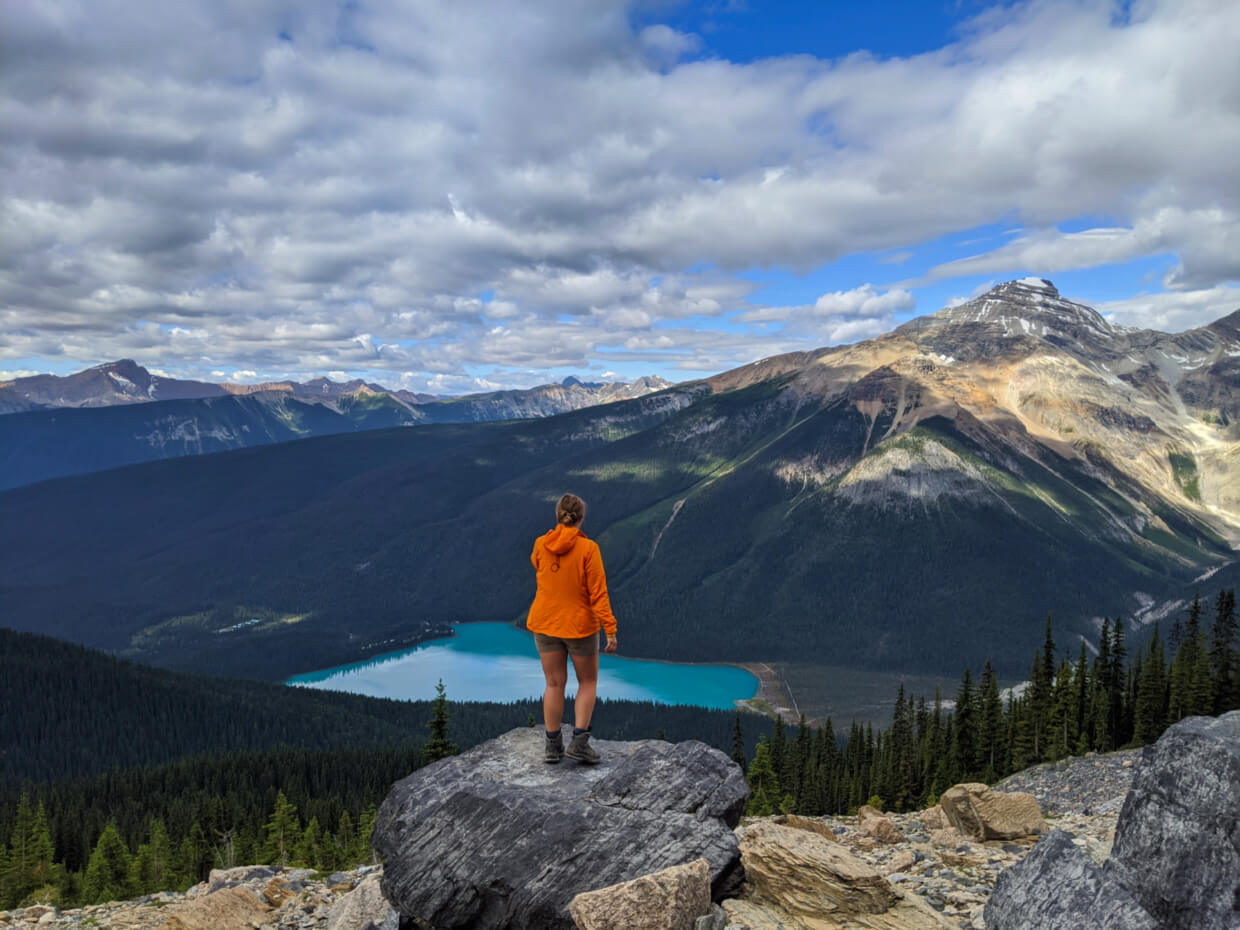
Lake O’Hara is absolutely spectacular and my all time favourite place in the Canadian Rockies. This turquoise lake is surrounded by soaring mountain peaks, giant glaciers, larch forest, hanging valleys and cascading waterfalls.
An expansive network of well maintained hiking trails provide access to all this beauty, with the highlight being the Alpine Circuit.
The only reason Lake O’Hara is not higher up on this list is because access is restricted. It is not possible to drive or bike the 11km long access road – the only options are to hike or take the very popular shuttle bus.
The shuttle bus operates on a lottery system that occurs in April of each year. Another way to secure a bus ride is to book a stay at the Lake O’Hara Lodge, camp at the backcountry campground or sleep in the communal Elizabeth Parker ACC hut. More details in our Lake O’Hara guide.
To learn about the hike-in option or how to score a shuttle bus cancellation (it’s always worth a try), check out this last minute Lake O’Hara guide.

Wapta Falls
Wapta Falls is my favourite short hike in Yoho National Park. In the warmer months, this wide 30m high waterfall is 4.2km return from the parking area near Highway 1. It’s the largest cascade on the Kicking Horse River.
The trail is mostly flat as it travels towards the top of the waterfall. At the end, a series of switchbacks lead down to several different viewpoints. The lowest one offers access to the riverbank, though be very careful if you go beyond (at your own risk).
In the winter months, Wapta Falls visitors have to park next to the highway. This adds 3.4km to the total distance. I personally think it’s still worth the extra time.

Faeder Lake
Located on the western side of the park, Faeder Lake is a beautiful turquoise lake framed by mountains. It’s accessed from a picnic area next to Highway 1. There are picnic benches around the lakeshore and basic washroom facilities (pit toilets) in the parking lot.
Keep in mind that this lake is not super peaceful due to its highway location. On the other hand, it’s usually uncrowded by people since it is not very well known.
Please note that it is usually not safe to access Faeder Lake when driving eastbound. In the westbound direction, there is a turning lane. So if you’re heading to Wapta Falls (above) or Golden, be sure to stop at Faeder Lake on the way there and not on the way back.
Sherbrooke Lake
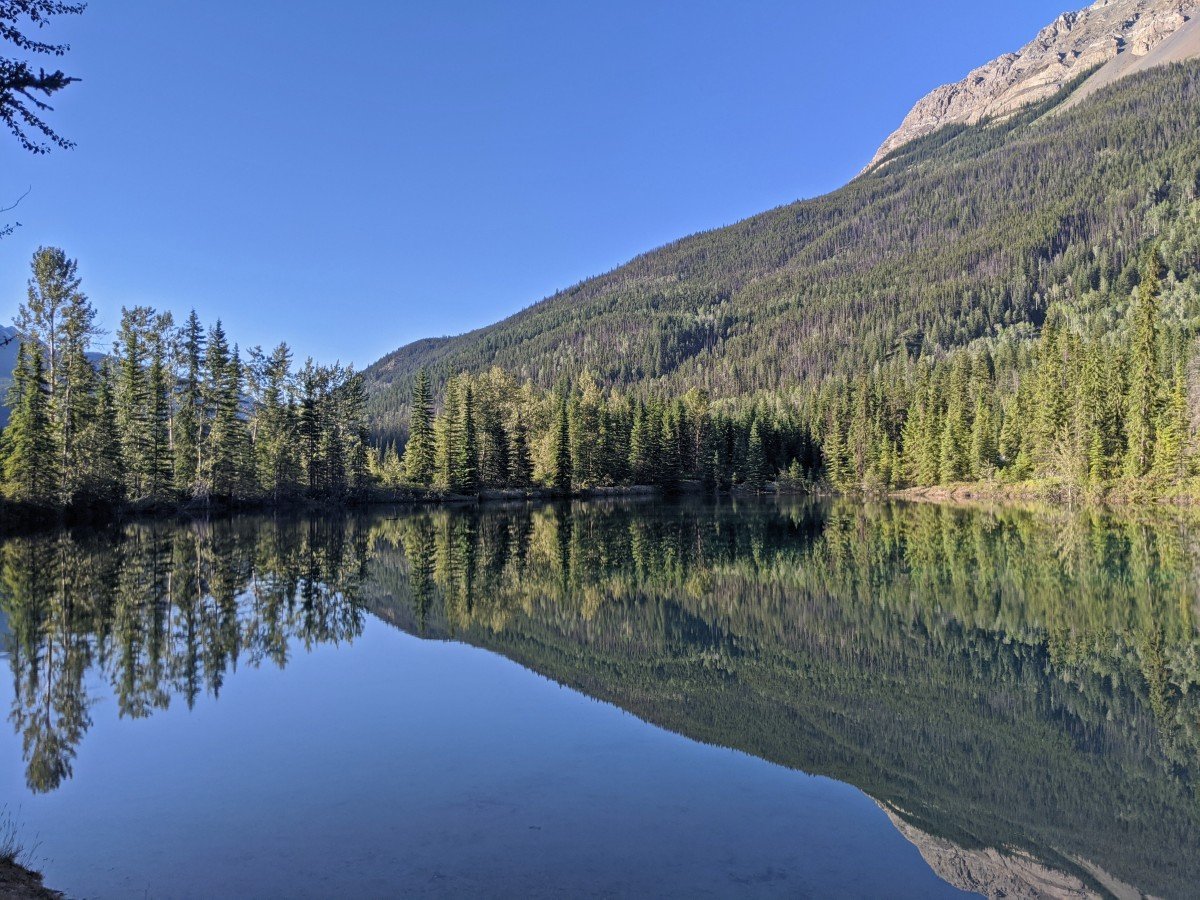
This turquoise lake is one of Yoho’s most underrated hiking destinations. Sherbrooke Lake is 6km return from the Highway 1 parking lot, with around 200m elevation gain. The trail may not be very long but it does have some steep sections.
My friend Leigh from HikeBikeTravel has written a Sherbrooke Lake hiking guide – she says that sandy beaches appear in late summer along the lakeshore, perfect for relaxing or letting the kids play. This is a great trail to combine with Paget Lookout.
It is possible to continue beyond Sherbrooke Lake on a rougher and boggier trail to the Niles Amphitheater, which has bigger views and lots of wildflowers in the middle of summer.
Spiral Tunnels
There are two different viewpoints overlooking the underground spiral tunnels that allows trains on the nearby Canadian Pacific Railway line ascend/descend the very steep Kicking Horse Pass.
Completed in 1909, these spiral tunnels solved a huge construction challenge. The tunnels are now a National Historic Site. Depending on timing, you may be lucky and see a train pass through these impressive structures while standing at the viewpoints. About 25-30 trains pass through every day.
The Lower Spiral Tunnel Viewpoint is worth a quick stop even without a passing train. There are some mountain views and several interpretive displays about the importance of the railway to Canada and also Yoho National Park.
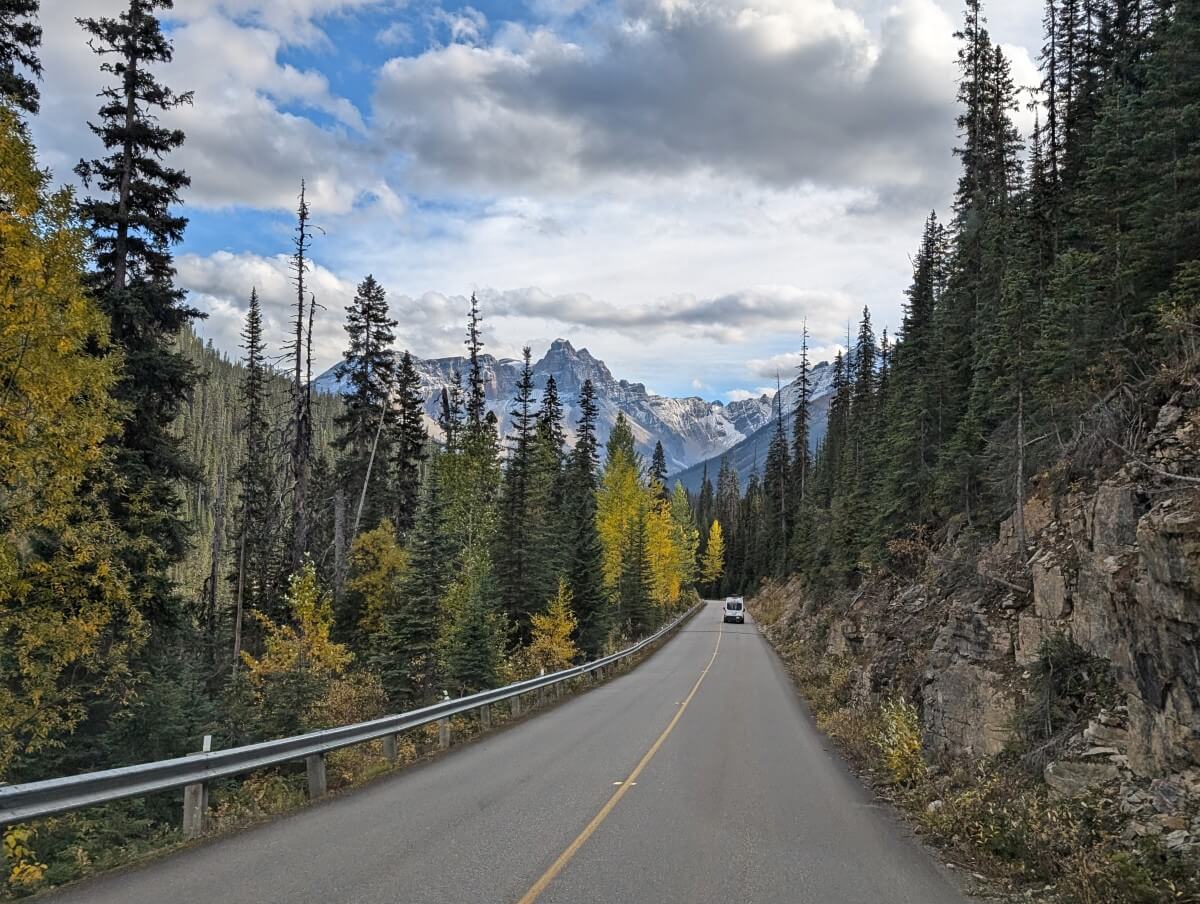
Longer hiking trails
Hiking is the best way to see the park’s most beautiful scenery. The following trails range from short, half day trips (intermediate level) to full day adventures (difficult)
The Iceline Trail
Yoho’s iconic Iceline Trail treats hikers to sweeping alpine vistas, cascading waterfalls, and colourful subalpine meadows. Usually hiked as a 21km loop, the Iceline Trail provides a whole day of hiking discovery, with no double backing. It has around 1,090m elevation gain.
This hike really lives up to its reputation, so much so that it features on my best BC day hikes list. I would recommend putting it on your list as a priority! For more details including what to expect, essential items to bring and hiking tips, head to our dedicated Iceline Trail guide.
Technically, the Iceline is a short trail (7.8km) but it is hiked in a loop with other trails. I prefer to hike it clockwise with the Little Yoho Valley extension. The trail can also be explored on a 2 or 3 day backpacking trip, also taking in Twin Falls and/or the Whaleback (below).
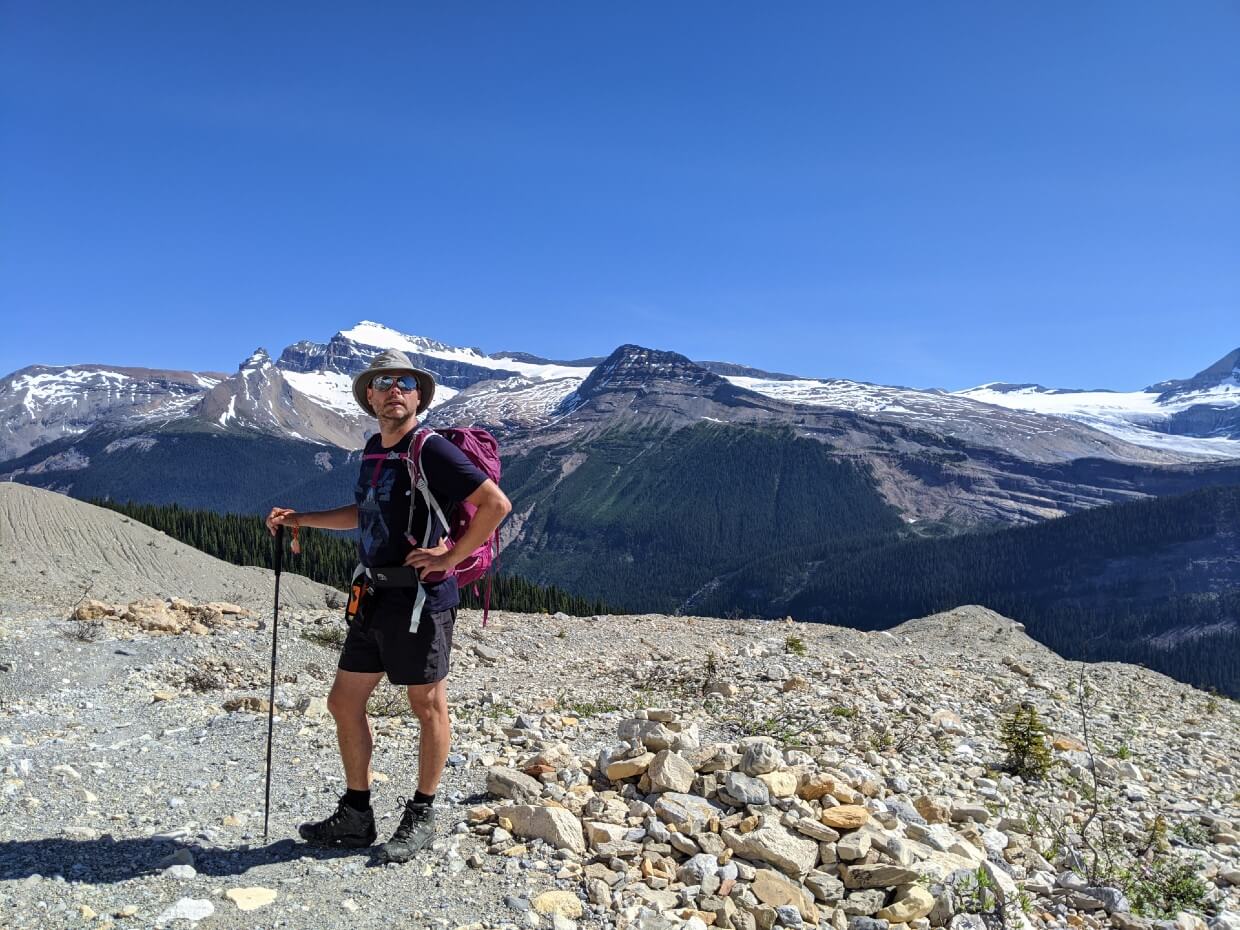
Laughing Falls
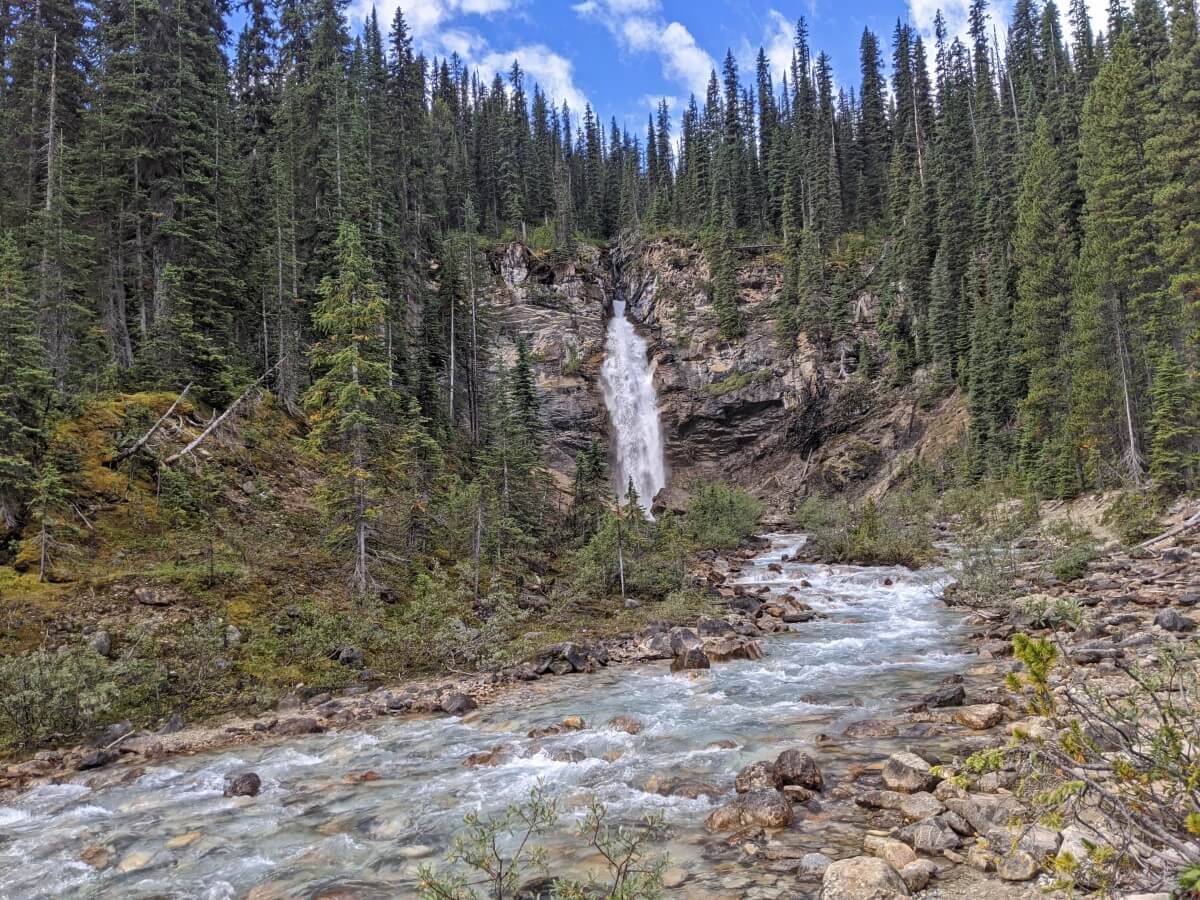
Laughing Falls is a beautiful 30m high waterfall, 9km return from the Takakkaw Falls day-use area. It’s a worthy half day adventure if you don’t have the time or energy to hike the longer Iceline, Whaleback or Twin Falls trails.
The first part of the trail is pretty flat as it follows parallels the Yoho River. This does mean that it can get flooded in the early summer. There are some great sweeping views of the surrounding mountains as well as Takakkaw Falls in the distance.
Short side trails (around 200m each way) lead to viewpoints of Point Lace Falls and Angel’s Staircase. Another detour leads to pretty Duchesnay Lake. Closer to Laughing Falls, the trail passes through a gorge. If you want to continue hiking, head to Twin Falls (below).
Twin Falls and Twin Falls Tea House
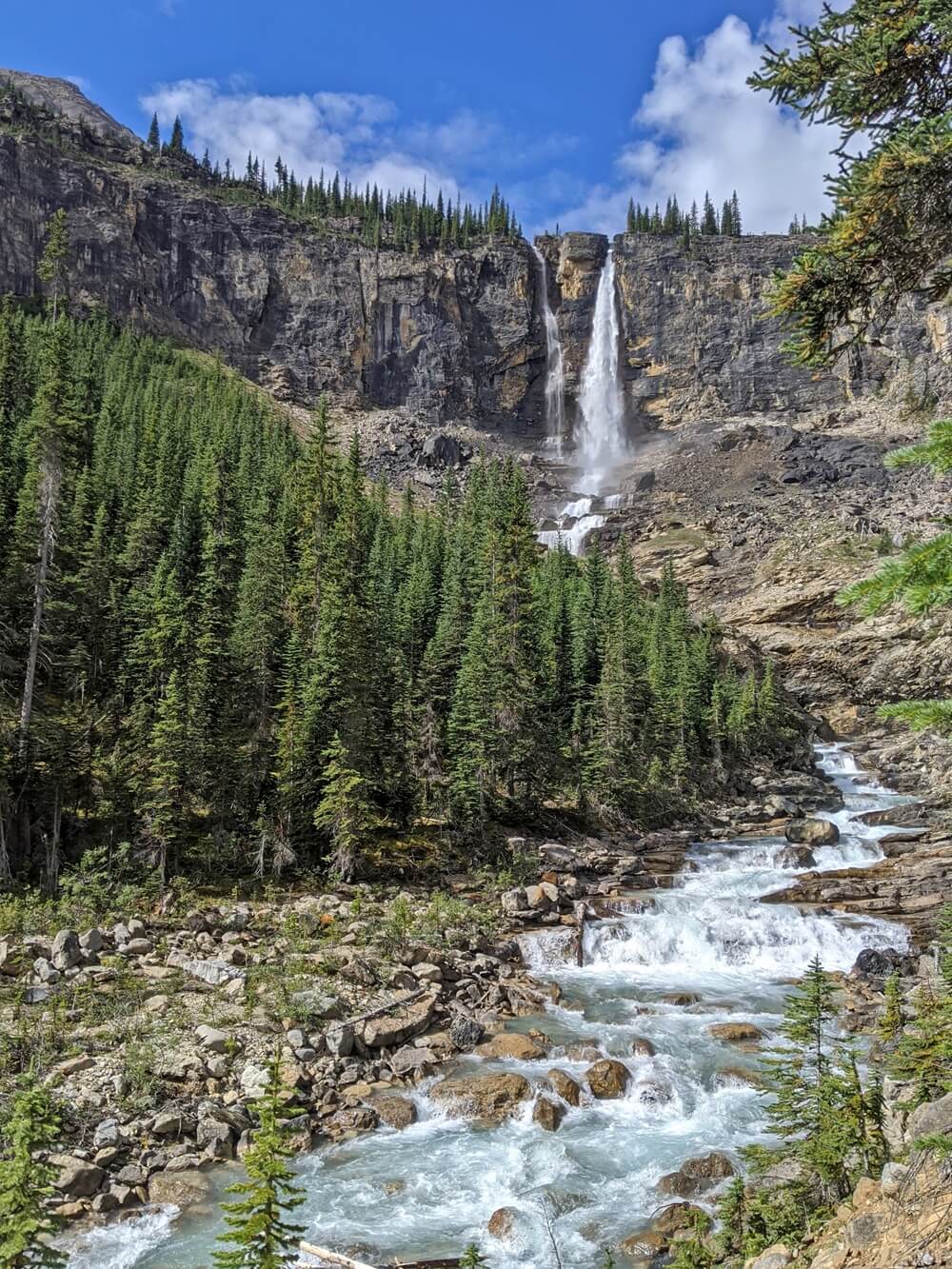
Twin Falls is a spectacular double waterfall plunging over a rugged cliff. It’s an impressive sight, especially as the surrounding area is pretty quiet. The 17km return trip from the Takakkaw Falls parking lot helps keep away the crowds.
Total elevation gain to the bottom of Twin Falls is around 400m (+300m to the top).
Located close to the waterfall is the Twin Falls Tea House, a National Historic Site. It was built in the early 1900s in association with the Canadian Pacific Railway, to provide a place to eat and sleep on the hiking trails.
While drinks and treats are no longer sold here, the three part log cabin structure is still impressive to see. Each section was built separately in different decades, using a range of log construction methods. In 2027, the Tea House will become an Alpine Club of Canada hut.
The Whaleback
If it wasn’t for the Iceline Trail, the Whaleback would be the premier hike in this area of the park. The full loop is a very similar length (20.5km) with a slightly higher total elevation gain (1,110m) and also features views of the surrounding peaks, glaciers, waterfalls and more.
Technically, the Whaleback is more of a balloon than a loop, with both the start and end at the Takakkaw Falls parking lot. The trail first heads to Laughing Falls, then Twin Falls (and the Tea House) and then up to a ridge with amazing unobstructed views of the park.
The return journey to Takakkaw Falls is through the forest. Counter-clockwise is the best way to go. Honestly, the Whaleback is a fantastic trail and I would suggest it to keen hikers who have an extra day to explore.
Paget Lookout and Peak
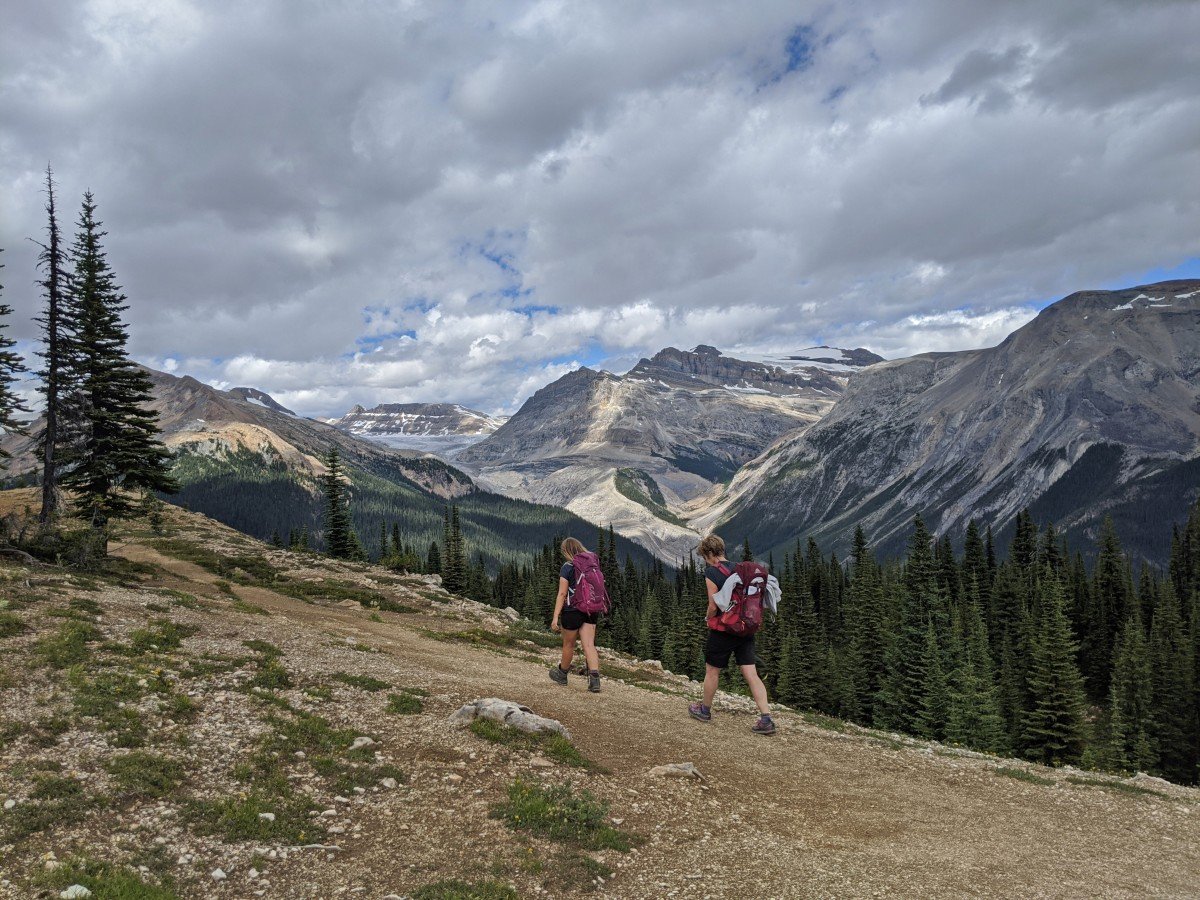
This uphill hike to an old fire tower is ideal to combine with visiting Sherbrooke Lake. Paget Lookout offers incredible views of Yoho’s mountain peaks from the trail and the lookout itself. Allow around 3-4 hours for the 7km return trip.
If you are comfortable with heights and scree, consider continuing onto Paget Peak (extra 2.8km return) for even more glorious panoramas. This unmaintained trail has some steep, exposed sections with a couple of easy scramble sections. Check out my friend Leigh’s guide for more details.
Burgess Shale Fossils guided hike
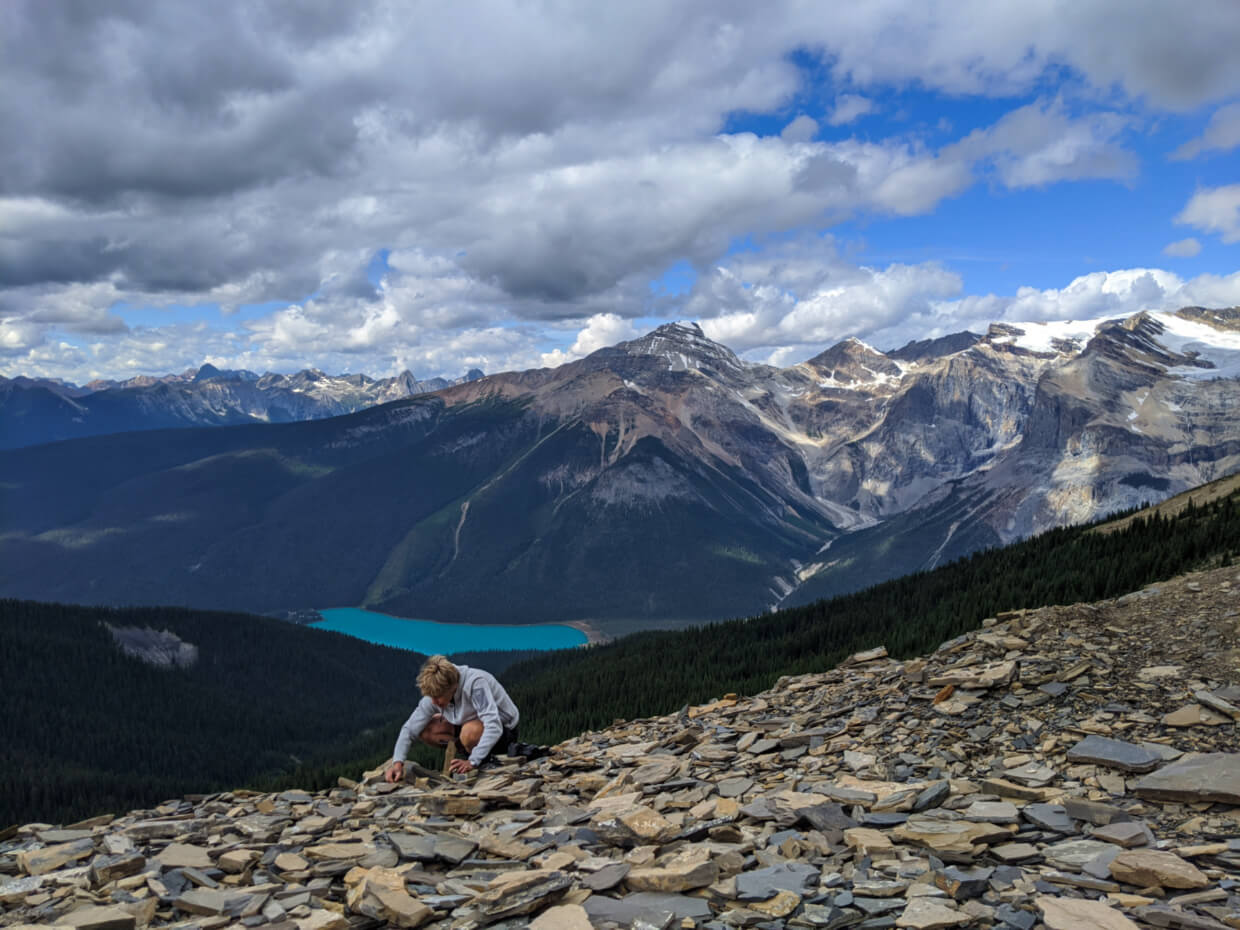
The Burgess Shale is a rare, fossil-rich geological formation that contains exceptionally well-preserved soft-bodied organisms within sedimentary rock. Yoho National Park has one accessible Burgess Shale site, situated on a ridge above Emerald Lake between Wapta Mountain and Mount Field.
Access to Walcott Quarry is restricted by law but you can visit on a guided hike with Parks Canada or the Burgess Shale Geoscience Foundation.
We joined one of Parks Canada’s tours a few years ago and I’d highly recommend it. While a long day (11 hours) and a lengthy hike (21km return with 825m elevation gain), it’s a real one-of-a-kind experience with the most incredibly scenic backdrop!
The tour was well paced with plenty of breaks and included lots of information about the geological history of the park, local wildlife, native trees and more. Reservations open in January each year.
Where to stay in Yoho National Park
Since Yoho National Park doesn’t have a big townsite like Banff or Jasper, accommodation options are somewhat limited.
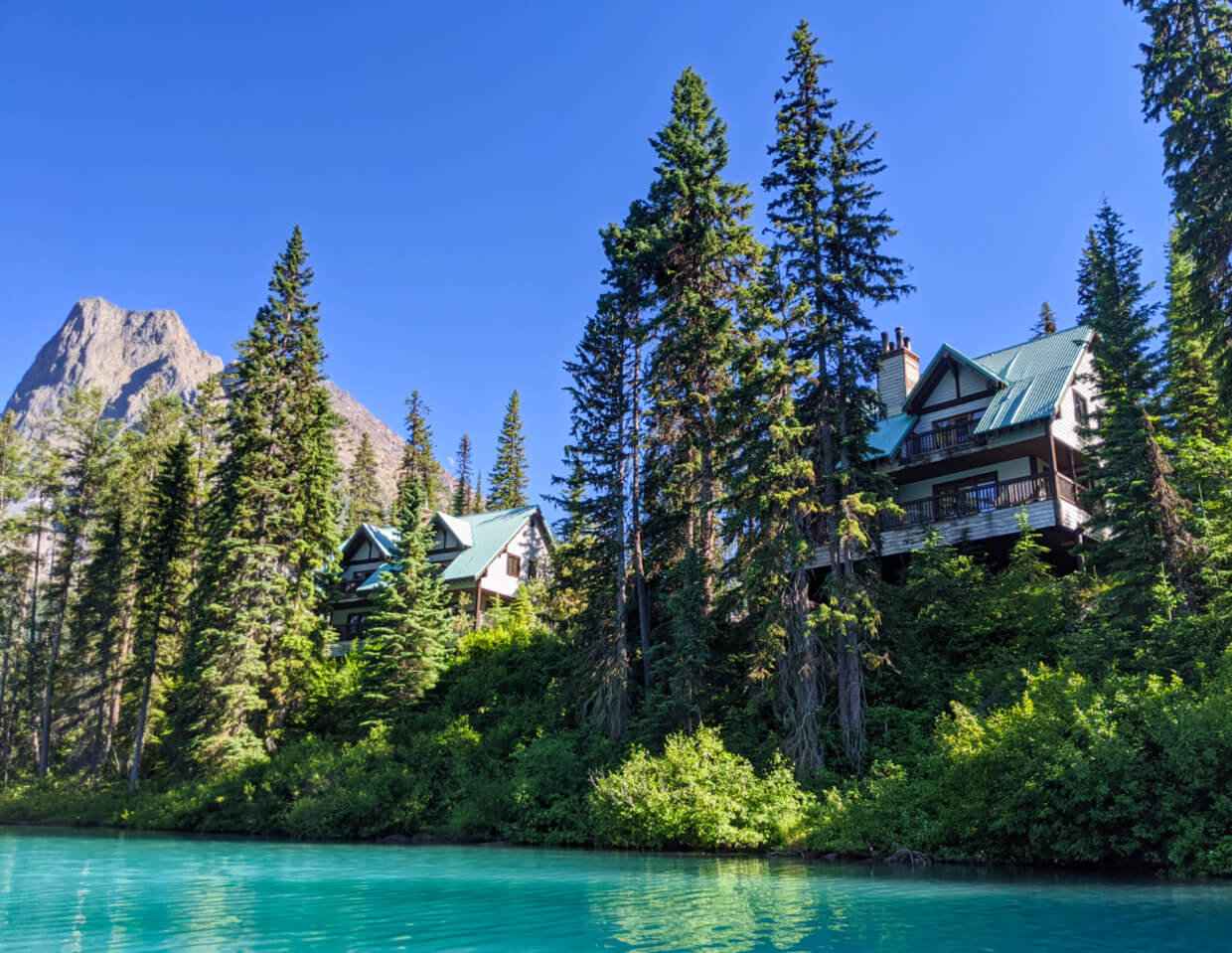
There are a small number of independently run guesthouses and B&Bs in Field such as the adults-only Canadian Rockies Inn and the Truffle Pigs Lodge. There is also the dreamy Emerald Lake Lodge (the only place to stay at the lake) and the gorgeous Cathedral Mountain Lodge on the Yoho Valley Road.
Most visitors to Yoho stay in Golden, Lake Louise or Banff. Golden is the most budget friendly and is around 40 minutes drive from Field. This mountain town has a range of chain hotels as well as ski resort accommodation and family run motels.
Campers have quite a few options in Yoho, both in the frontcountry (vehicle accessible) and backcountry (accessible on foot). Reservations open in January each year – read my pro tips!
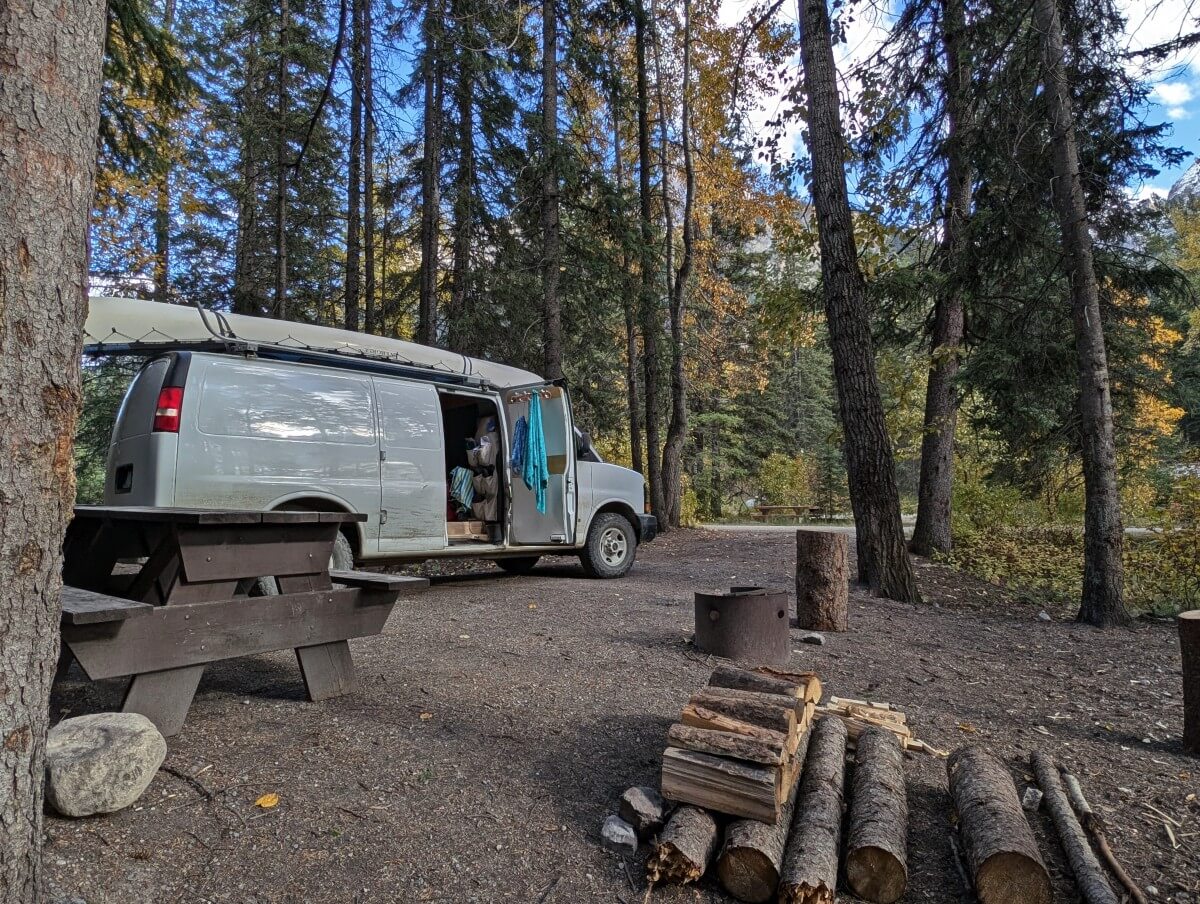
If you have an RV or van, your choice is simple – Kicking Horse (large, reservations available, shower facility) or Monarch (first come first serve only, close to the railway/highway, no showers). These campgrounds are located on the Toho Valley Road, on the way to Takakkaw Falls.
Tent campers have more options. Takakkaw Falls Campground is absolutely beautiful, with some campsites even having direct views of the falls. It’s a handy place to stay if you’re camping in this area. It is 300m from the main parking lot and there are wheelbarrows to help carry your gear in.
For backcountry campsites, there are campgrounds at Laughing Falls, Twin Falls, Little Yoho, Yoho Lake and Lake O’Hara. Yoho Lake is well placed for exploring the Iceline Trail as well as the Emerald Triangle.

Yoho National Park itineraries
Wondering how to put all these activities and trails in an itinerary? Check out these one, two and three day Yoho trip plans!
One day
The best one day Yoho National Park trip is simple:
- Emerald Lake (either before 9.30am or after 4pm)
- Natural Bridge
- Takakkaw Falls
- Ice cream, lunch or dinner at Truffle Pigs
Want to fit in a short hike? Consider the circuit trail around Emerald Lake or Wapta Falls. I think Wapta Falls is more impressive overall so that would be my top pick when choosing between them. On the way to Wapta, make a quick stop at Faeder Lake to check out the view of this pretty lake.
If you do manage to get shuttle tickets for Lake O’Hara, that will always be my first choice.
Hate crowds but love hiking? Prioritise the Iceline Trail. Head to Emerald Lake and Natural Bridge afterwards, after most people have gone home.
Two days
Keen hikers should aim to spend at least two days in Yoho National Park.
With the extra day, you can check out the incredible Iceline Trail OR hike into Lake O’Hara (and attempt to get the bus back). Of the two, the Iceline Trail is the more sensible option and definitely doesn’t feel like a compromise.
Day 1:
- Emerald Lake (before 9.30am), optional hike
- Natural Bridge
- Quick stop at Faeder Lake
- Wapta Falls hike (4.2km)
- Field for dinner or an ice cream
- Camp at Takakkaw Falls/Kicking Horse/Monarch or stay in Golden/Lake Louise/Banff
Day 2:
- 20km Iceline Trail circuit route starting at Takakkaw Falls (full day hike)
- Alternative – hike into Lake O’Hara (11km), explore short trails or full Alpine Circuit (11km), attempt to get return bus/hike out as last resort (11km)
- Short hike option – Laughing Falls (9km return) or Sherbrooke Lake (4.3km return)

Three days
Visiting Yoho National Park for a third day? Lucky you! Follow the above two day itinerary and then join a guided Burgess Shale hike on day 3 (reservation required). Alternatively, hike the Whaleback Trail (20.5km loop)
Paget Lookout (7km return) is a good option for a shorter adventure. Continue up to Paget Peak if you don’t mind heights and scree (additional 2.8km).
Related posts you may find helpful
The Best Vancouver to Calgary Road Trip Routes: Highway 1 & Alternatives
Canadian Rockies Road Trip Loop: Detailed 9 to 12 day Itineraries + Map
The Best Hot Springs in BC: Complete Guide
The Rockwall Trail Hiking Guide, Kootenay National Park
Ultimate 2 Week Western Canada Road Trip from Vancouver


One half of the Canadian/British couple behind Off Track Travel, Gemma is happiest when hiking on the trail or planning the next big travel adventure. JR and Gemma are currently based in the beautiful Okanagan Valley, British Columbia, Canada. Consider buying us a coffee if you have find any of our guides helpful!
Great Post, Loved it!