
Mountains, ocean and rainforest meet in Prince Rupert, Northwestern BC. Over 16 hours drive from Vancouver (or less than 2 hours by plane), this small city is a gateway to both the Pacific and untamed wilderness. It is also Canada’s rainiest – or, as I prefer, the one with the most rainbows!
Imagine my surprise, then, when I arrived in early May to find sunshine. And plenty of it. That said, I still managed to see the misty mountain views as well, with low clouds enveloping the forested peaks and soft layers of fog drifting around the rugged coastline.
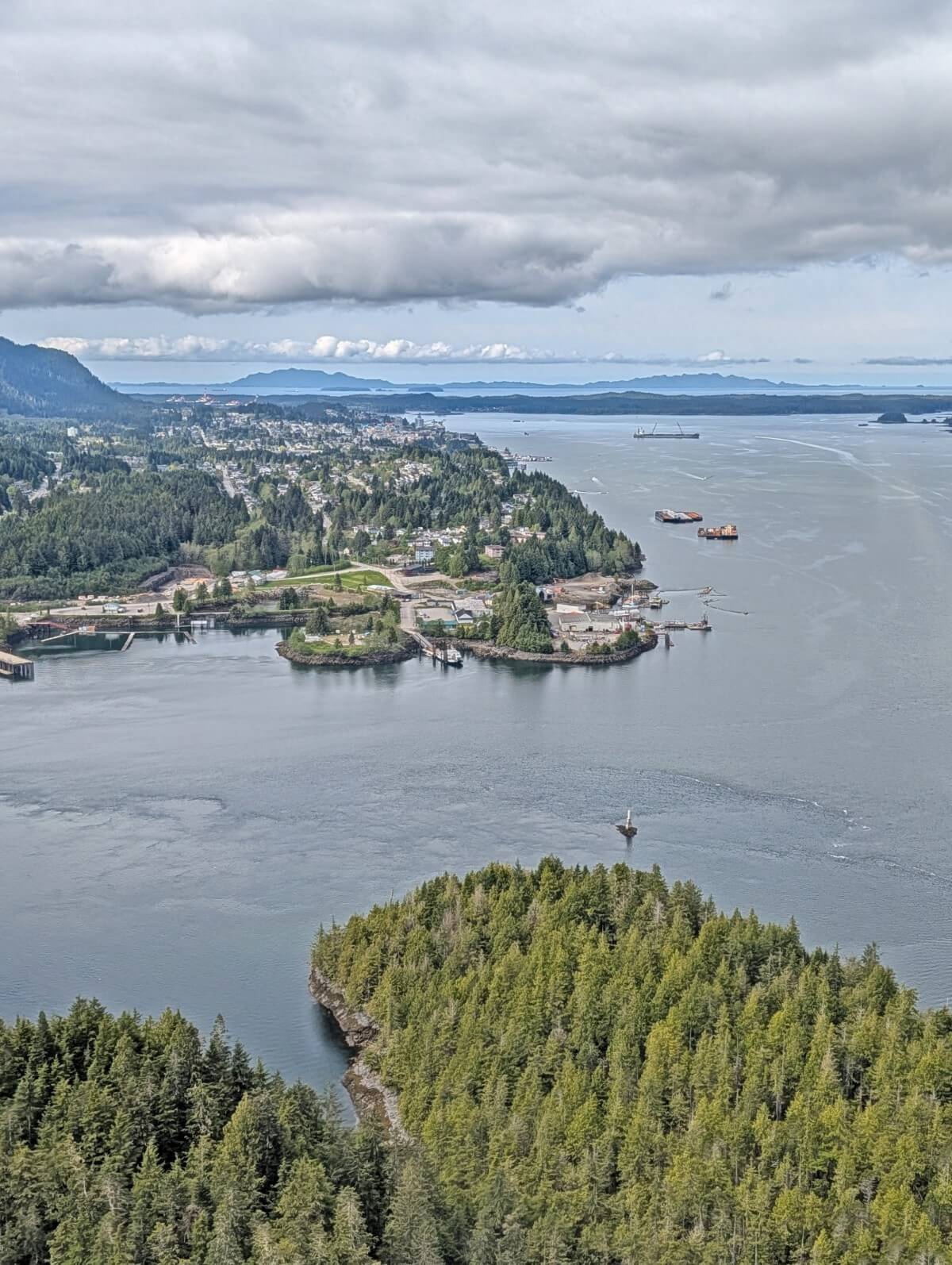
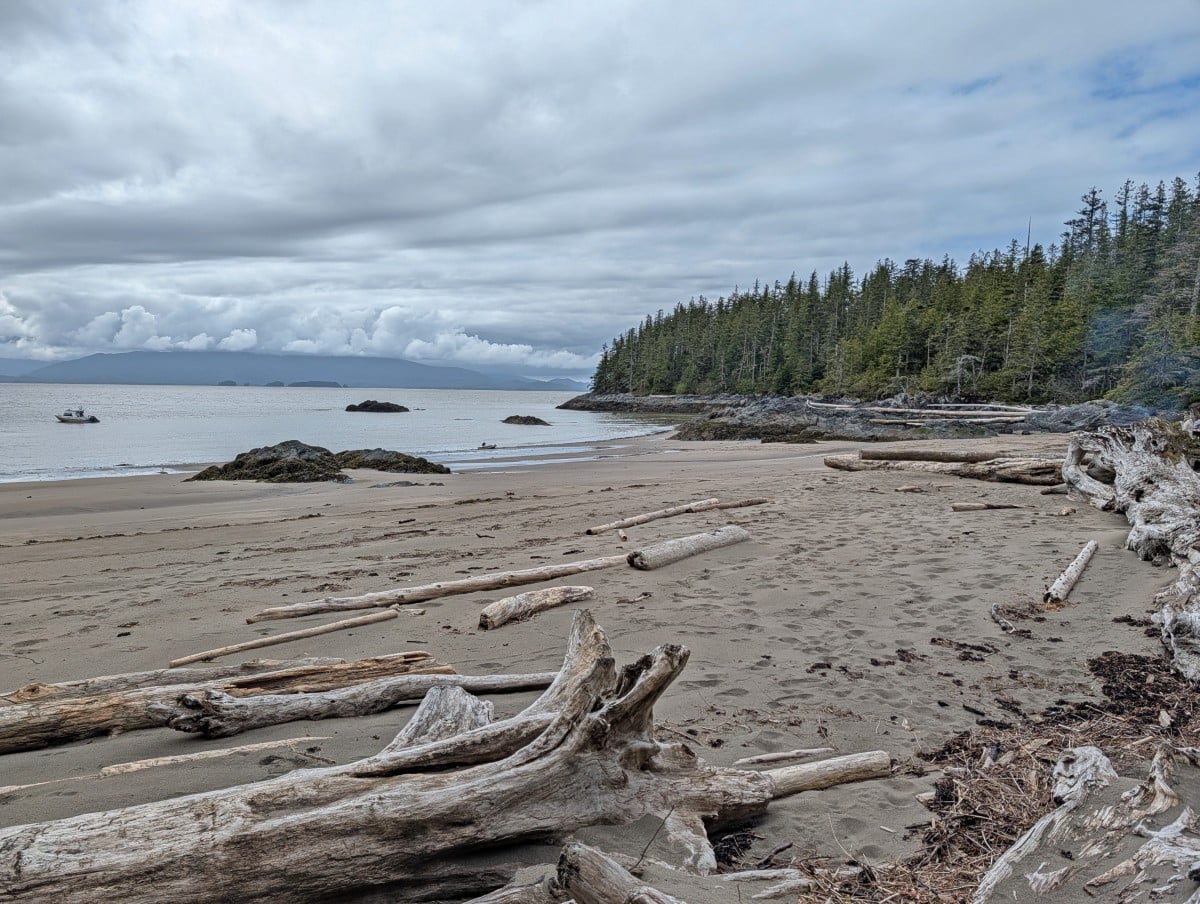
I explored Prince Rupert from the water, sky and land, learning about local Indigenous culture, the region’s fishing heritage and spotting orcas, grizzly bears and bald eagles. Every perspective revealed another layer of the region’s vast scale and natural beauty.
Based on my own experiences, this post highlights the best things to do in Prince Rupert and what makes this remote coastal city so special. I’ve presented my suggestions as a 48 hour itinerary, but there enough ideas here to fill a much longer visit.
I visited Prince Rupert in May 2026 on a hosted trip with the Northern BC Tourism Association. This post includes some affiliate links. If you click a link and make a purchase, we may receive a percentage of the sale.
An introduction to Prince Rupert, British Columbia
Prince Rupert, better known by the locals as simply ‘Rupert,’ is a small city of just under 13k people on the coast of Northwestern BC.
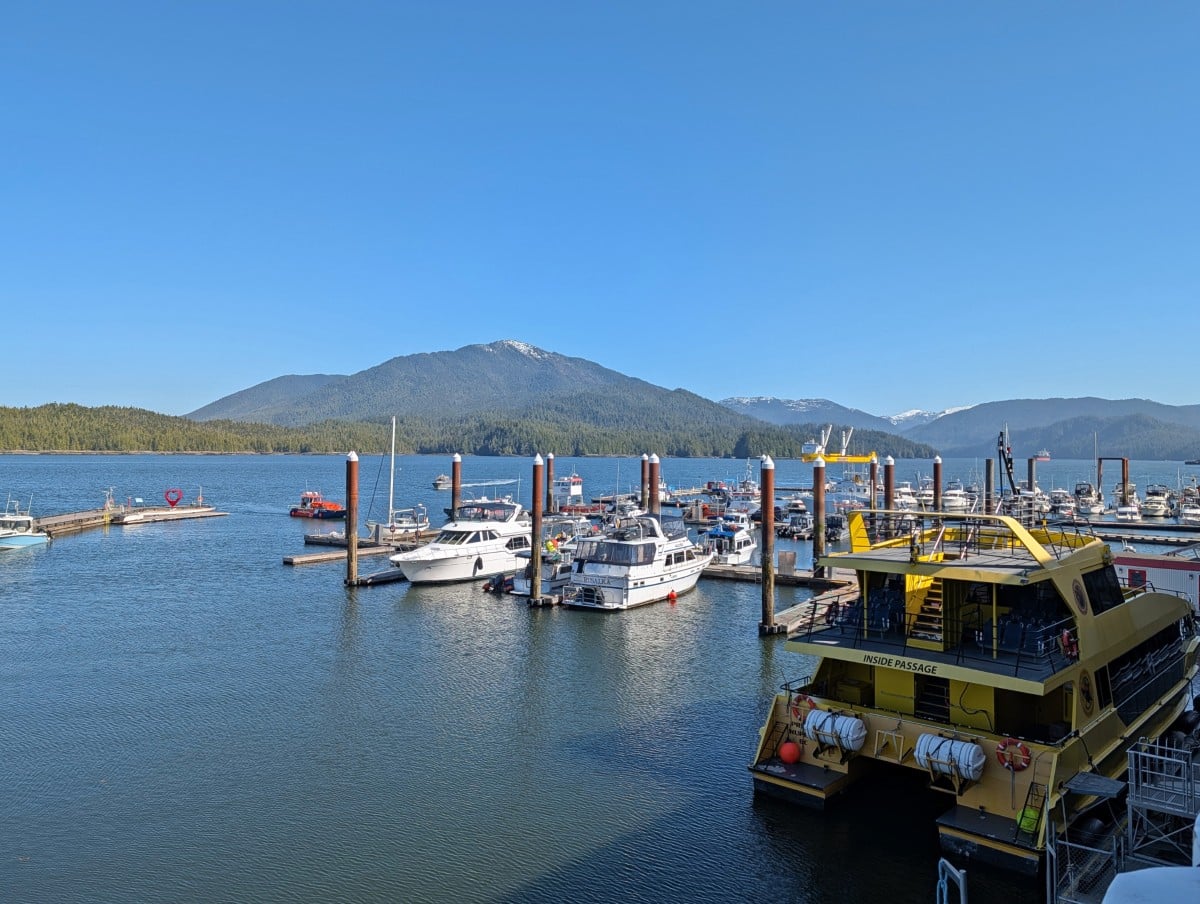
Situated on the Inside Passage, a sheltered coastal route linking Washington and Alaska, Prince Rupert serves as the region’s land, sea and air transportation hub.
A surprising fact – Prince Rupert isn’t actually on the mainland, but rather an island. Kaien Island stretches about 11 km in length and features a central mountainous ridge rising to 700 metres. The rest of the island is covered by temperate rainforest, sustained by about 2,600 mm of annual rainfall.
Why go to Prince Rupert?
- Stunning temperate rainforest, mountain and coastal landscapes
- The energy of a working port balanced with small coastal town vibes
- Rich Indigenous culture and history
- Fresh seafood, especially salmon, halibut and crab
- Friendly locals who love their city and take pride in its natural beauty
- Incredible wildlife viewing, including whales, bears and eagles
- Multicultural cannery heritage shaped by Indigenous, Asian, and European workers
- Easy access to the ocean for wilderness tours, fishing, kayaking and more
A short history
Located in the traditional territory of the Ts’msyen, about half of the population are First Nation people. The area has been inhabited for over 10,000 years.
Trading posts established in the 1800s marked the beginning of European settlement in this area. Before the end of the century, salmon canning emerged as the dominant industry. These isolated self-sufficient coastal communities employed thousands of workers across the region.
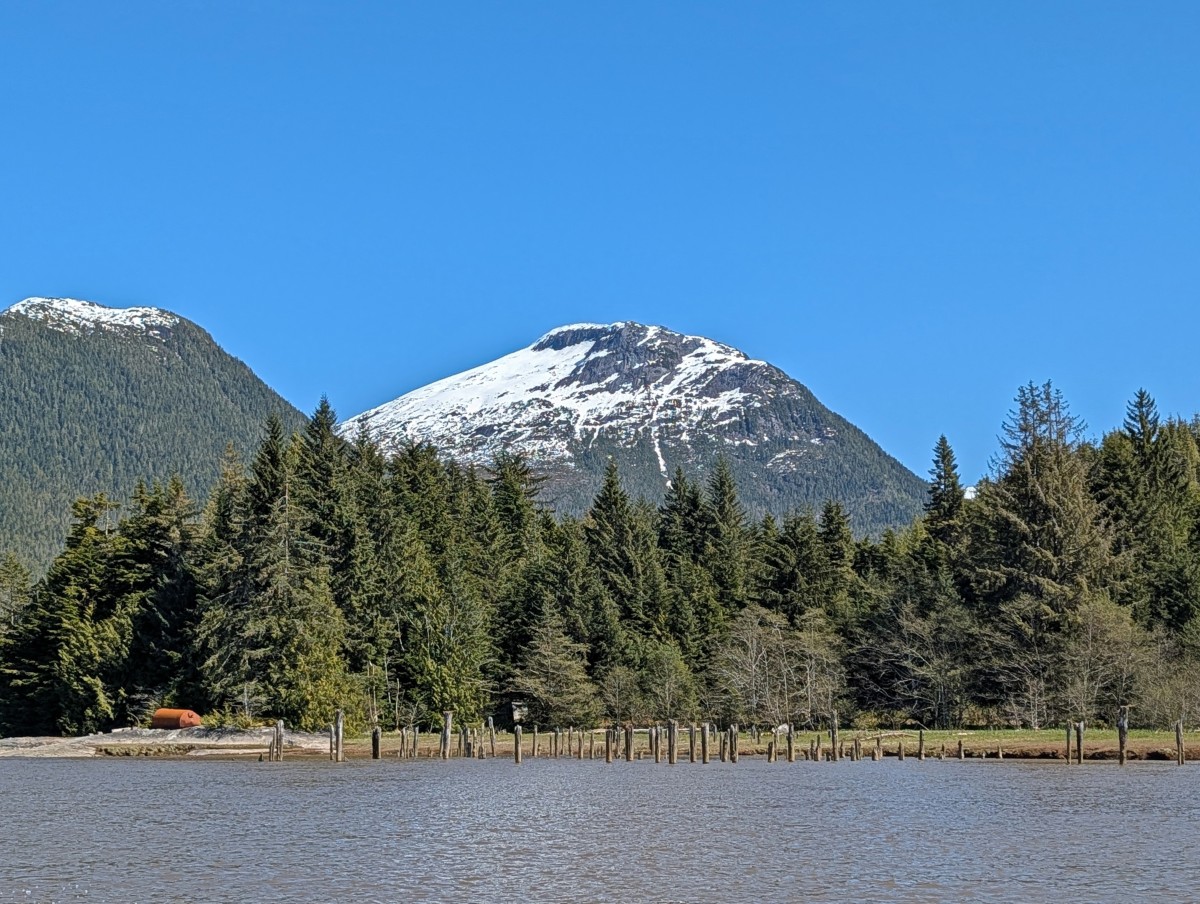
The largest settlement was Port Essington on the Skeena River estuary. At its peak, 5000 people lived and worked here – a mix of European-Canadians, Chinese, Japanese-Canadians and First Nations.
In 1906, surveyors chose Kaien Island as the western teminus of the Grand Trunk Pacific Railway on Kaien Island. This led to the founding of Prince Rupert and the demise of Port Essington.
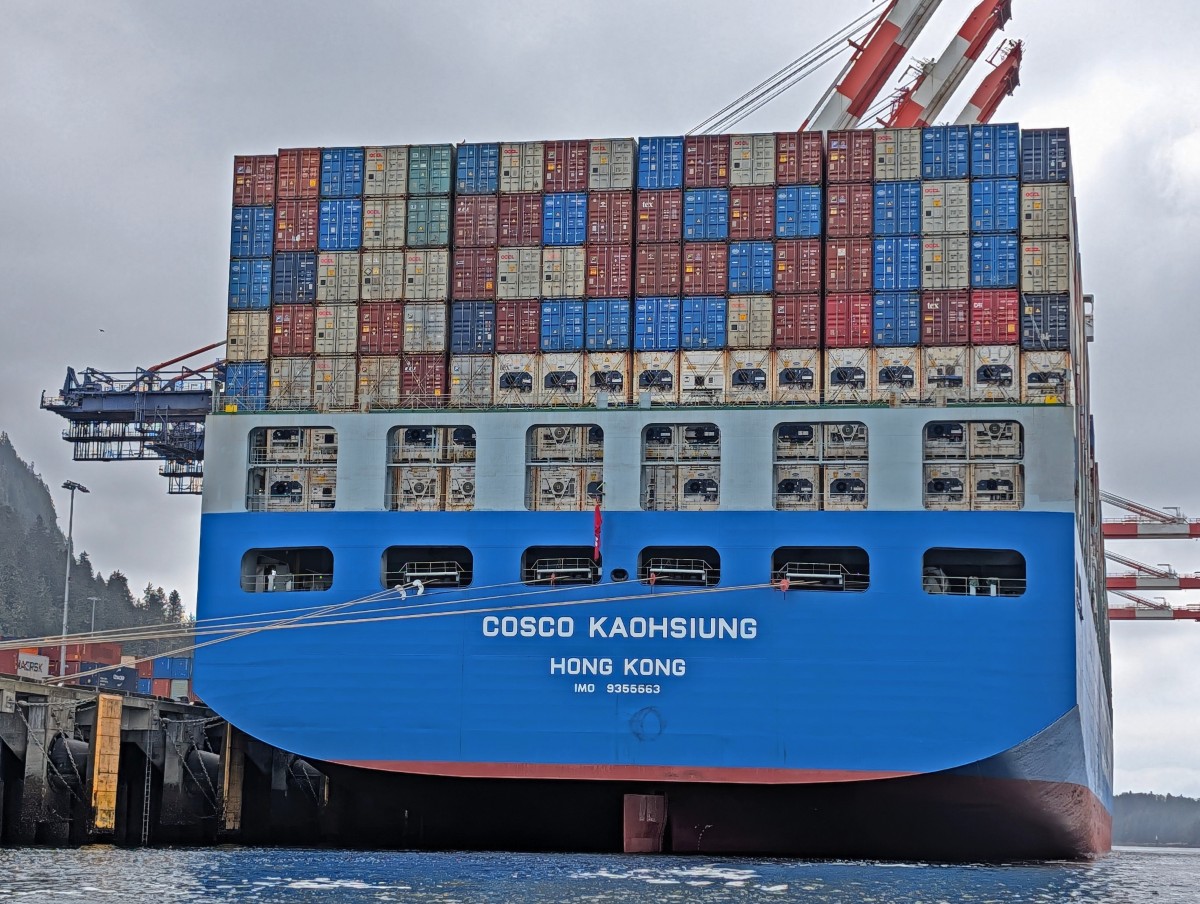
Prince Rupert sits next to the deepest ice-free natural harbour in North America and is the third busiest seaport in Canada. Commercial fishing remains an important industry.
The city also welcomes thousands of cruise ship passengers every year as well as BC Ferries and Via Rail passengers.
No matter the reason you are visiting Prince Rupert, I hope you’ll be an impressed as I was!
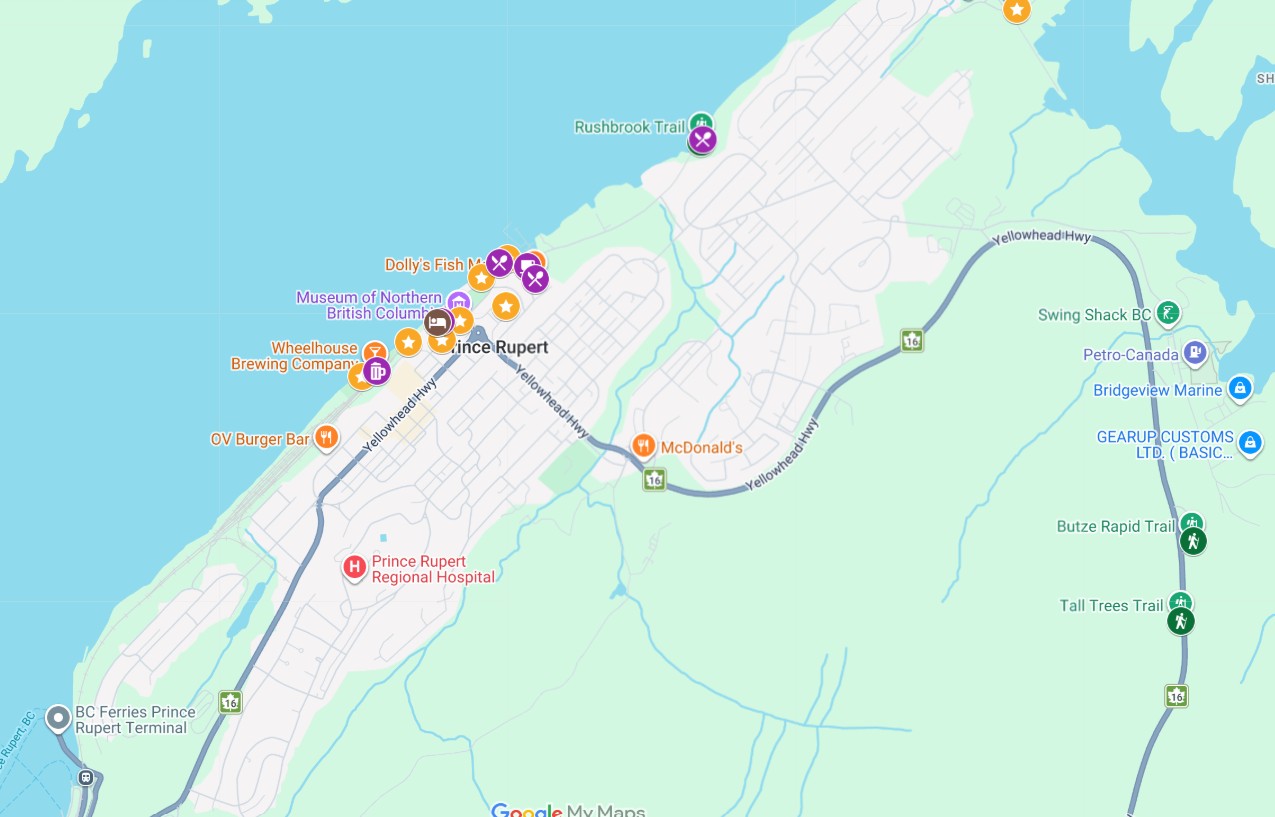
48 hours in Prince Rupert: Day 1
Welcome to Prince Rupert – get ready for an fun day, rain or shine.
Not arriving in the morning? Simply adjust each day’s activities to suit your own schedule. On that note, if the weather favours one day over the other, then adjust accordingly.
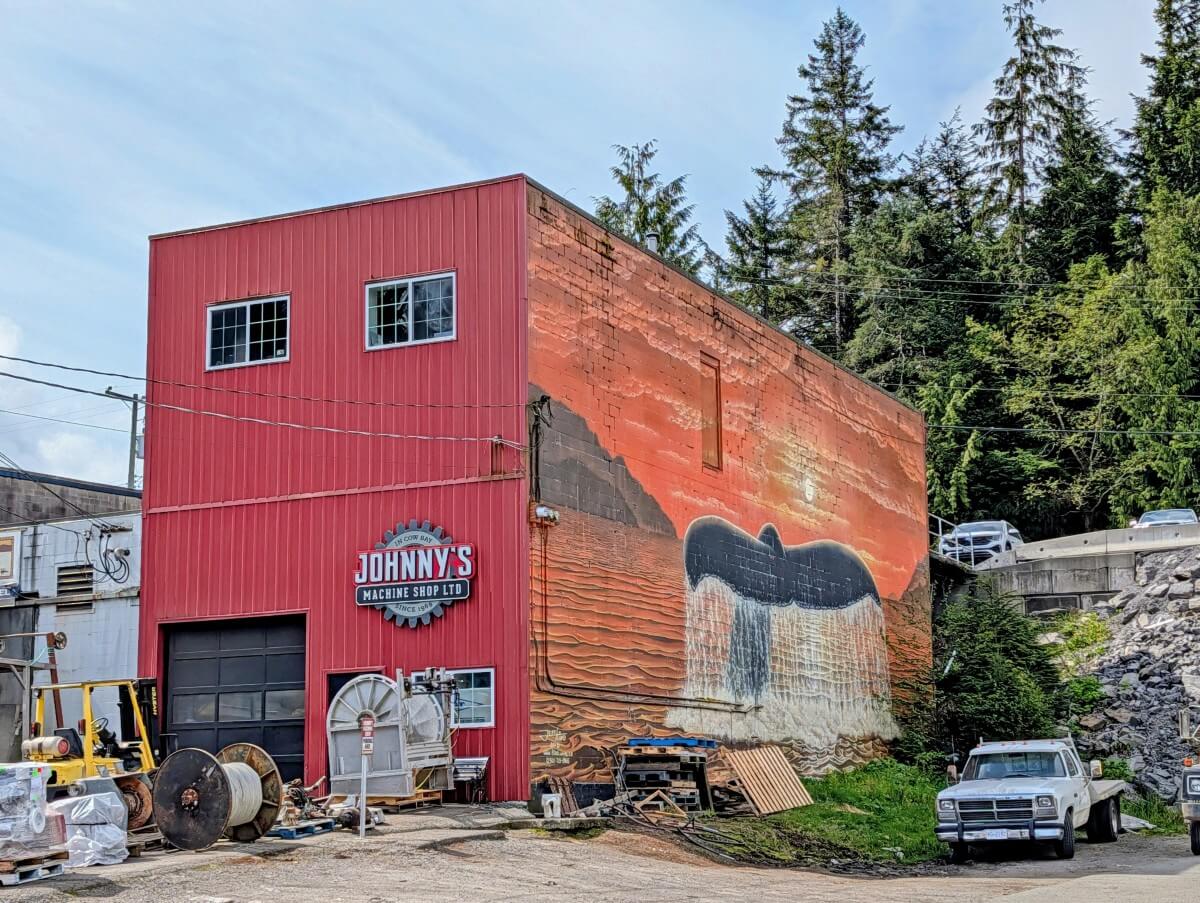
If you’re only in town for a short time, I’d recommend a mix of day 1 and 2 – book a tour to get out onto the ocean, explore Cow Bay and then check out either the Museum of Northern BC or the North Pacific Cannery.
No car? No problem! Almost all of the recommended activities are accessible by foot or bus.
Morning
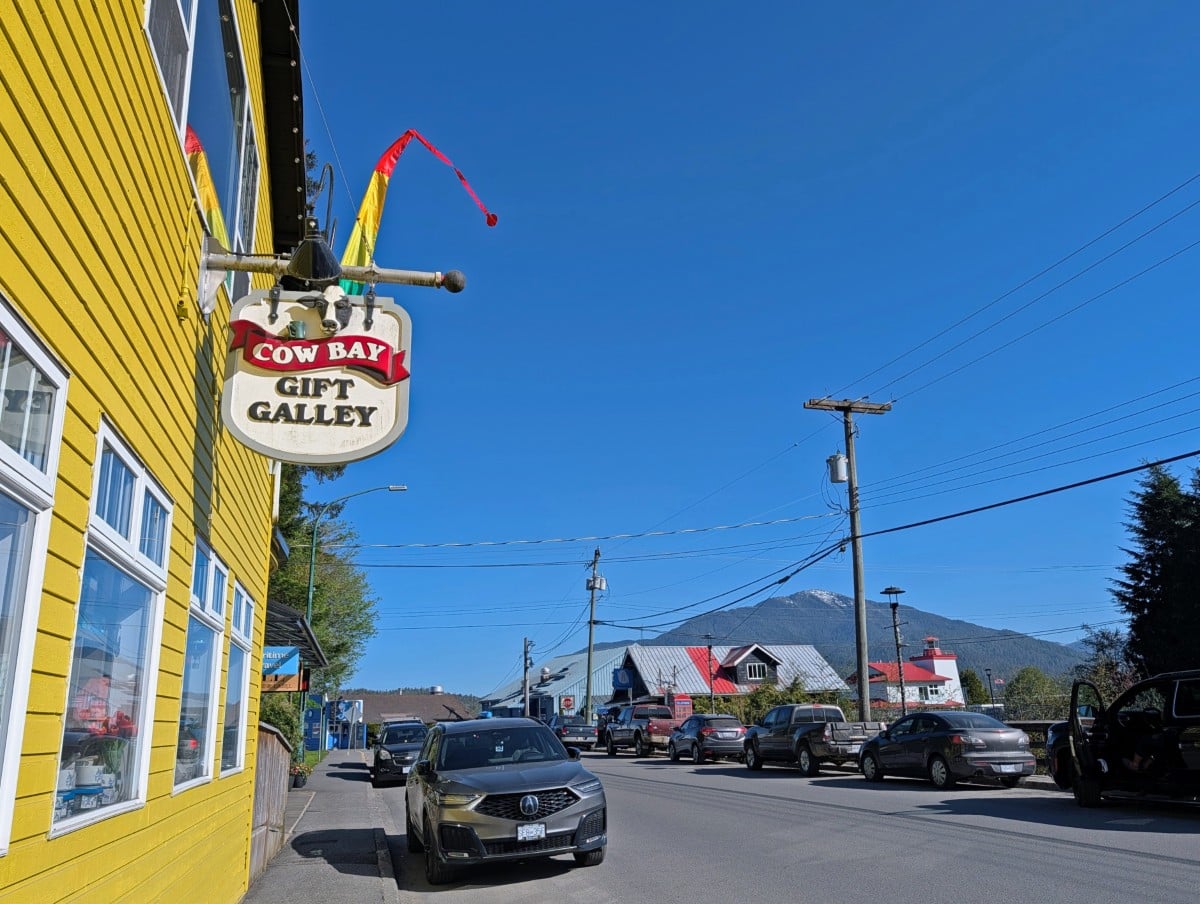
Take some time to get your bearings in Prince Rupert. A good way to do this is to head to colourful Cow Bay, Prince Rupert’s core tourist area. The peculiar name comes from a clearly eventful moment in 1908 when a Swiss farmer unloaded a herd of cows from a barge.
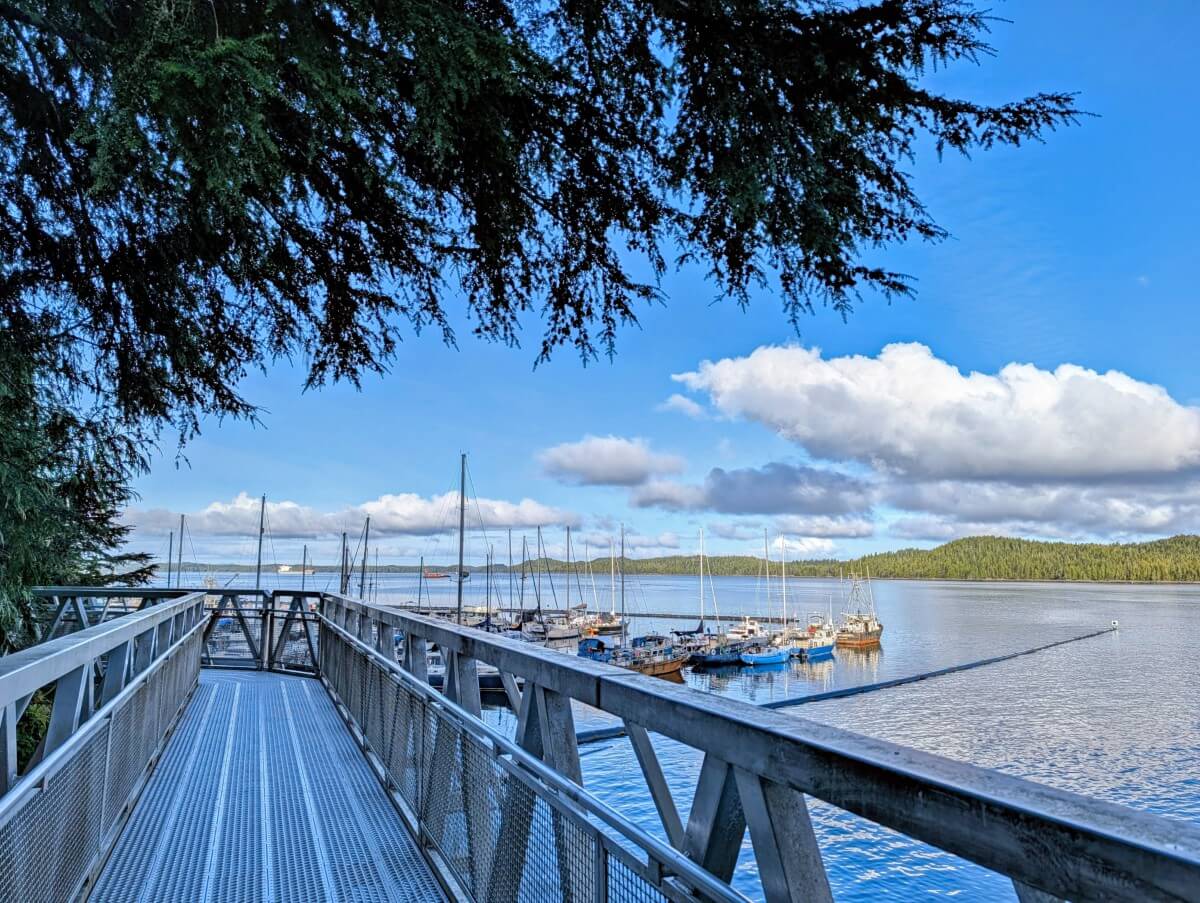
Enjoy a coffee or a light breakfast from Cowpuccino’s, a child and dog friendly spot that just celebrated its 30th anniversary. Wander the surrounding boutiques and gift shops, making sure to stop by the Visitor Centre (‘the Outpost’) in the bright blue Atlin Terminal at the marina.
For lunch, consider picking up a sweet treat or two from Saltwater Bakery – the croissants get rave reviews. Hungry for more? Dolly’s Fish Market or Bob’s on the Rocks are both worth considering, depending on your plans for the rest of the day.
There are a few ways to spend the afternoon, based on what you’re interested in and how far you’d like to venture.
Afternoon
Combine hiking and culture with a walk along the Rushbrook Trail and a trip to the Museum of Northern British Columbia.
- The Rushbrook trailhead is 1km from Cow Bay, located in the same place as Bob’s on the Rocks. This mostly flat 3.4 km return coastal trail offers beautiful mountain and island views. Allow at least an hour, plus travel time to the trailhead.
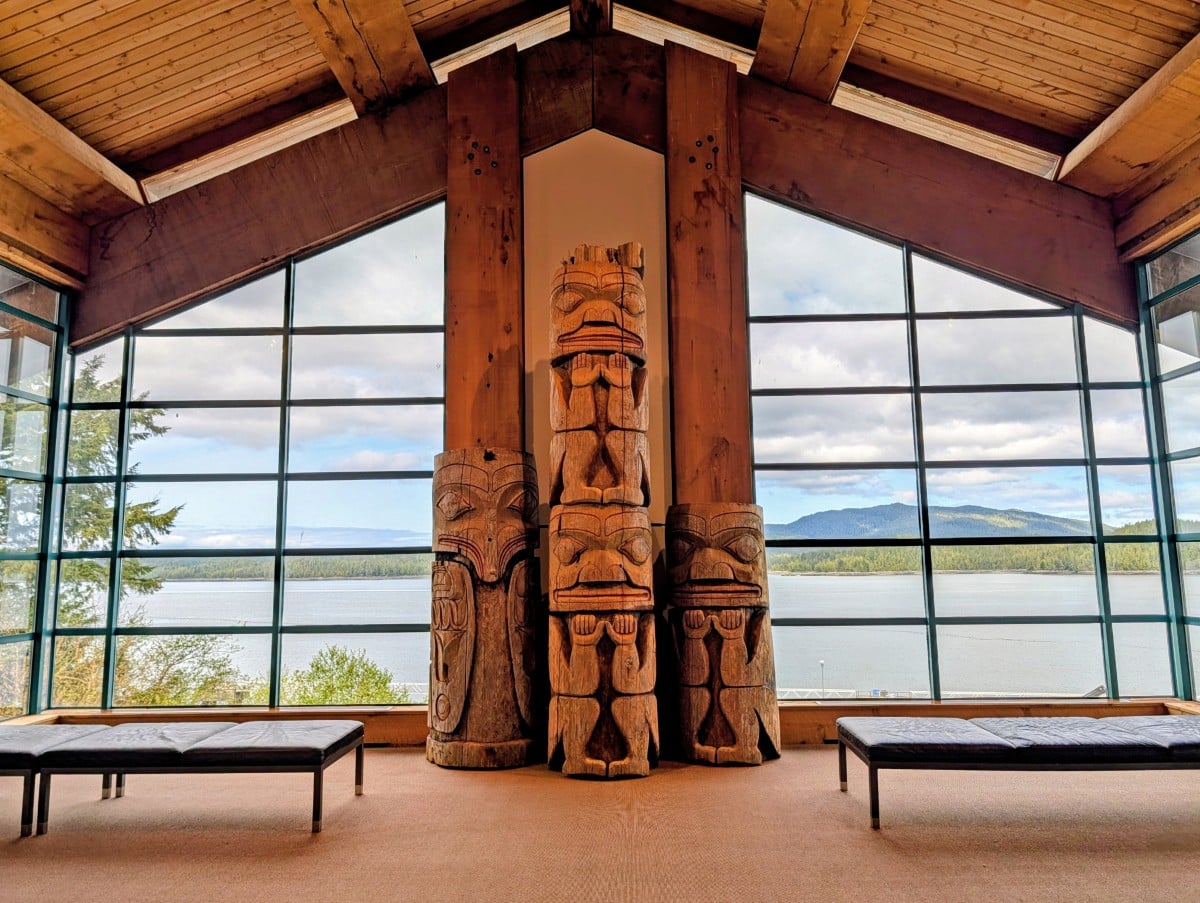
- Housed in a cedar structure designed in the style of a longhouse, the Museum of Northern British Columbia highlights the Indigenous cultures of the region. The collection includes carvings, masks, ceremonial objects, regalia and totem poles. It’s usually open until 4pm.
For an immersive history experience, drive or take the bus to the North Pacific Cannery near Port Edward (about 20 minutes from Prince Rupert).
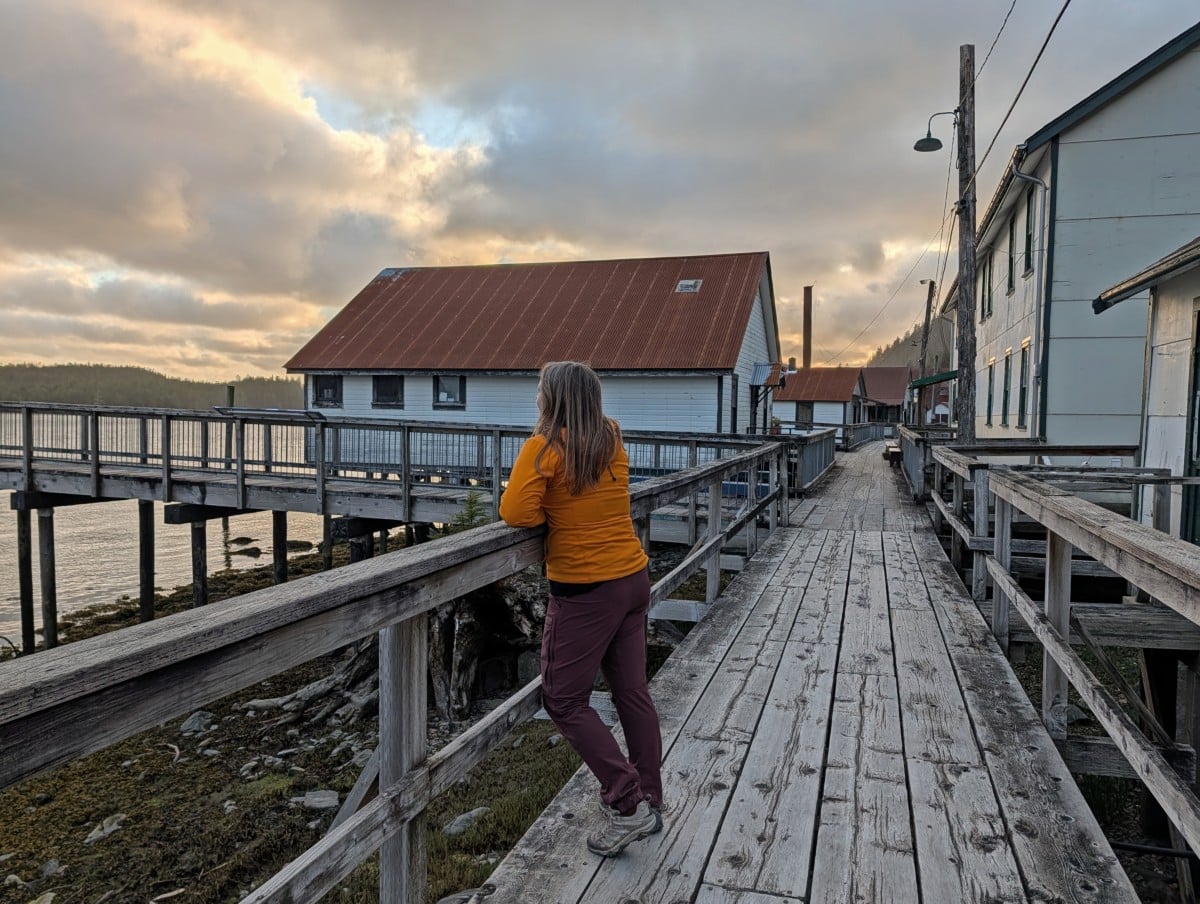
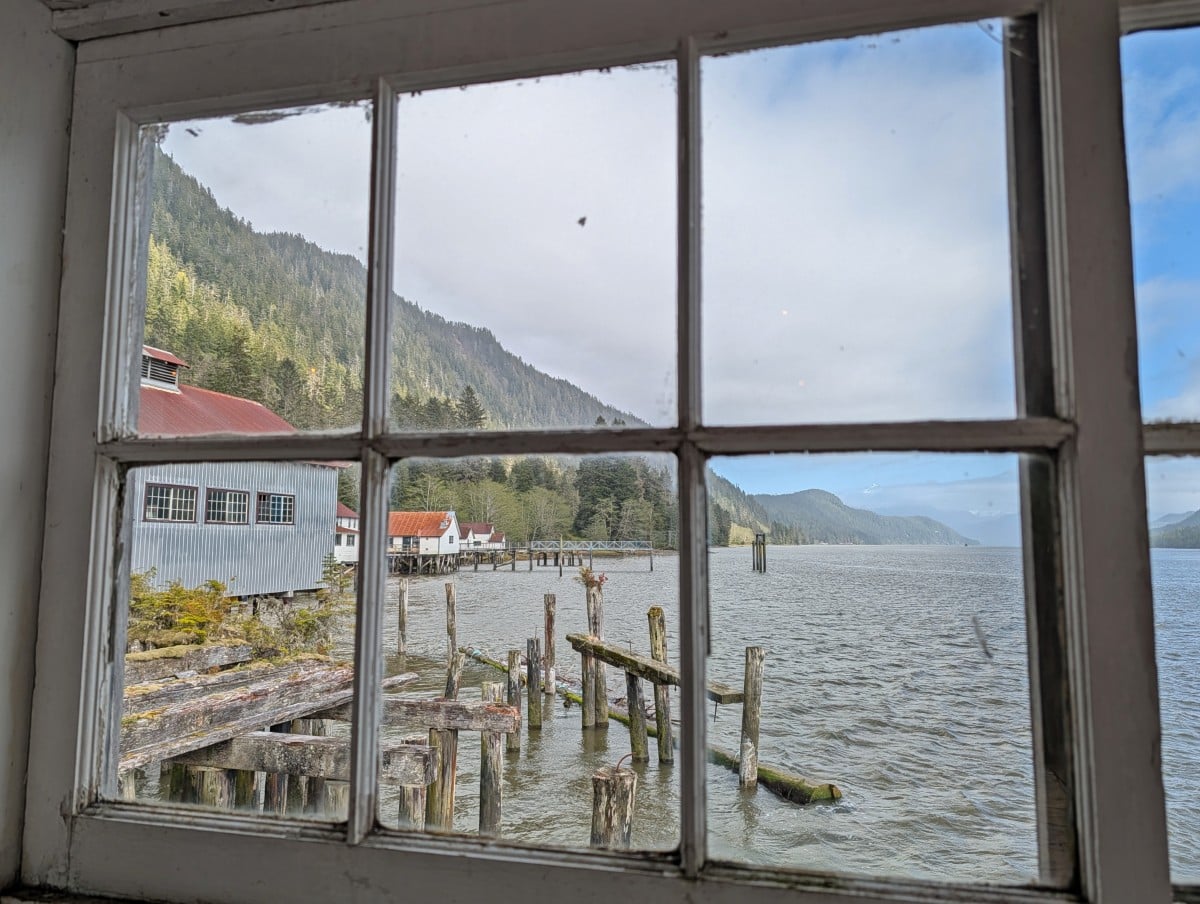
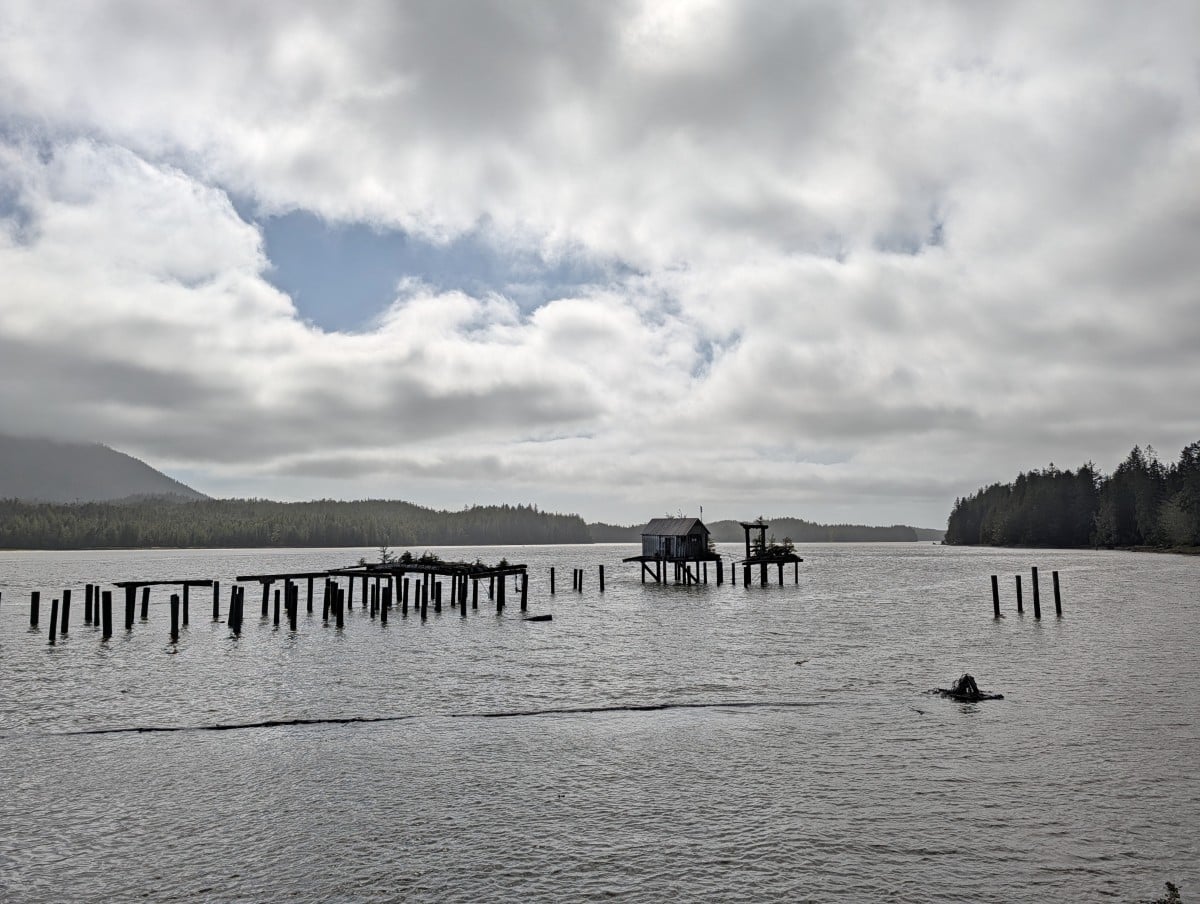
This national historic site is BC’s oldest surviving salmon cannery and it really is impressive to see. With its restored buildings and boardwalk, it’s easy to step back in time and imagine life when salmon fishing was the way of life in this area.
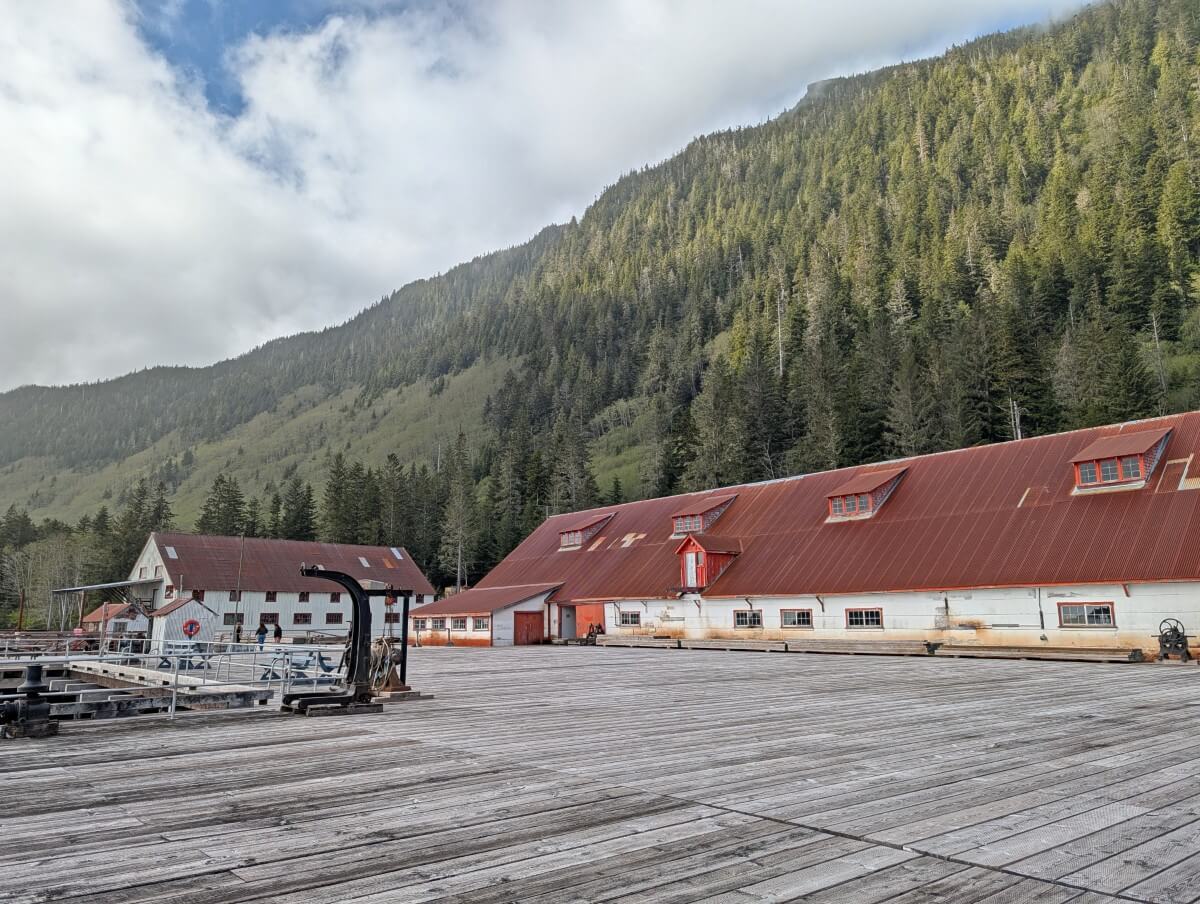
- At one time, as many as 80 different canneries dotted the BC coastline. This cannery on Inverness Passage was built in 1889
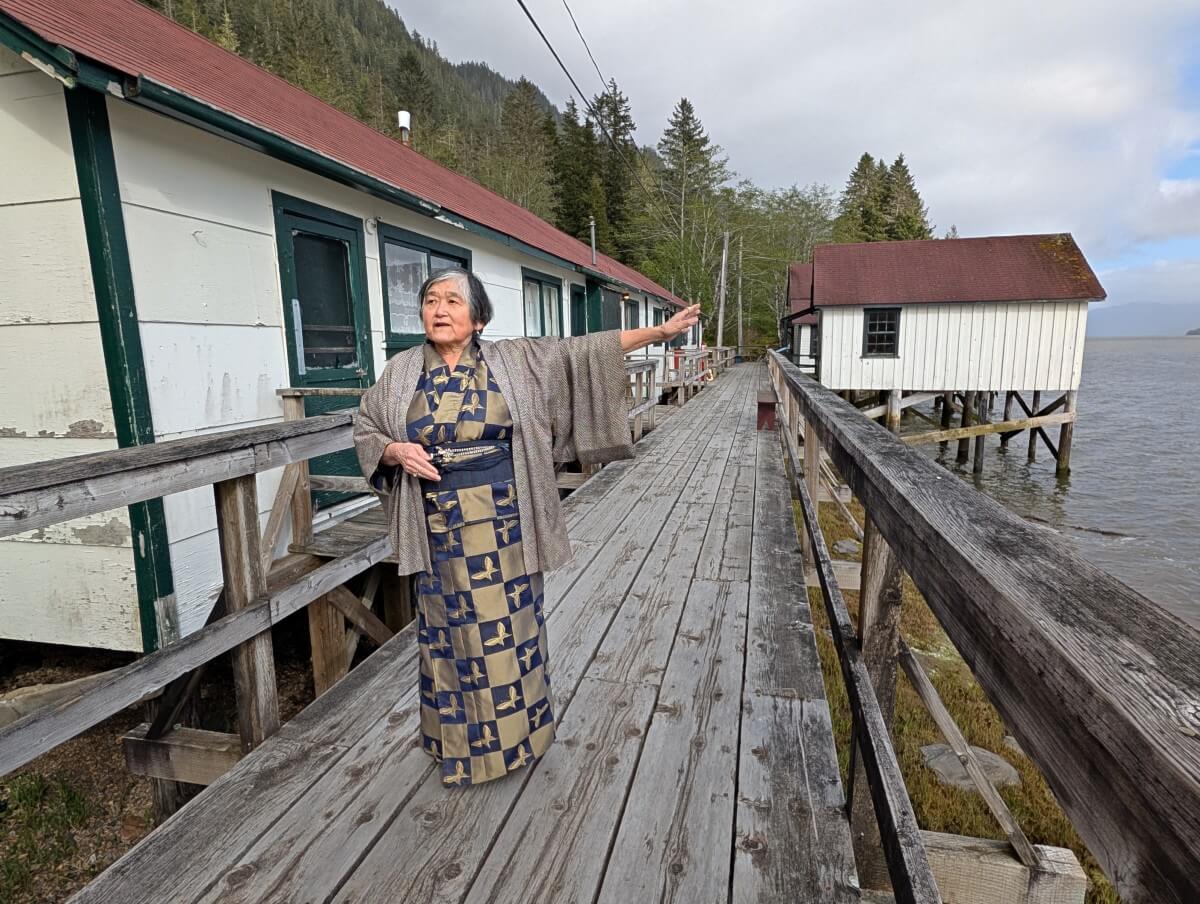
- Be sure to take a guided tour to discover how the cannery complex operated and more about the 600+ seasonal workers that called it home.
- Mama’s Mess House Cafe serves locally inspired food right on the boardwalk from 11am to 4pm. I’d suggest getting the 12.30pm bus from Prince Rupert (extra fee), grabbing lunch and then joining the 2pm tour
If hiking is your focus, head to the Buntze Rapids Trail. It’s about 6km out of town. We sadly didn’t have time to check out this trail but it is highly recommended by locals and visitors alike.
- This easy 5.4km loop trail traverses through an old growth forest droped in mosses and lichens to reach a viewpoint platform above the rapids. There are interpretive signs along the way.
- If you can, plan your trip within an hour of low or high tide, when the water seems to reverse.
- Consider visiting the Museum of Northern British Columbia before heading to the trail
48 hours in Prince Rupert: Day 2
As I was advised by many locals, you simply must get out onto the water while visiting Prince Rupert. The ocean defines life here, shaping both daily rhythms and the region’s history.
Morning
I suggest exploring Prince Rupert’s spectacular coastline in one of four different ways:
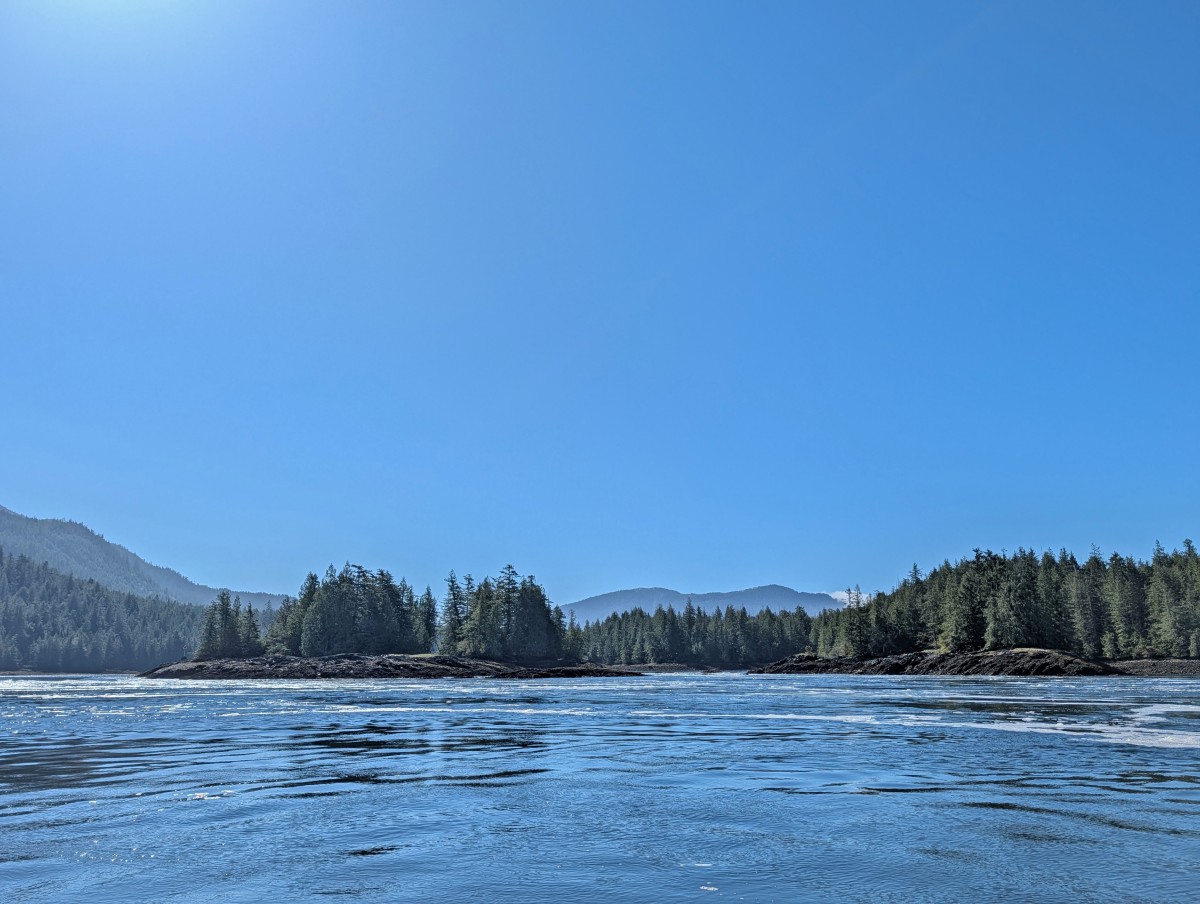
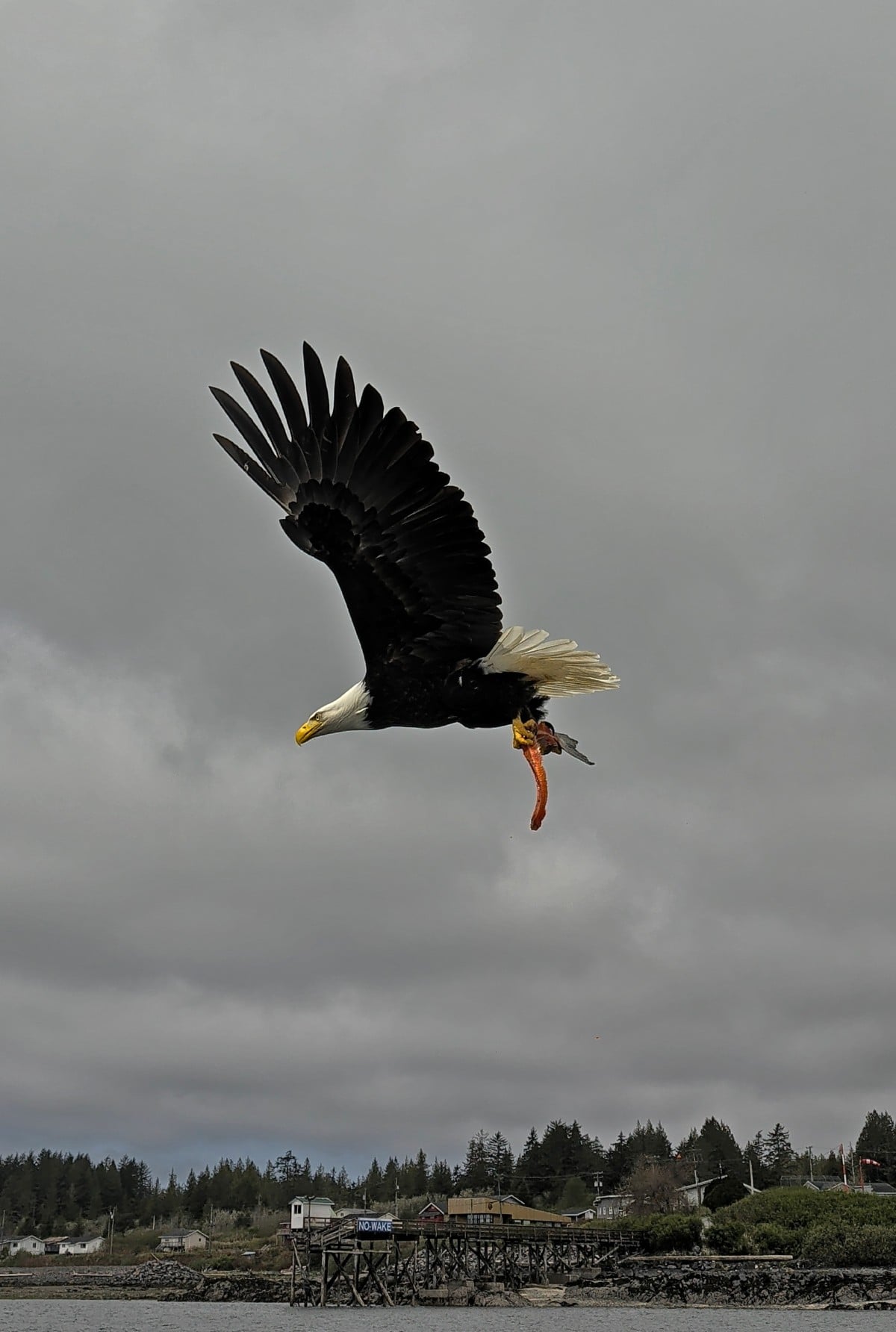
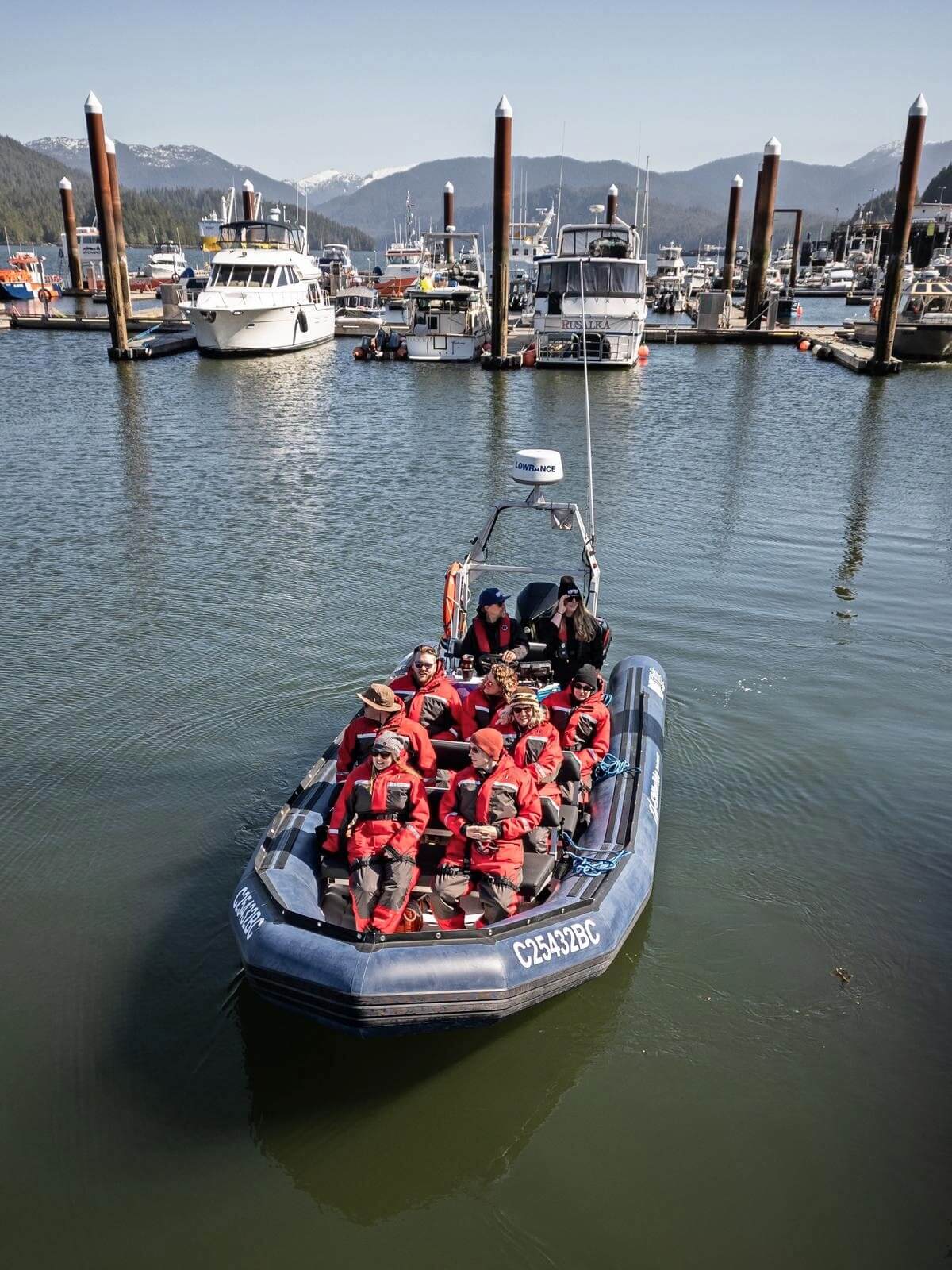
- 2 to 3 hour boat tour with RIBTide Tours. Leaving from Cow Bay Marina, choose between a shorter scenic cruise around the harbour or a longer excursion to the outer islands. On the two-hour tour, we saw Butze Rapids, bald eagles, seals, and plenty of misty mountain views
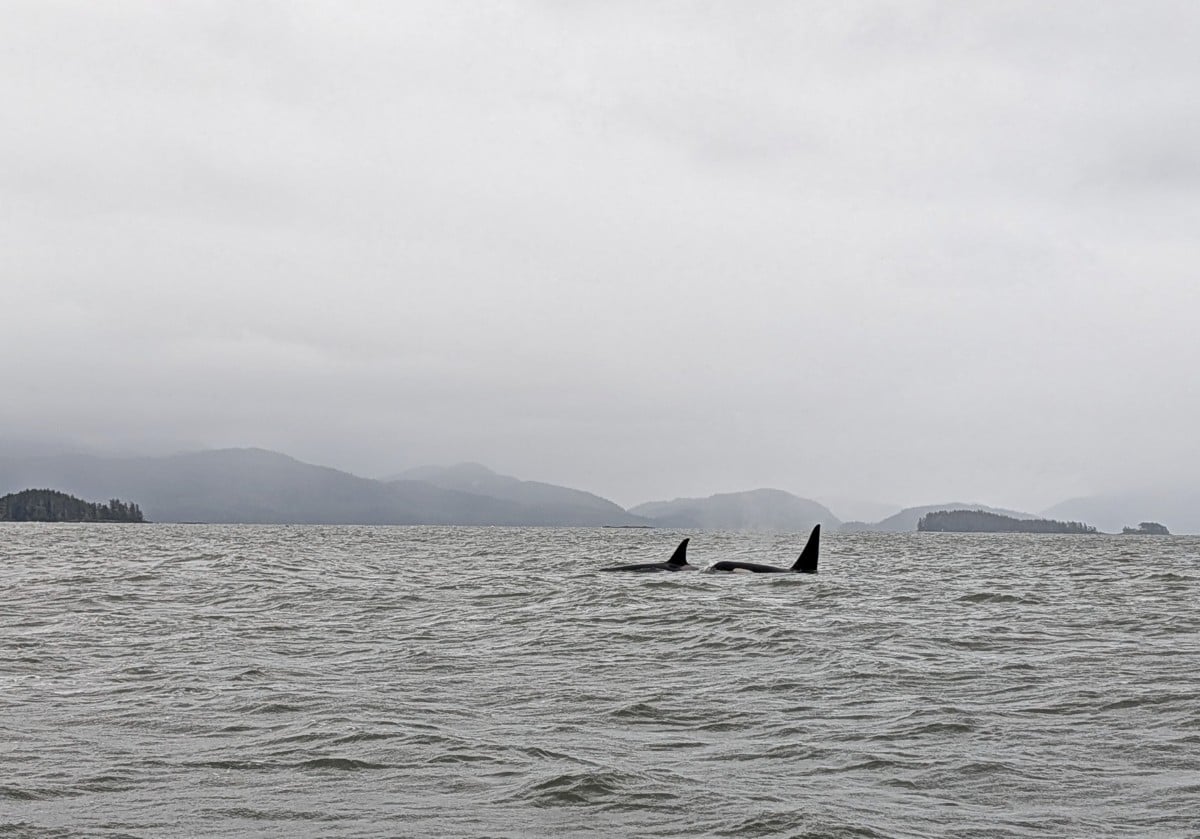
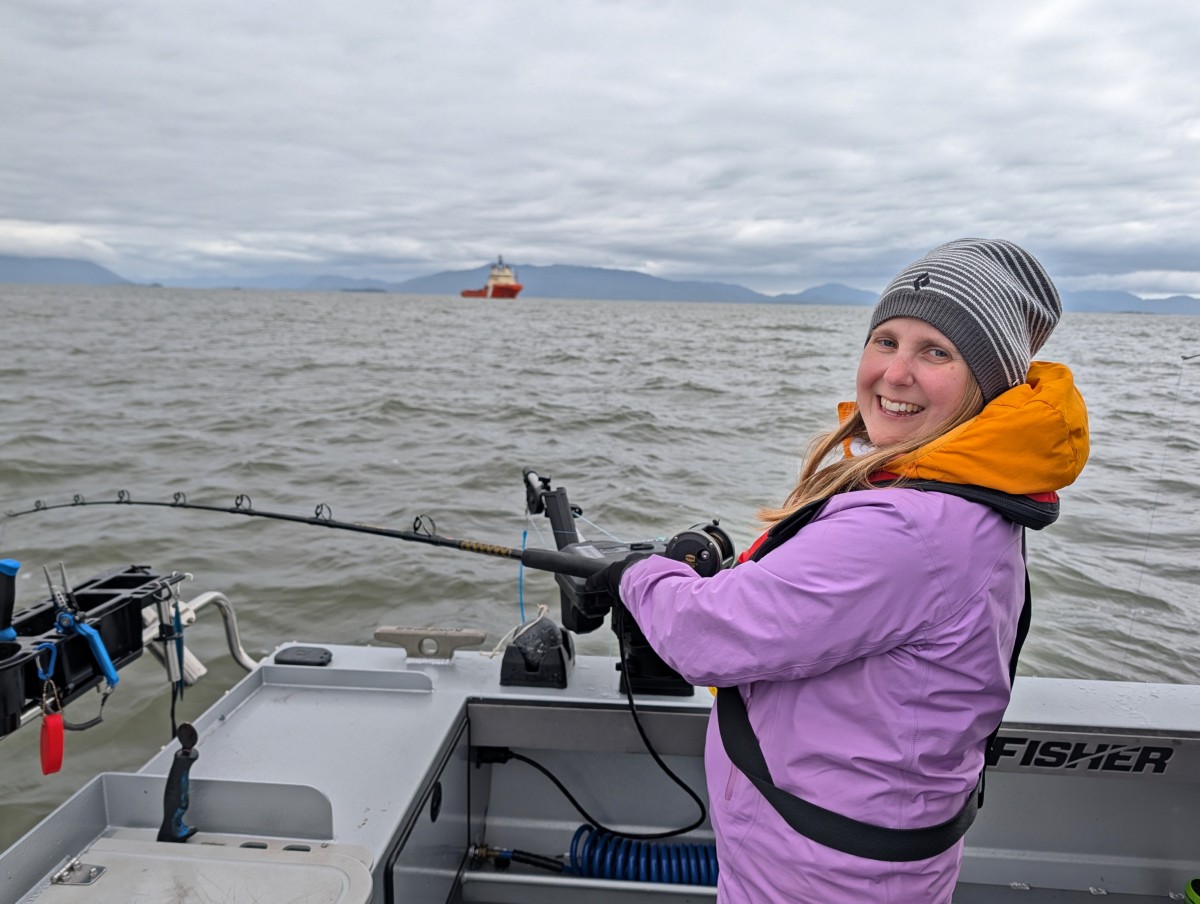
- A half-day or full-day fishing charter. We joined James from Thin Blue Lines Fishing Charters for the day, who was wonderfully patient with our group of novice anglers. Our catch included salmon, rockfish, black cod (sablefish), as well as both Dungeness and red rock crab. And we saw orcas!
- Kayak adventre. Explore sheltered inlets and pristine beaches on a guided tour with Skeena Kayaking. They also rent kayaks from Cow Bay and Kloiya Bay, with transportation available for a fee
- Full day grizzly bear watching tour. Travel to the remote wilderness of the Khutzeymateen Valley, known for having one of North America’s densest grizzly bear populations. Please note that these tours usually operate from mid May to the end of July only
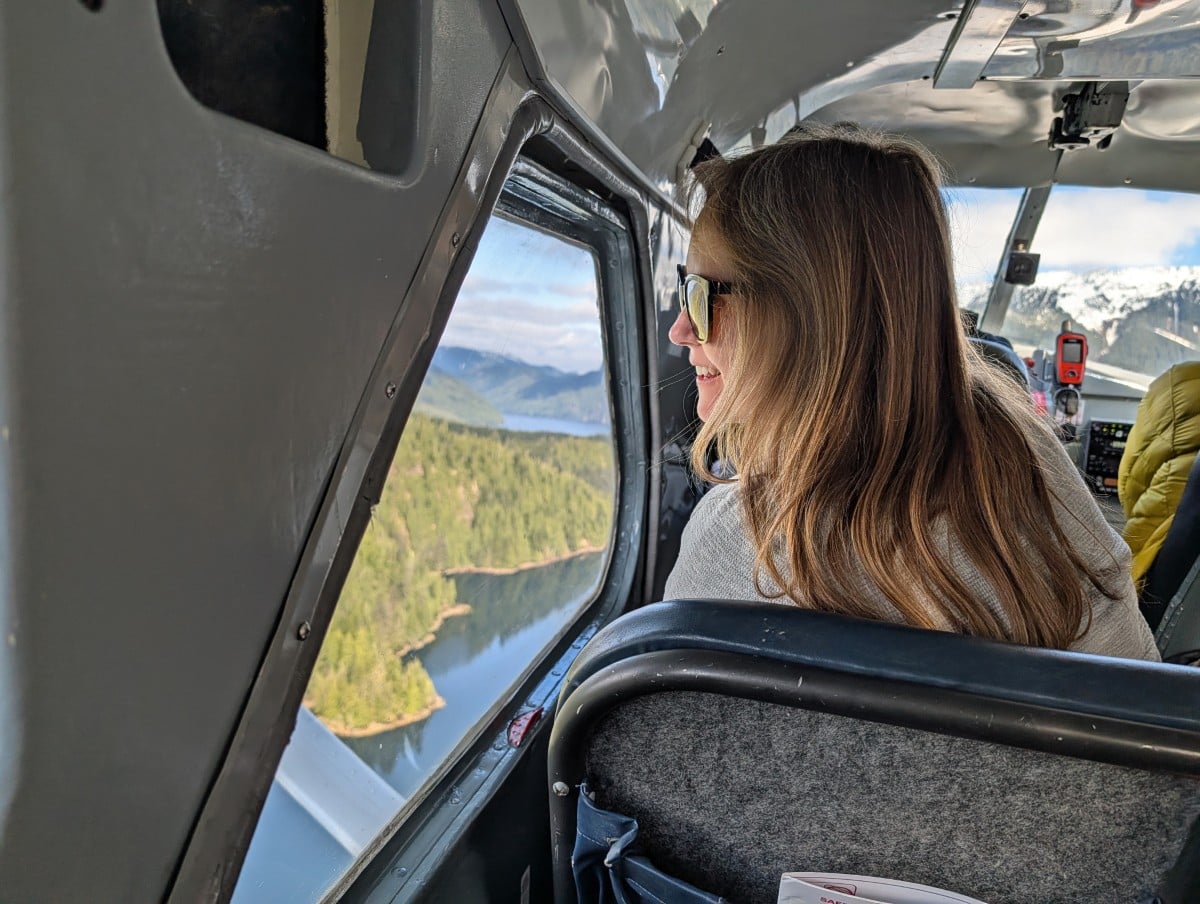
If you’re not a water person, how about flying? Inland Air Charters operate local flightseeing tours. Tours typically run for about an hour, with several destination options available.
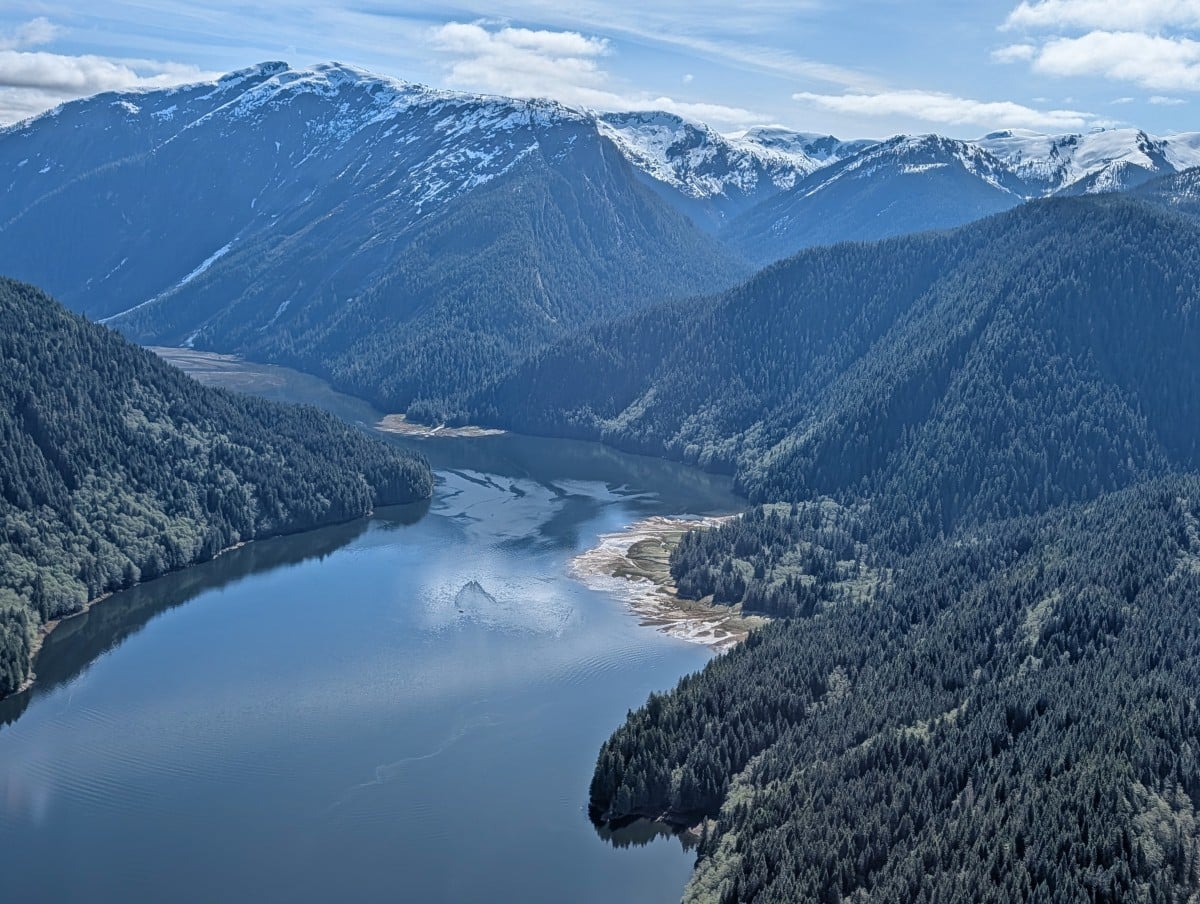
Preston, our pilot, took us to his favourite area, with views of endless snow capped mountains, steep granite-walled fjords and Khutzeymateen Park, where we spotted grizzlies.
Afternoon and evening
Back on dry land, use any remaining time to enjoy one of the activities mentioned above (such as the Rushbrook Trail or the Museum of Northern British Columbia). Some more ideas:
- Swing by Pacific Mariners Memorial Park to check out the views and learn about how the Kazu Maru, a tiny Japanese fishing boat, ended up here
- Enjoy a peaceful walk in the beautiful Sunken Gardens behind the Courthouse, all maintained by volunteers
- Stroll the Millennium Walkway along the shoreline from Cow Bay to Rotary Waterfront Park
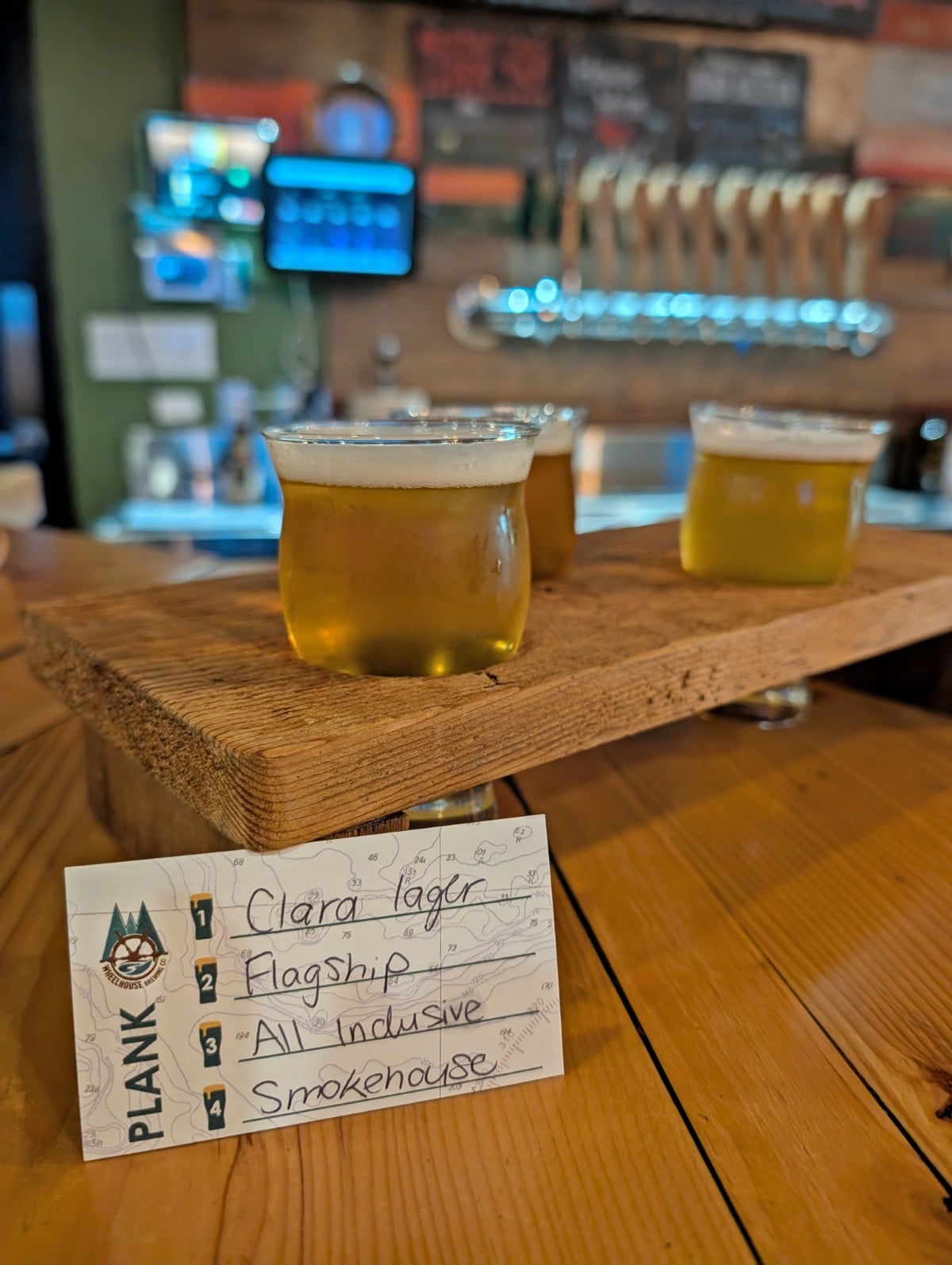
- Sip a flight of locally made beers at Wheelhouse Brewing Company. My favourite is the All Inclusive Sour (pineapple and coconut flavours, yum). The Scurvy Dog Spruce Ale is made with local spruce tips
- Hike the rugged and usually muddy Tall Trees Trail to a spectacular viewpoint high above the city. Around 9km return with 550m elevation gain
- Learn more local history at the Kwinitsa Railway Museum or the Prince Rupert Fire Museum
- Hot day? If you have a vehicle, head to Diana Lake for a swim and a picnic. Spawning salmon can be seen in the creek in August and September
Where to eat and drink in Prince Rupert
Seafood lovers will feel right at home in Prince Rupert. The local fishing industry supplies restaurants with a plenty of fresh seafood, including halibut, Dungeness crab, salmon, rockfish and lingcod. Fish and chips, seafood chowder and fish tacos are staples at many local restaurants.
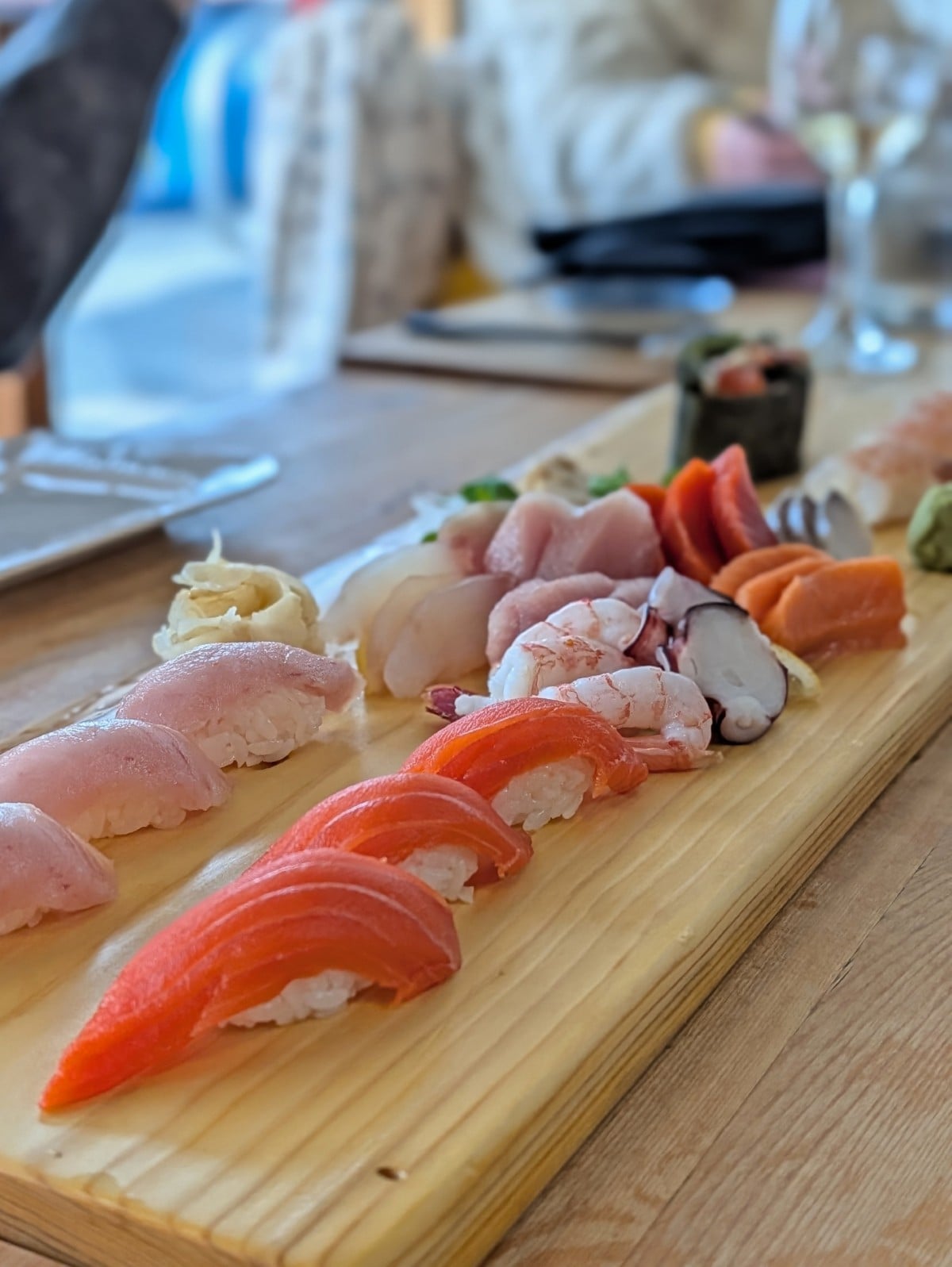
The best dining experience in town is found at Fukasaku in the vibrant waterfront Atlin Terminal in Cow Bay.
Local sourcing and sustainability are at the heart of this cosy 14 seat sushi/seafood restaurant, so much so that all seafood is sourced directly from BC fishermen. Bookings are essential, with at least 48 hours advance notice needed for the incredible seven course omakase experience.
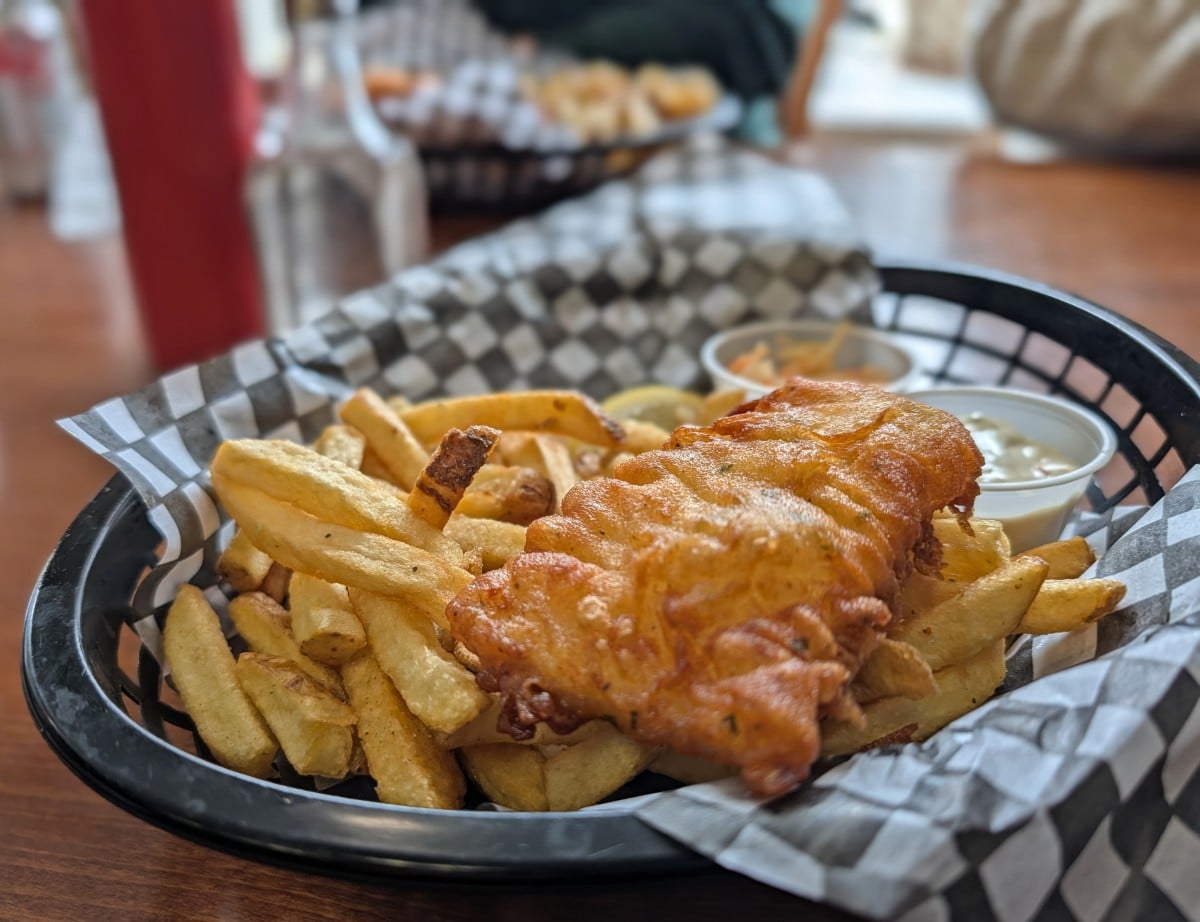
For fried fish, head to Dolly’s Fish Market or Bob’s on the Rocks. Operating for 25 years, Dolly’s is a Cow Bay institution. This casual spot is next door to a processing facility, where you can get your fresh catches all packed up for the road. The star of the show is the halibut, encased in a thin, crispy batter.
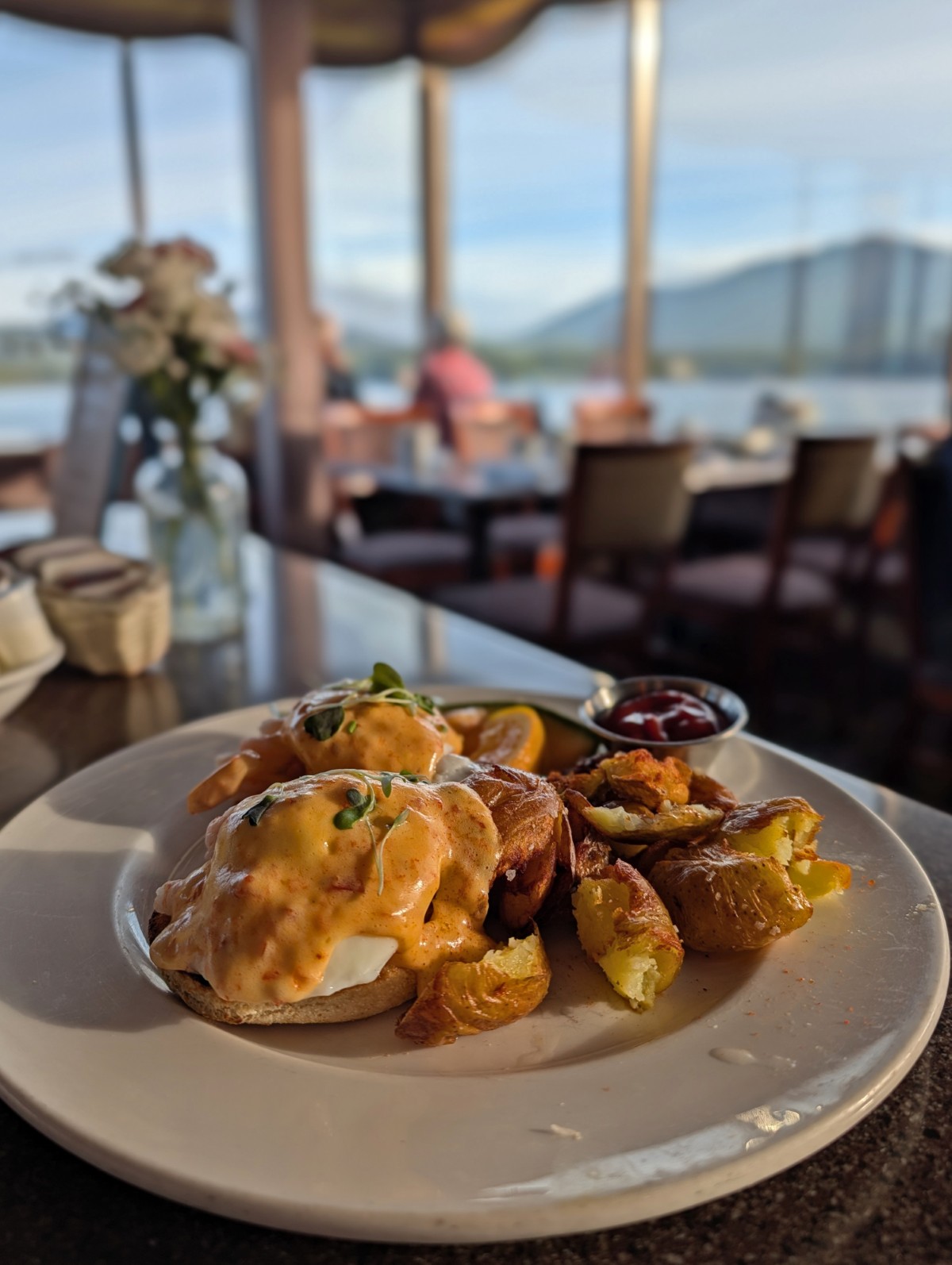
While I only visited for breakfast, the Waterfront Restaurant at the Crest Hotel is well known for its seafood. The elegant dining room offers sweeping ocean views, with tables positioned to take full advantage of them.
Not a fan of seafood? I’d recommend heading to Wheelhouse Brewing Company to enjoy a beer and one of their creatively topped wood fired pizzas. All of these spots offer other options, including Fukasaku, which has a solid vegetarian menu (as rated by me, a former vegetarian).
Where to stay in Prince Rupert
Prince Rupert has a wealth of hotels, inns, guesthouses and B&Bs in the downtown area. I’d also recommend looking outside of town, towards Port Edward, where you can stay in one of the historic canneries that helped shape the region’s fishing heritage.
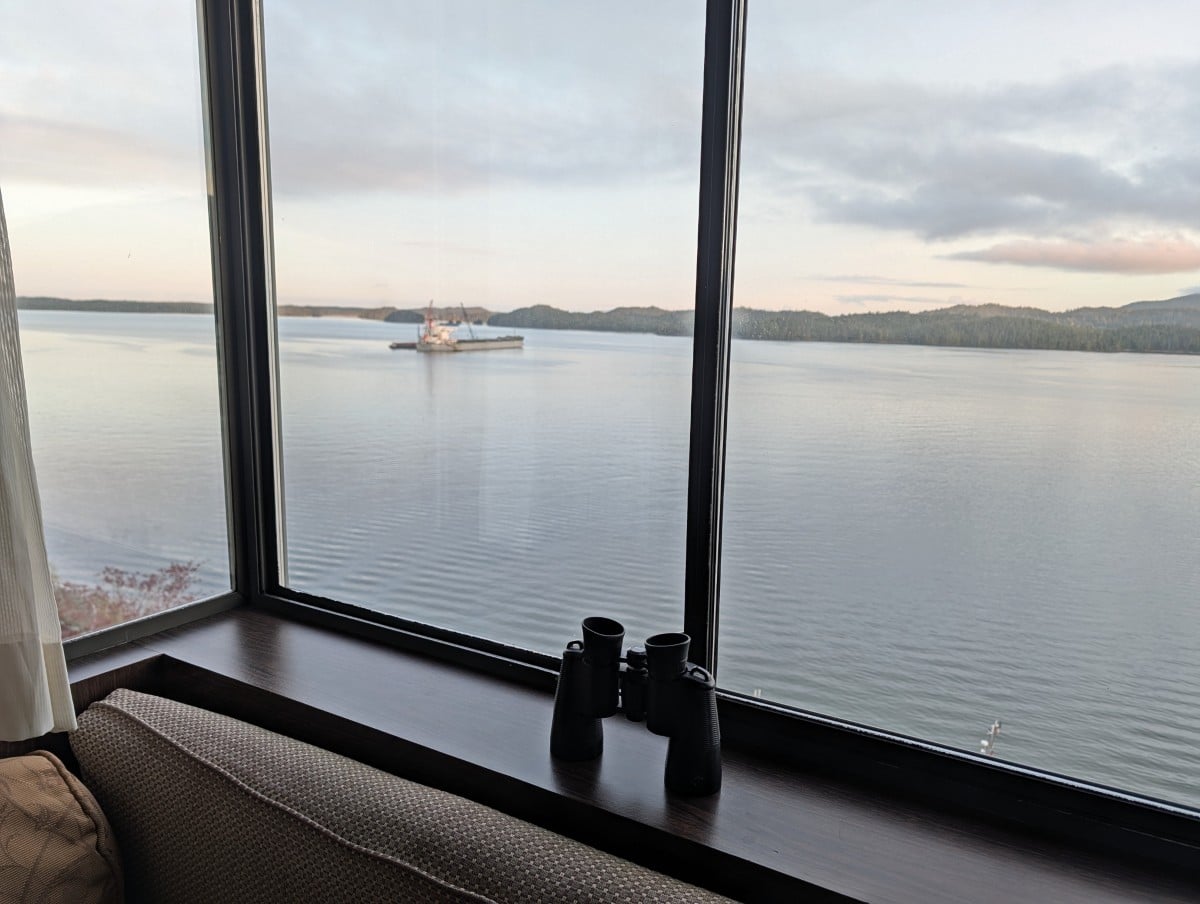
My top pick for accommodation in Prince Rupert is the Crest Hotel, which sits high on a hillside overlooking the cruise terminal.
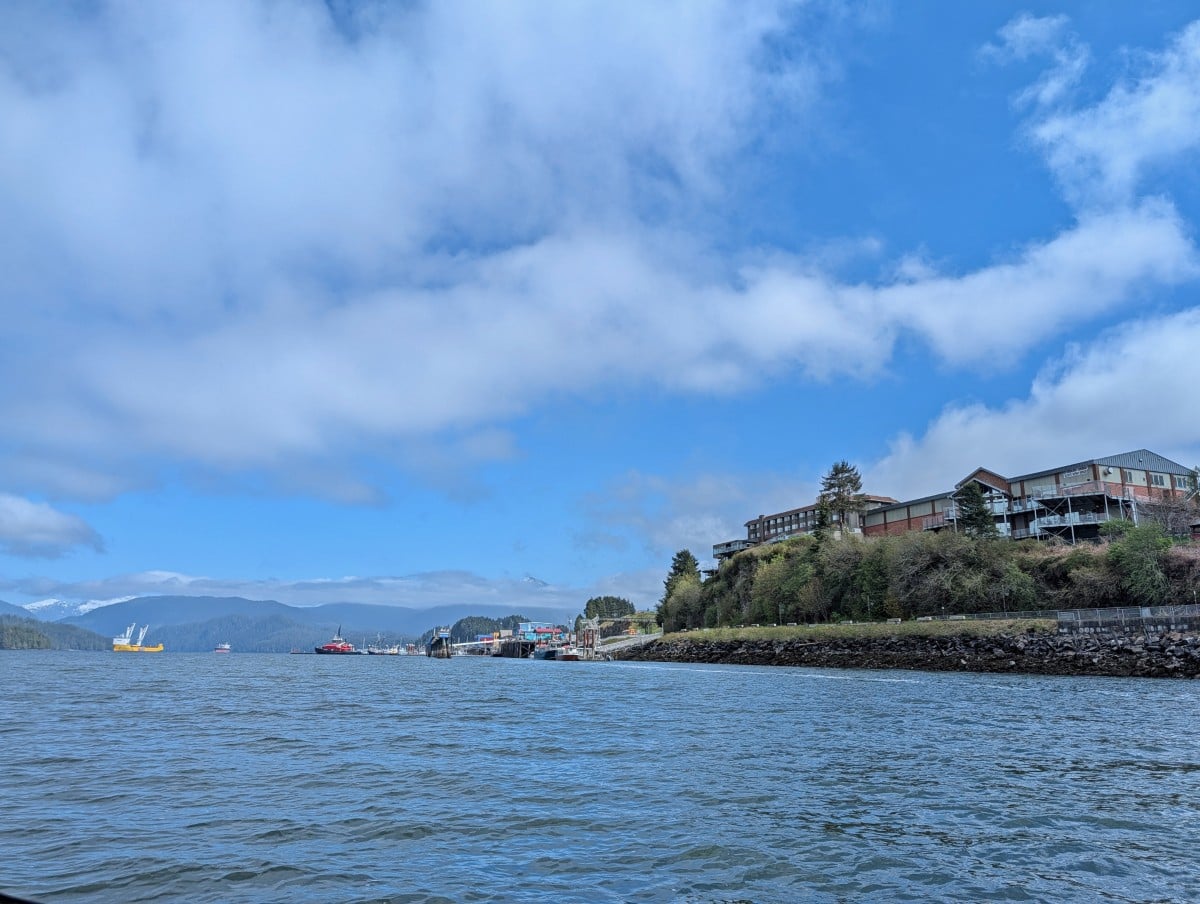
Many rooms enjoy views of the ocean – mine had a lovely seat built into the window.
The Crest Hotel is ideal for exploring Cow Bay and the downtown area on foot. It’s right next door to the Museum of Northern British Columbia, for example. Breakfast is served downstairs in the Waterfront Restaurant, which also made my list of the best places to eat (above).
Cassiar Cannery
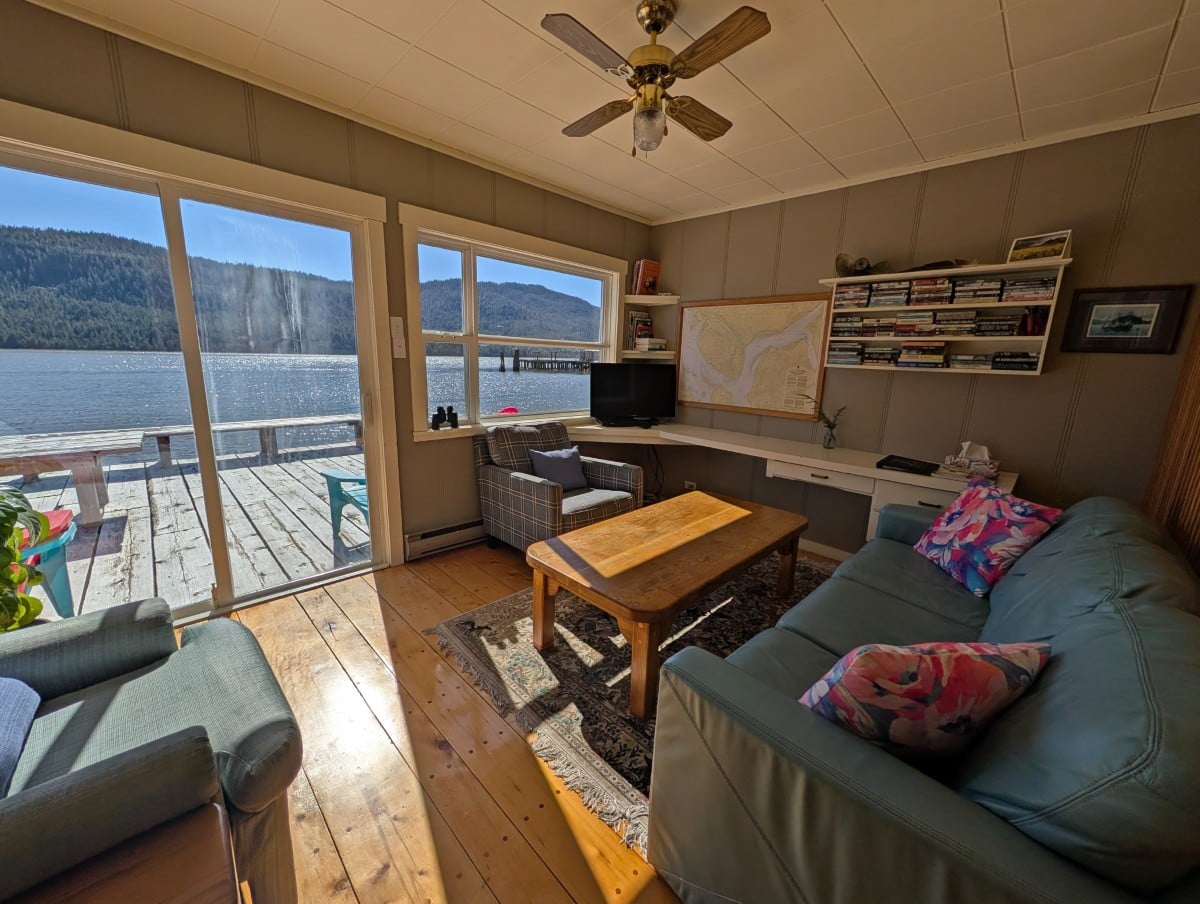
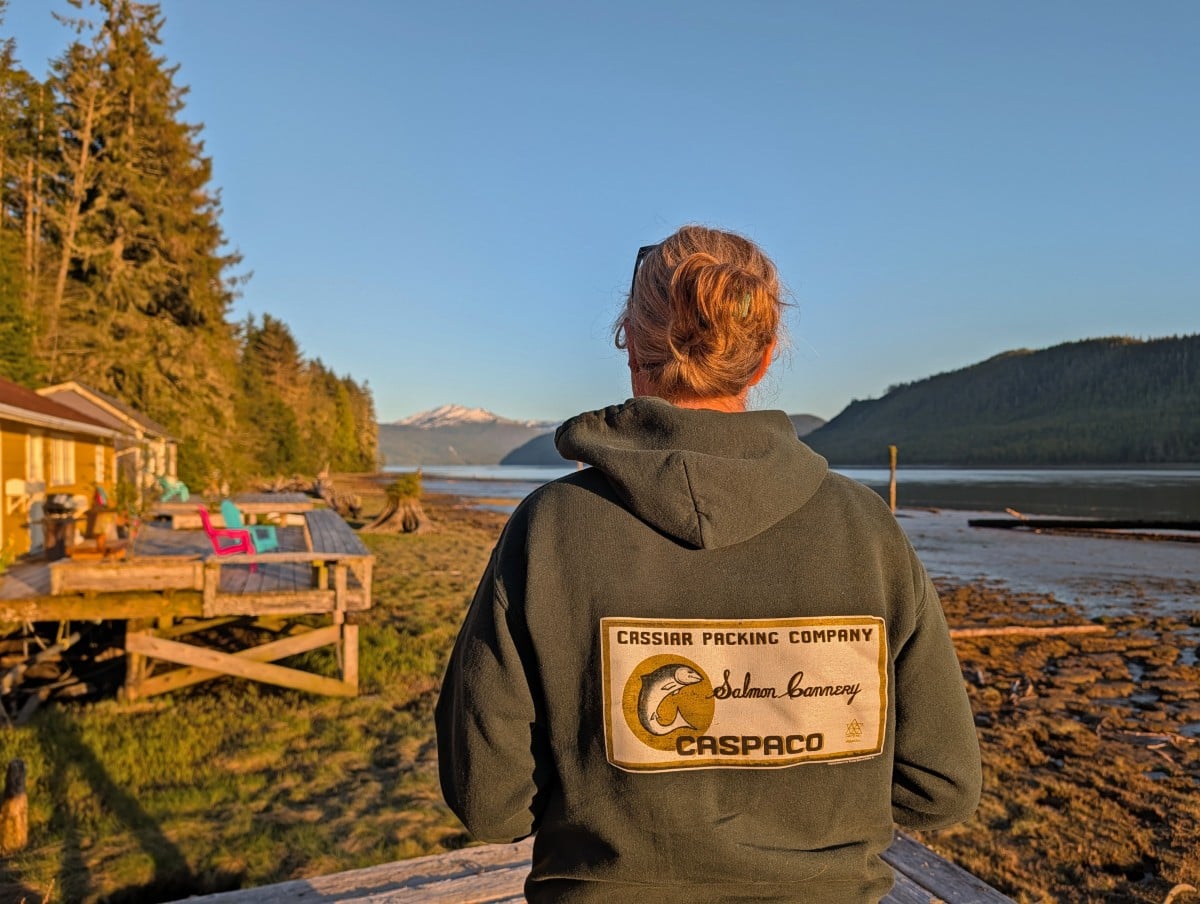
Established in 1889 and operating for almost a century, Cassiar Cannery was the last salmon cannery standing on the Skeena River. It was purchased by Justine and Mark in 2006 and transformed into a waterfront retreat, with the former manager’s houses becoming colourful guesthouses.
I stayed in ‘Coho House,’ a beautifully restored bright red three-bedroom home with a huge deck, full kitchen and stunning water views from nearly every window.
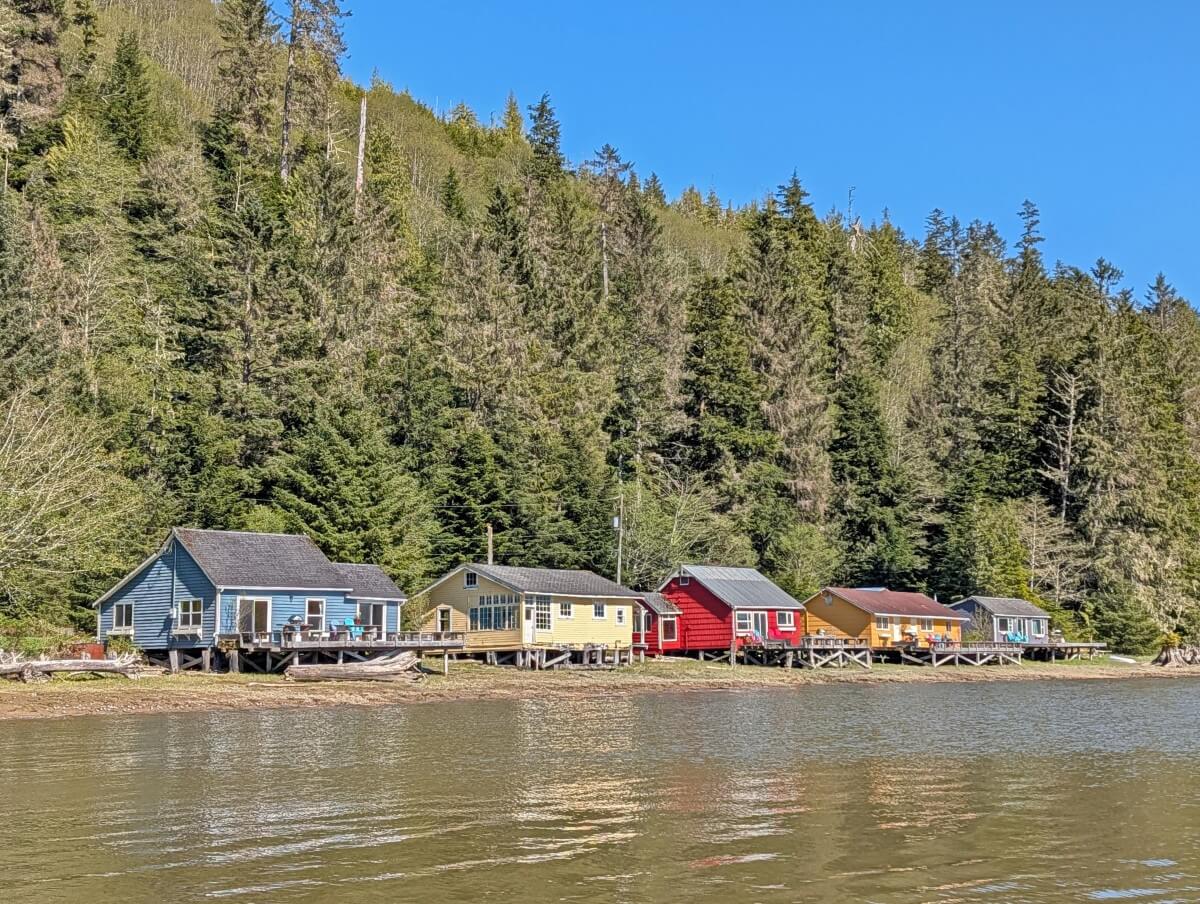
Much of the wooden furniture and décor was crafted on site. There is a two night minimum most of the year, three nights in summer.
Only 25 minutes from Prince Rupert and just down the road from the North Pacific Cannery, the Cassiar Cannery makes a great base for anyone looking to stay somewhere a little more secluded and full of ambience. I loved watching the sun set behind the pillars of the old cannery buildings.
North Pacific Cannery
For a unique overnight experience, head to the North Pacific Cannery. There are 14 rooms in the historic bunkhouse (shared bathrooms and kitchen), which has more than a few ghost stories.
The recently renovated ‘Japanese Triplexes’ are a great option for a more private stay. Up to four people can stay in these newly renovated three-room units, complete with kitchenettes and clawfoot tubs. Bring your own food as there is nothing open locally in the evening.
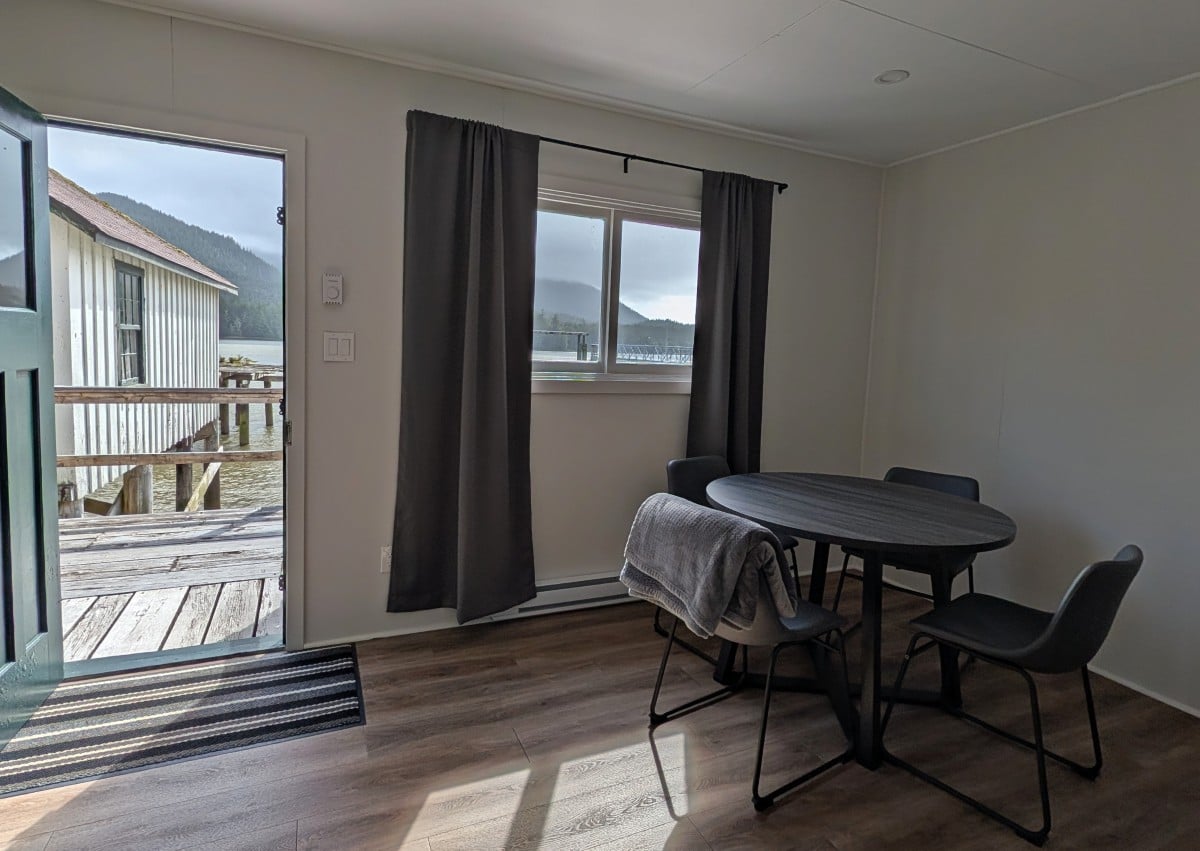
I found it a real treat to be able to fully immerse myself in the history of the site and explore it after hours with only a handful of other visitors around. Both the bunkhouse and triplexes are located right on the boardwalk, with ocean views from most rooms.
There is just one caveat to keep in mind when booking – the CN railway line passes right behind the accommodation. There’s around 20 to 25 trains daily. While they don’t blast the horn, the noise and vibration of the trains may bother light sleepers (bring ear plugs!)
Other posts you may find helpful
Campbell River to Port Hardy Road Trip Guide: Best Places to Stop
Best BC Road Trips: 12+ Routes, Maps & Tips by a Local
Into the Great Bear Rainforest: Grizzly Bear Watching from Telegraph Cove
BC’s Best Backpacking Trips: Our Favourites and 60+ More Suggestions
Check out these recently published posts:

One half of the Canadian/British couple behind Off Track Travel, Gemma is happiest when hiking on the trail or planning the next big travel adventure. JR and Gemma are currently based in the beautiful Okanagan Valley, British Columbia, Canada. Consider buying us a coffee if you have find any of our guides helpful!