
From British Columbia’s coast and the peaks of the Rockies to the wide-open prairies of Saskatchewan and highlands of Nova Scotia, Canada’s national parks offer a spectacular variety of camping experiences from coast to coast.
Unsurprisingly, a lot of people want to camp in these beautiful protected areas. The problem is, demand outstrips supply.
Having a reservation is the most stress free way to explore and camp in Canada’s national parks. It secures you a spot, a guaranteed place to set up camp and peace of mind during your trip.

JR and I have explored many of Canada’s national parks, camping over 100+ nights over the last few years alone. Needless to say, we’ve become pretty familiar with the Parks Canada reservations process.
And in that time, we’ve picked up a trick or two, enabling us to score sites in some of Canada’s most sought after national park campgrounds in peak season.
This post shares pro tips and insights for using Parks Canada camping reservation system, including:
- Why you need to reserve
- Camping vocab you need to know
- How to make a reservation
- How to prepare for the reservation launch
- Reservation tips
- Other ways to secure a camp spot in Canada’s national parks
Whether you’re a new Parks Canada user or a seasoned camper, it is my hope that it will make the reservation process simpler and less stressful for you.
This post includes some affiliate links. If you click one of these and make a purchase, we may receive a small percentage of the sale.

Why you need to reserve to camp in Canada’s national parks
Canada’s national parks showcase many of the most beautiful places in the country. Many national park campgrounds are 100% reservable.
The most popular campgrounds are usually fully reserved soon after the reservations open in January/February, well in advance of the main camping season.
While it’s not impossible to make a reservation later on in the season, it is certainly more difficult. I’ll talk more about other options later.
A few national campgrounds still use first come, first serve systems and, again, it’s something I will discuss later in the guide.
In case you weren’t aware, camping within national park boundaries is only permitted in designated campgrounds.
Indeed, it is illegal to do otherwise as per the Canada National Parks Act. There are only a few, very specific backcountry (hike/boat/ride in) exceptions to this rule.
The definition of camping includes sleeping in a vehicle. To make it very clear – camping is not allowed in roadside pullouts, trailheads and day use areas, only campgrounds.
Backcountry users should be aware that having a reservation is mandatory for the vast majority of overnight trails in Canada’s national parks. It is not possible to just turn up at a backcountry site and see if there is a spare spot. Hikers must have a valid backcountry permit, which is issued with a reservation.

Important national park camping vocab
If you’re new to the world of park camping or Parks Canada, welcome! Before continuing, let’s review some key camping terms that will help you navigate the reservation process.
Allowed Equipment – The size and type of RV, tent, or vehicle a campsite that can fit on the selected campsite.
Backcountry campgrounds – Acessible only by foot, boat, or horse, with no vehicle access. They are more rustic than frontcountry sites but usually provide outhouses and clear tent spaces at a minimum. Some have designated tent pads or platforms, and may offer cooking areas with picnic tables, food caches and grey water disposal.
Campground – Collection of campsites, ranging from a handful of sites to hundreds.
Campsite – An individual site suitable for a single camping party (see below).
Camping party – Parks Canada allows a maximum of six people (including children) on each frontcountry campsite. In the backcountry, the maximum camping party size can vary – check the relevant national park for details.
Fire permit – Campfires are permitted inside provided metal rings or fire boxes, when a fire ban is not in place. A fire permit is required. This is automatically added to every reservation of a campsite with a fire ring and cannot be removed. If there is a fire ban, the fire permit fee will be refunded.
First come, first serve – These campsites are not reservable and are assigned on the basis of who arrived first.
Frontcountry campgrounds – There is vehicle access to each campsite. Sites are separated, with a designated camping area, picnic table and usually a campfire pit. Campgrounds provide drinking water and toilets (outhouses or flush) and may also offer playgrounds, showers and kitchen shelters.
Reservation launch day – The date that reservations open. Every national park has its own reservation launch day, sometimes different ones for frontcountry and backcountry
Operating dates/season – The dates that the campground is open to the public.
Reservable dates – The dates for which you can reserve a site.
Roofed accommodation or ‘comfort camping’ – Basic structures available to rent, a mix of small cabins, hybrid tents and tipis with sleeping platforms/beds. Other facilities vary and can include heating, seating, electricity, BBQs and more. Bedding is not provided and cooking is not allowed inside the structure.
Serviced campsites – Primarily designed for RV and trailers, these campsites will have electrical, water or sewer hook-ups (or a combination of). Most Parks Canada campsites are unserviced.
Walk-in site – Frontcountry camping that is accessible by foot only, designed for campers who are using a tent.
New to camping altogether? You may find our Car Camping 101 or Backpacking 101 guides helpful.
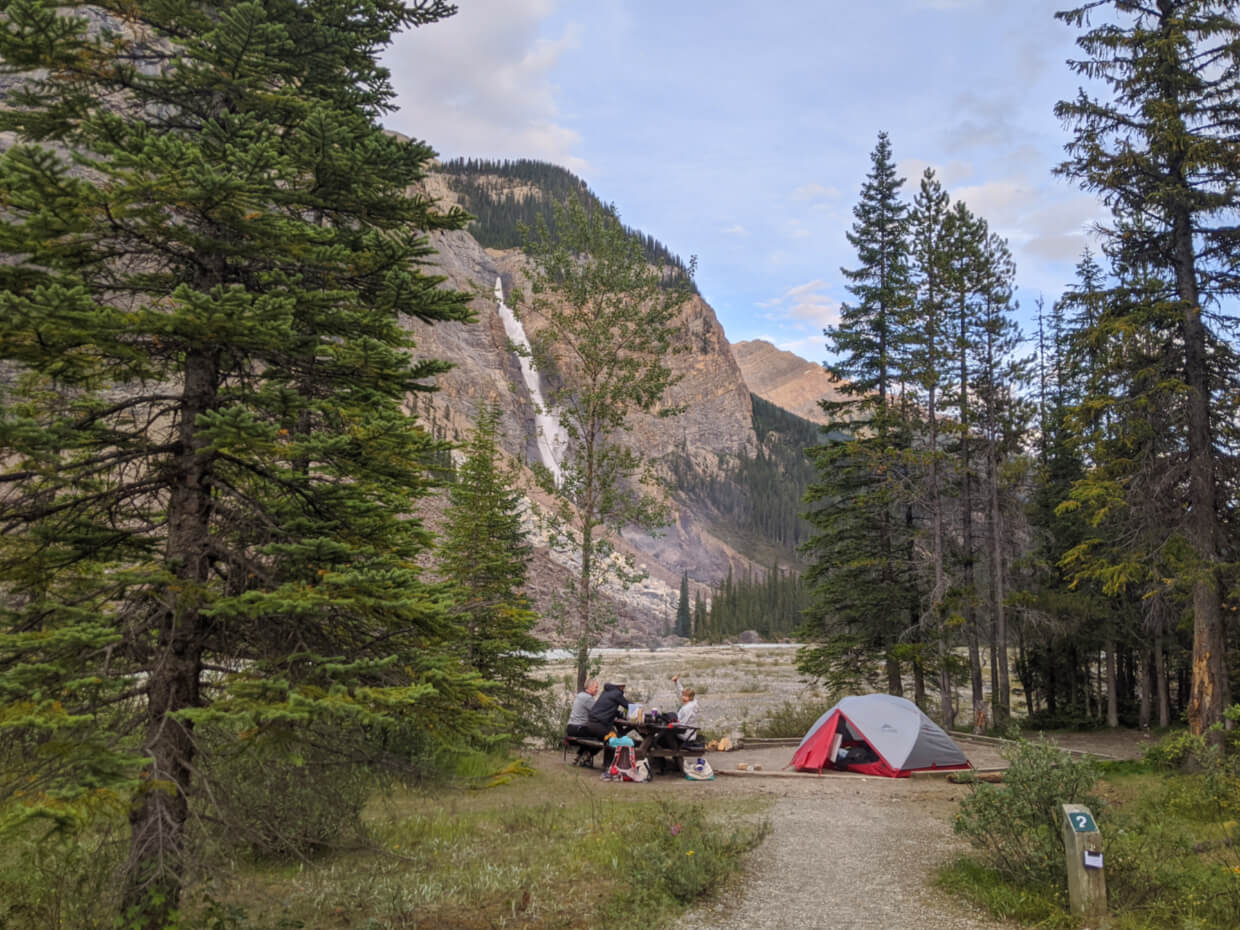
How to make a Parks Canada camping reservation
To reserve a campsite in one of Canada’s national parks, you must use the Parks Canada Reservation System. It can be accessed online and also by phone (1-877-737-3783).
There is a $11.50 fee for making a reservation on the website, $13.50 for phone reservations.
National park reservations launch in January and February each year. Each national park has its own launch day(s), though some overlap. All reservation launch days are listed on the Parks Canada website. The specific dates are usually published in December.
At the stated time on the launch day, camping reservations for the entire operating season will be available.
For many parks, campsite availability disappears very quickly. This can happen within minutes for the most in demand campgrounds.

Parks Canada reservation launches with the virtual queue system
Parks Canada uses a virtual queue system for the most popular parks (more details later).
This process manages the number of visitors accessing the website at the same time. A lot of people complain about it but I prefer this system. I find it a lot more chaotic when it isn’t used.
Here’s how the virtual queue system works –
- On launch day, starting 30 minutes before reservations open, all website users are placed in a waiting room page
- At the exact opening time, the page will automatically refresh and all users randomly assigned a place in the queue. The placing is not based on how long you have been waiting on the website prior to the launch. Do not refresh once you have a place!
- Anyone who arrives after the launch time will be placed at the back of the queue
- When it is your turn, a pop-up will appear. Wait and then the page will automatically refresh to allow access onto the site
- Make your selections
- If unavailable, make alternative selections
- Once you have campsites in your basket, you will have 20 minutes to finalise the reservation
- At this time, sign in to your Parks Canada account (or follow the prompts)
- Finish the reservation process, with payment being the final step
- A confirmation email will be sent once the reservation is completed. It may take a few minutes during the reservation launch due to the high volume of bookings at this time
Parks Canada reservation launches without the virtual queue system
Since 2025, Parks Canada has been reducing the amount of reservation lanches that use the virtual queue system.
If you do not see the waiting room screen immediately prior to the reservation launch, that means Parks Canada will not be using it. This means that all users will have access to the website at the time of launch (skip to step 5 of the step-by-step process explained in the previous section).
In this situation, it’s even more important to be fast at making your reservation. You really need to know what you’re doing and be prepared with back-up options.
Leading to the launches, Parks Canada usually shares on social media which ones will use virtual queue systems and which will not. In 2026, there were significant technical issues for some of the early launches and the queue system was used for more launches than expected.
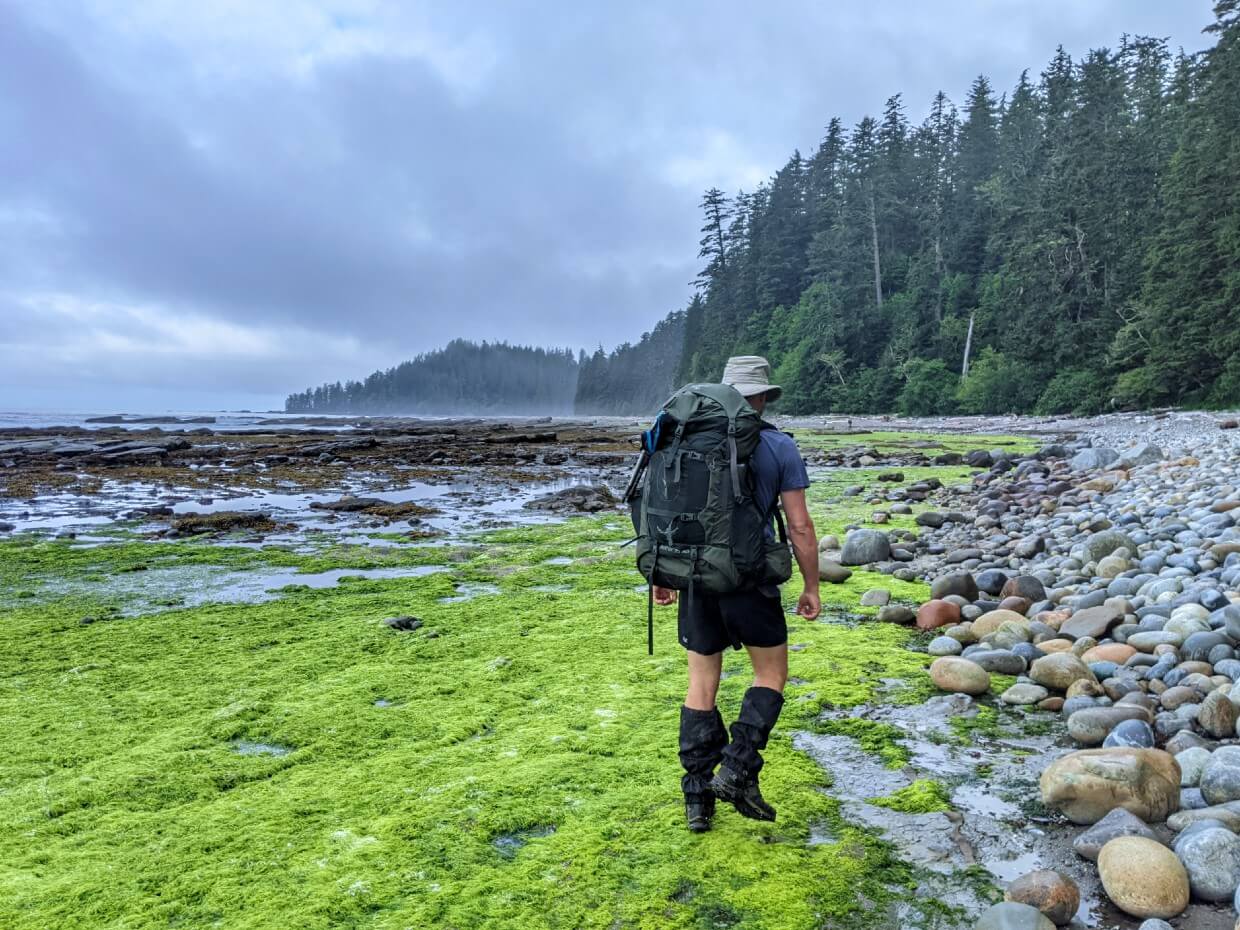
How to prepare for the reservation launch
To up your chances and make the reservation process as painless as possible, I would recommend doing the following:
- Create a Parks Canada account well in advance of the launch. Existing users, be sure to test your login prior to the launch morning. Trust me, you don’t want to deal with the stress of resetting your account during the process!
- Get familiar with the website and practice the reservation process. The faster you are, the more likely you are to be able to secure the spots you want. This is the single most important thing you can do to improve your chances
- Have multiple dates, options and itineraries ready (as applicable), with back-ups. Consider all possible options before the launch, so you know what alternatives will work best ahead of time and can adapt quickly
- Navigate to the website 10 minutes before the launch time, so you can become familiar with the waiting room screen (if used)
- Have your credit card ready for payment. Check the expiry date to make sure it is still valid
- Use a desktop computer or laptop rather than a mobile device. The Parks Canada website is a lot easier to navigate and use with a bigger screen. The mobile version is a bit finicky
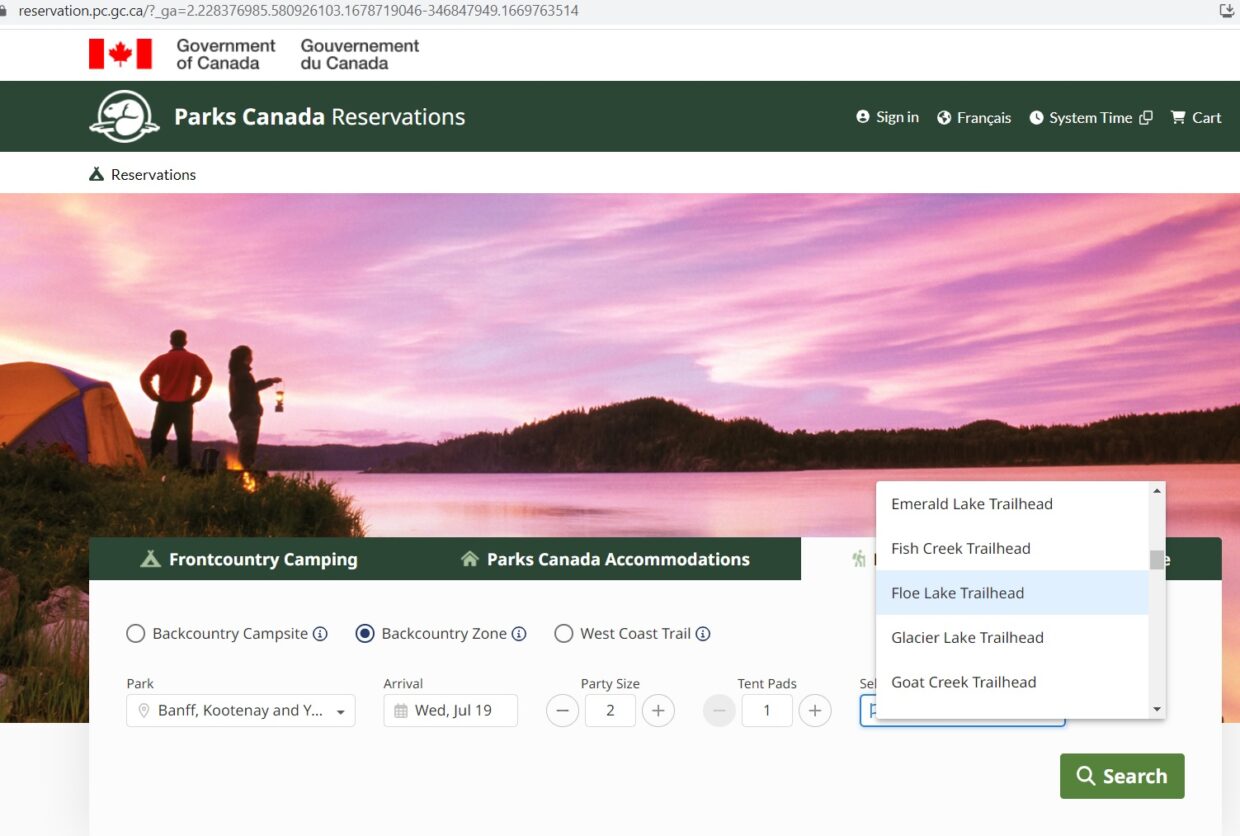
- Backcountry users should be ready to input their desired trailhead – it’s an essential part of the reservation process
And finally, please be patient. Yes, it is frustrating that there isn’t enough spots for everyone on their preferred dates but we have to work with what we have. If you don’t manage to secure anything, head to the last section of this guide, in which I explain some other options.
Parks Canada reservation tips
I’ve been successfully making Parks Canada reservations for years. Often, I’ve been fortunate to get exactly what I want. A few times, I’ve had to adapt. Regardless, I always secure something. The following tips may help you suceed as well!
- Have realistic expectations. If you have your heart set on one particular campsite in a specific campground on a fixed date, you may be setting yourself up for disappointment (especially when it comes to super popular spots like Two Jack Lake in Banff NP). Flexibility really matters
- The waiting room system allows multiple devices to be used from the same IP address. Each device is issued a different place in line
- Camping with a group? Enlist other members to help you secure a reservation. The more people trying to reserve, the better chances you have
- Availability can really fluctuate on reservation launch day – don’t leave immediately if you are not successful! As mentioned, users are able to hold reservations for up to 20 minutes. If they do not complete the booking in that time, the site becomes available again
- Backcountry users should be aware that Banff, Yoho and Kootenay National Park all have the same reservation launch. Don’t panic if you see huge numbers in the waiting room – not everyone is booking the exact same backpacking trip as you
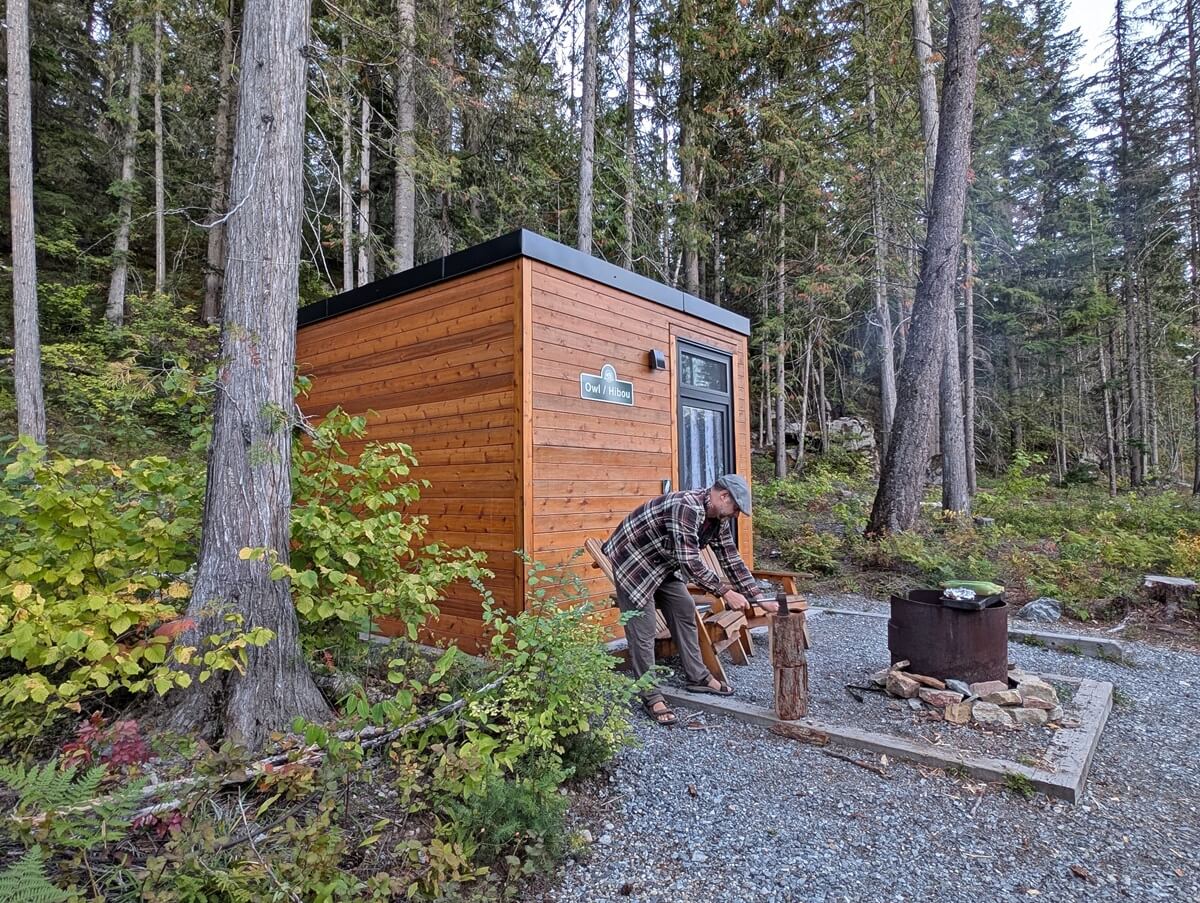
Other ways to secure a national park camp spot
If you don’t manage to secure a camping reservation on launch day, don’t despair. There’s still a few ways you can go camping in the national parks.
Cancellations
Cancellations are pretty common. People change plans all the time – weddings, international vacations, family illnesses, work commitments and more.
This is particularly true given how early Parks Canada reservations opening in the year. So much can happen between January/February and the summer months!
Cancellations can happen on long or short notice. A bad weather forecast (rain, cold temperatures) can easily trigger a rush of cancellations.
Obviously, flexibility is key when trying to take advantage of cancellations.
There are a few different ways to check for Parks Canada cancellations:
- Manually. Visiting the website often is one way to check for cancellations. Of course, the chances of finding a cancellation when checking manually at random times are pretty slim but not totally impossible.
- Use the Parks Canada notification system – For frontcountry reservations, you can set up a availability notification via Parks Canada’s own system (free of charge). You will be sent an email notification when a site matching your selected criteria becomes available. This video explains the process
- Pay for an automated scanner app – Parks Canada doesn’t yet offer a backcountry reservation notification system, but this service is available via CampNab. After setting up a custom scan, CampNab will automatically check and then notify you by text or email when there is a cancellation. CampNab offers this service for frontcountry campgrounds too
- In person. For last minute availability, it may be possible to check in person. The larger frontcountry campgrounds usually have staffed gatehouses. For smaller campgrounds and backcountry sites, head to the Visitor Centre. In Banff National Park, for example, there are two Visitor Centres
We’ve tried all of these approaches over the past few years, and had the best results using the Parks Canada notification system and CampNab.
Checking in person has worked well for us with larger campgrounds. We’ve always been successful with getting a last minute tent or van spot at Whistlers Campground in Jasper National Park, for example (even in the middle of summer).
Using CampNab, we’ve been able to successfully find summer camp spots in many popular frontcountry and backcountry areas of the Canadian Rockies, including the Rockwall, Egypt Lake, Baker Lake and more. As long as you’re flexible and can react quickly, the system works really effectively.
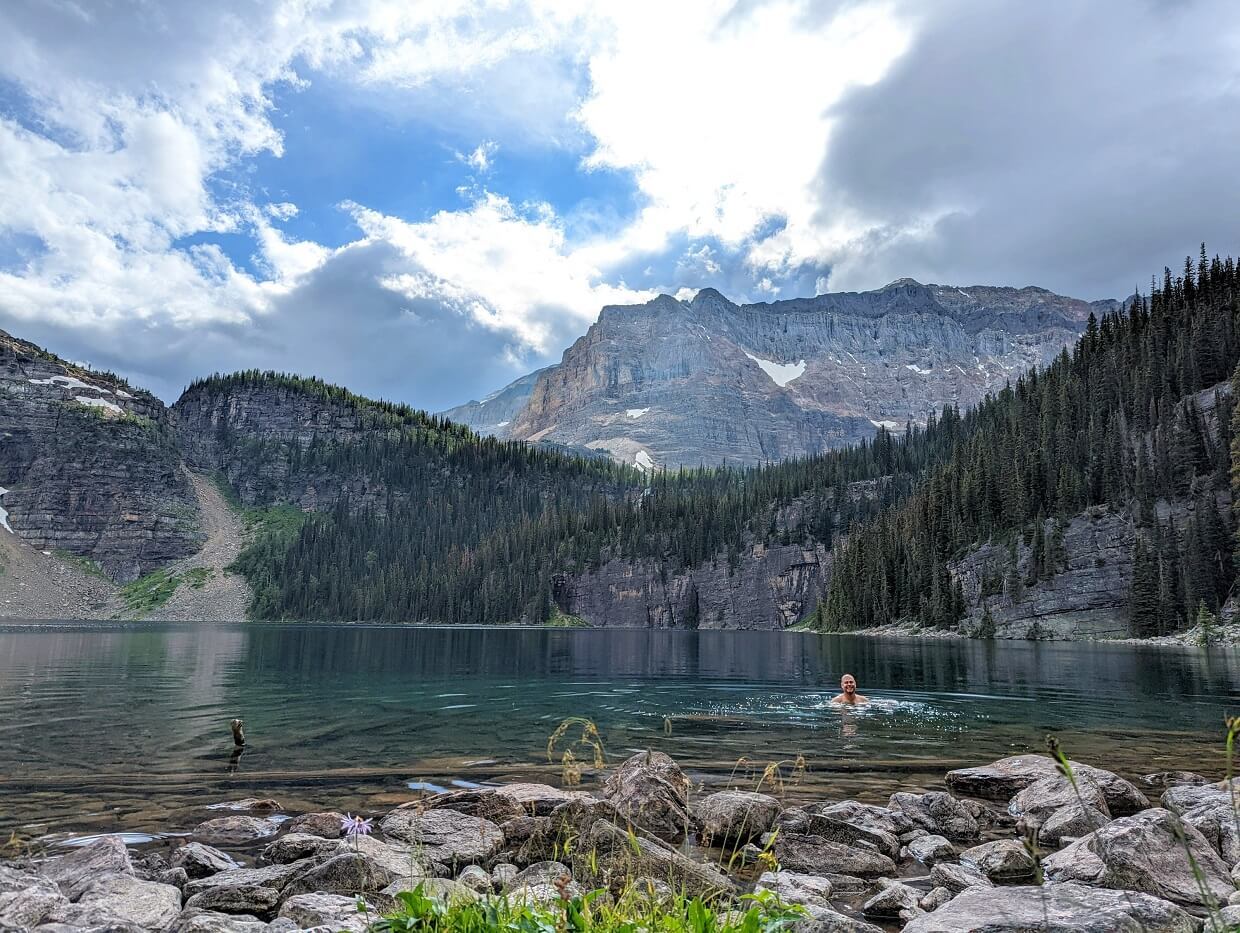
First come first serve campsites
While most of Parks Canada’s campgrounds are reservable, some frontcountry campgrounds still operate a first come first serve system. Some examples include:
- Corney Brook in Cape Breton Highlands National Park, NS
- Mosquito Creek in Banff National Park, AB
- Monarch in Yoho National Park, BC
There are also national park campgrounds that offer a mix of reservation and first come first serve sites.
As with reservable campsites, these first come first serve spots are usually also incredibly popular. For this reason, there is a risk with planning to utilise this type of campground – there may not be an available spot for you.
Here are some tips:
- Check-out time is 11am. If campers have not paid for an extra night by this time, the spot is available. Late morning is therefore a good time to arrive and review available sites. Look for dates on posted permits at the entrance to each campsite
- In busy areas, first come first serve campgrounds often have overflow areas. This is true for Mosquito Creek in Banff National Park. This campground having an overflow area makes me feel a lot more confident about planning to use it
- If the campground does not have an overflow, research some back-up options. Don’t let the first come first serve campground be your only option. Check in person for last minute cancellations at the larger campgrounds. Be prepared to leave park boundaries if necessary
Other posts you may find helpful
How to Find Free Camping in Canada
BC Parks Camping Reservations Guide
How to Reserve Backcountry Camping in BC: Essential Details and Dates
How to Go Camping in BC Without a Reservation
37+ BC Backpacking Trips Without a Reservation
The Best Provincial Parks in British Columbia, Canada


One half of the Canadian/British couple behind Off Track Travel, Gemma is happiest when hiking on the trail or planning the next big travel adventure. JR and Gemma are currently based in the beautiful Okanagan Valley, British Columbia, Canada. Consider buying us a coffee if you have find any of our guides helpful!
Thanks for all the advice. You two are amazing not only for your hiking trips but for the way you put out these newsletters with all this wonderful and well written advice.
Hi Margaret,
Thank you SO much for this lovely comment! You truly made my day! Thanks for being on our newsletter list. And I’m so glad that you find these tips helpful!