
Newfoundland’s wild west coast is a place of rugged shorelines, dramatic mountain scenery and authentic fishing communities, where a rich mix of cultural influences has helped shape some of the friendliest people you’ll meet anywhere in Canada.
Western Newfoundland is made for road trips, with long scenic drives along the coast, excellent hiking trails and interesting historic sites to explore along the way.
Visit a lighthouse or two, tuck into a lobster roll and take a few detours to discover waterfalls, scenic viewpoints and some more unusual sights, such as an outdoor bread oven. Those who take their time to slow down and breathe in the salt air are richly rewarded.
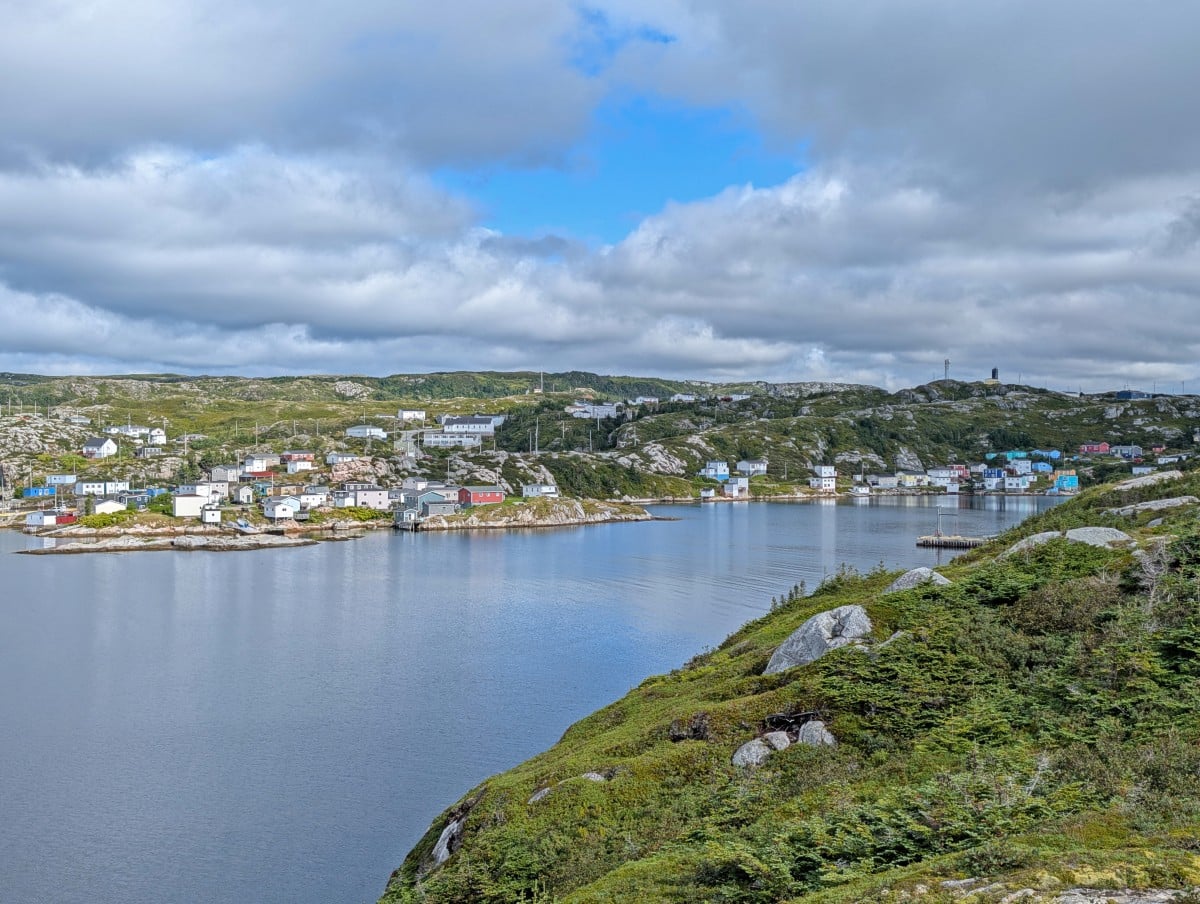
Our recent two week Western Newfoundland road trip completely blew us away. Literally, at times, thanks to the wind, and also figuratively because of the incredible coastal and mountain scenery we discovered along the way.
While we spent plenty of time exploring Gros Morne (and loved it), one of our biggest takeaways from the trip was just how much there is to see beyond the national park. We found so many beautiful places with hardly anyone else around. Stunning scenery without the crowds? Yes, please!
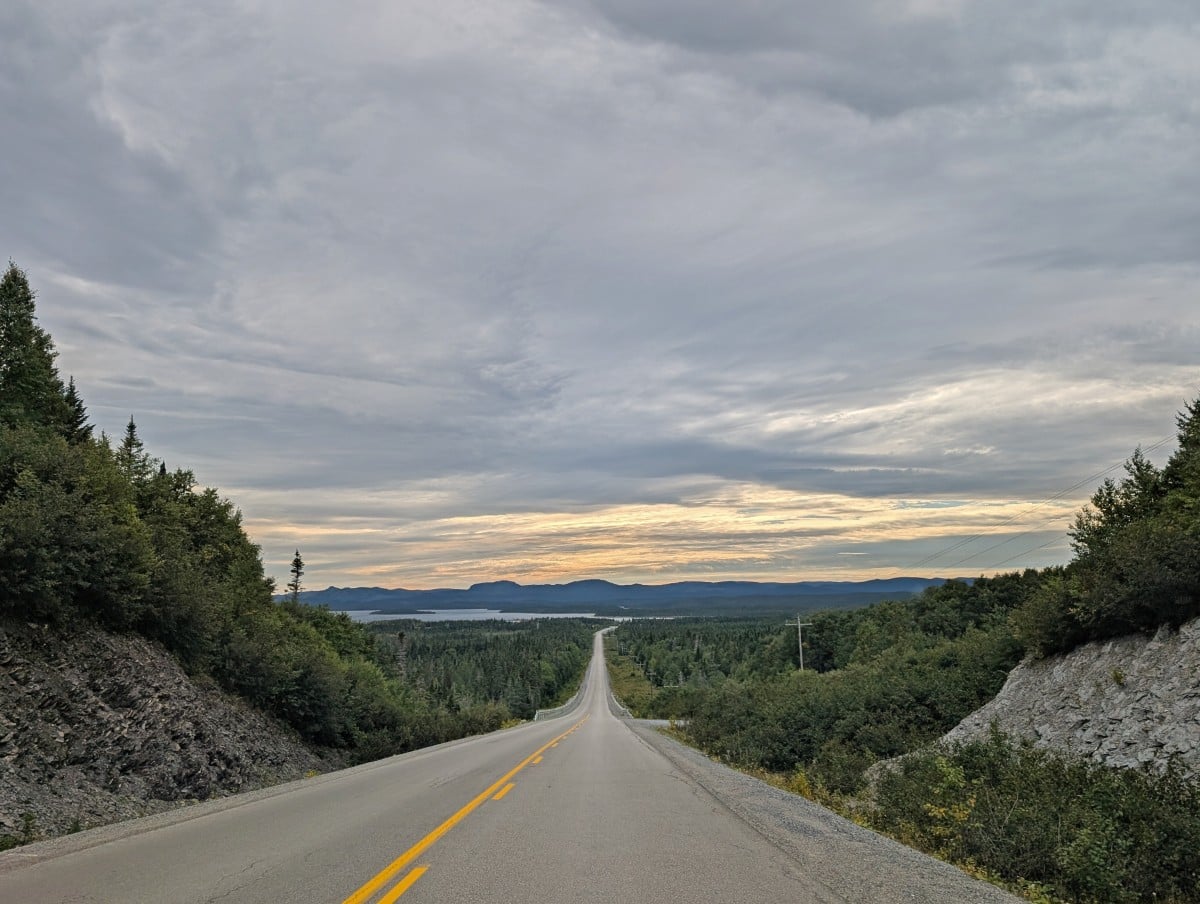
This guide covers the best stops on a Western Newfoundland road trip, from Port aux Basques in the south to L’Anse aux Meadows in the north. It includes our favourite places to eat and stay, must do activities plus practical travel tips and recommendations for what to pack.
Only planning to visit Gros Morne and L’Anse aux Meadows? You can still use this guide – hopefully it inspires you to extend your trip and explore more of Western Newfoundland!
In partnership with Go Western Newfoundland. There are some affiliate links ahead – if you make a purchase via one of these, we may receive a percentage of the sale.
Introducing Western Newfoundland
Western Newfoundland is the region along the west coast of the island of Newfoundland in Canada, stretching from Port aux Basques in the south all the way to the tip of the Northern Peninsula.
Part of ‘the Rock,’ this region is known for its expansive coastline, rugged mountain ranges, unique geological formations and rich cultural history.
For centuries before European arrival, Western Newfoundland was home to a number of different groups of Indigenous people – Maritime Archaic, Dorset, Groswater, Beothuk and Mi’kmaq.
Around 1020AD, a group of Norsemen from Greenland arrived and used one of the northernmost points of Western Newfoundland as a seasonal base for around a decade. Centuries later, the Basque started to fish cod and hunt whales along the coast.
Seasonal fishermen from France came next, though they were prohibited from settling permanently under the agreement between France and Britain. JR’s great-great-great-great-great-great-grandfather Francois from Normandy fished the ‘French Shore’ (or le petit nord) from 1720 onwards.
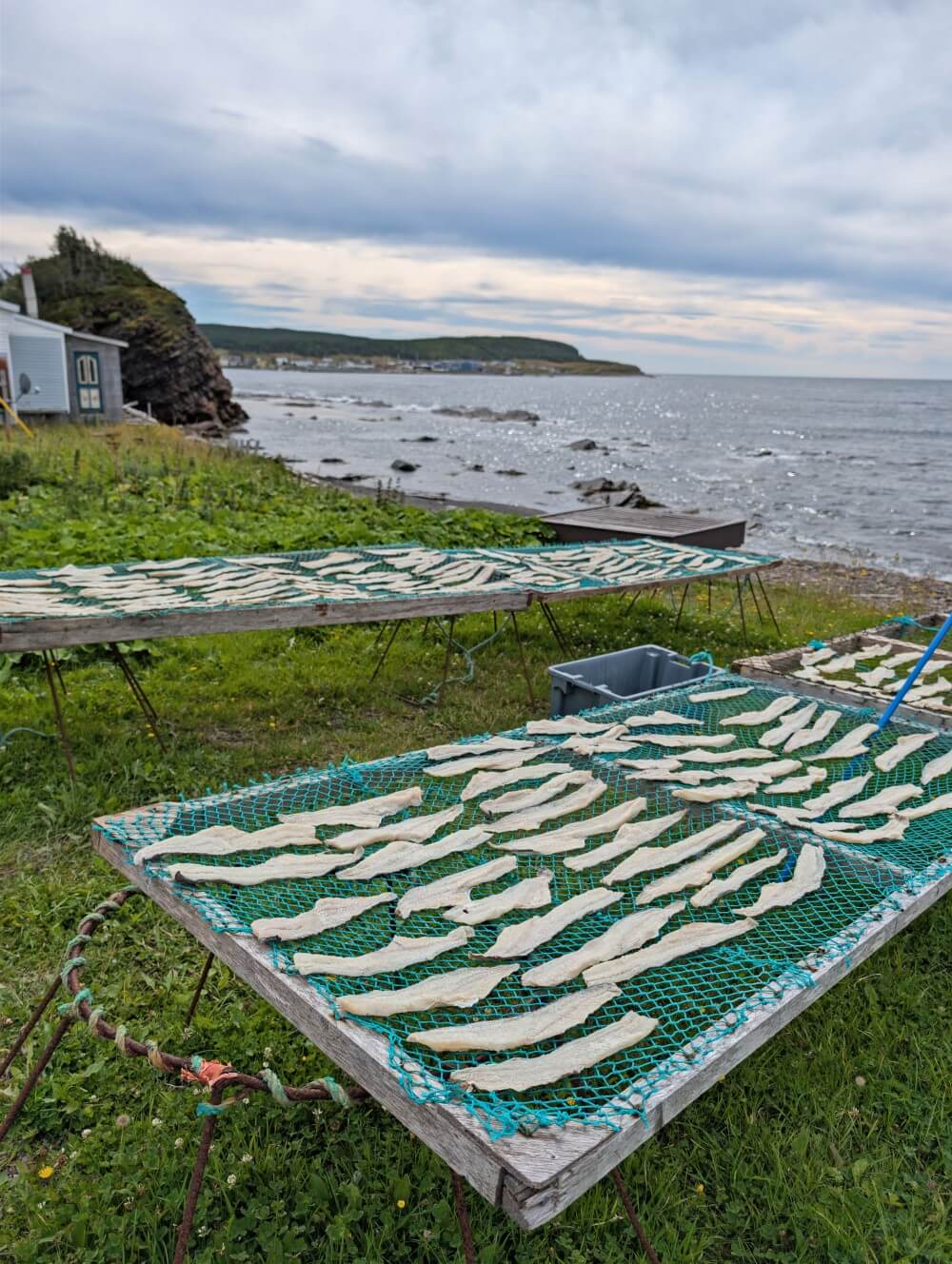
Western Newfoundland later drew fishermen from Ireland and England, alongside Scottish farmers and displaced Acadians from Nova Scotia. These different migrations helped shape Western Newfoundland into the place it is today – one of the most friendly and welcoming places in Canada!
To get to Western Newfoundland, most visitors arrive by ferry in Port aux Basques (from Nova Scotia, 7 hours) or Saint Barbe (Labrador, less than 2 hours), by plane in Deer Lake or by road from Central Newfoundland.
No matter how you arrive, having your own wheels makes it easy to explore Western Newfoundland’s diverse landscapes and small coastal communities.
The best places to go on a Western Newfoundland road trip
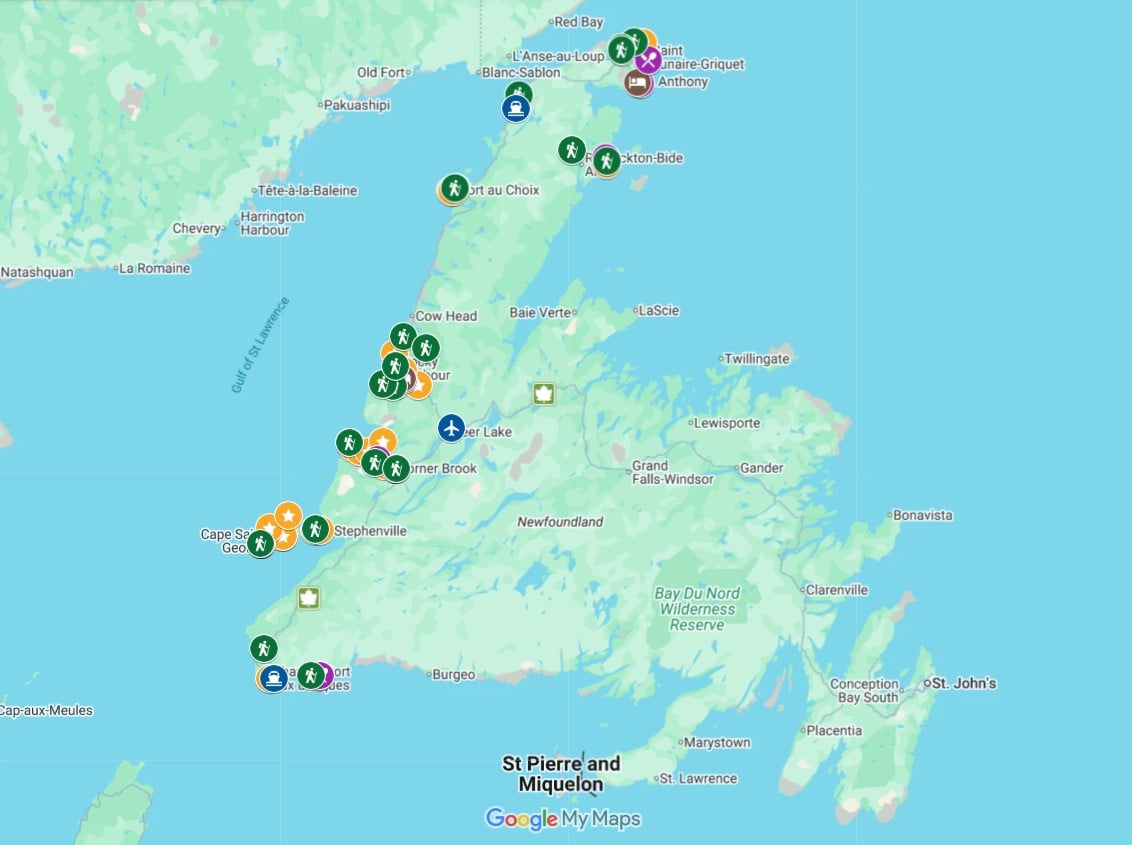
Ready to discover the 30+ amazing places in Western Newfoundland? Use the below map to locate all of the attractions and locations featured in this road trip guide.
Rose Blanche and Port aux Basques area
Port aux Basques is best known as the ferry arrival point to Western Newfoundland. While many visitors head straight out of town after arriving, we think that is a mistake.
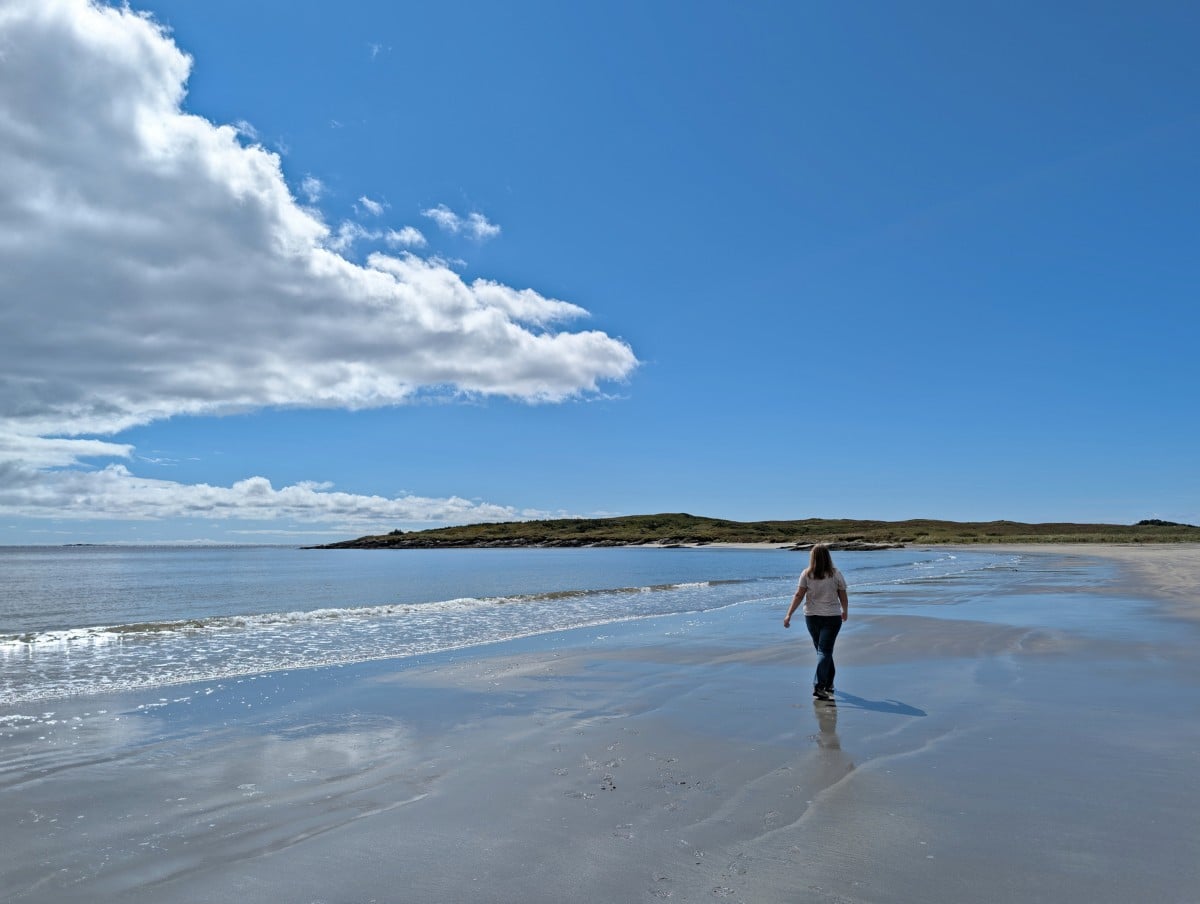
After all, we found one of the most beautiful beaches in the entire region right in Port aux Basques – the stunning stretch of sand that is Grand Bay West Beach. From town, follow Highway 470 east through traditional fishing villages to the iconic Rose Blanche Lighthouse.
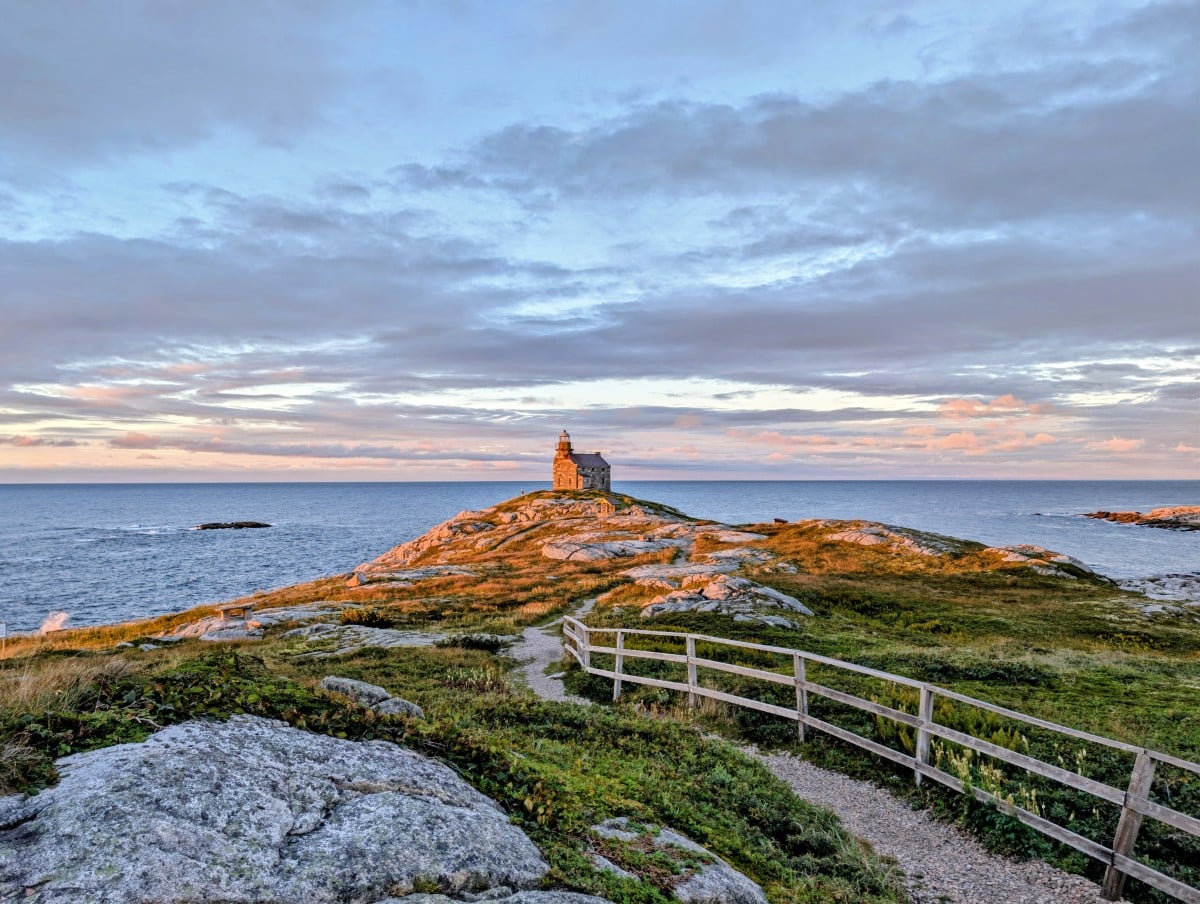
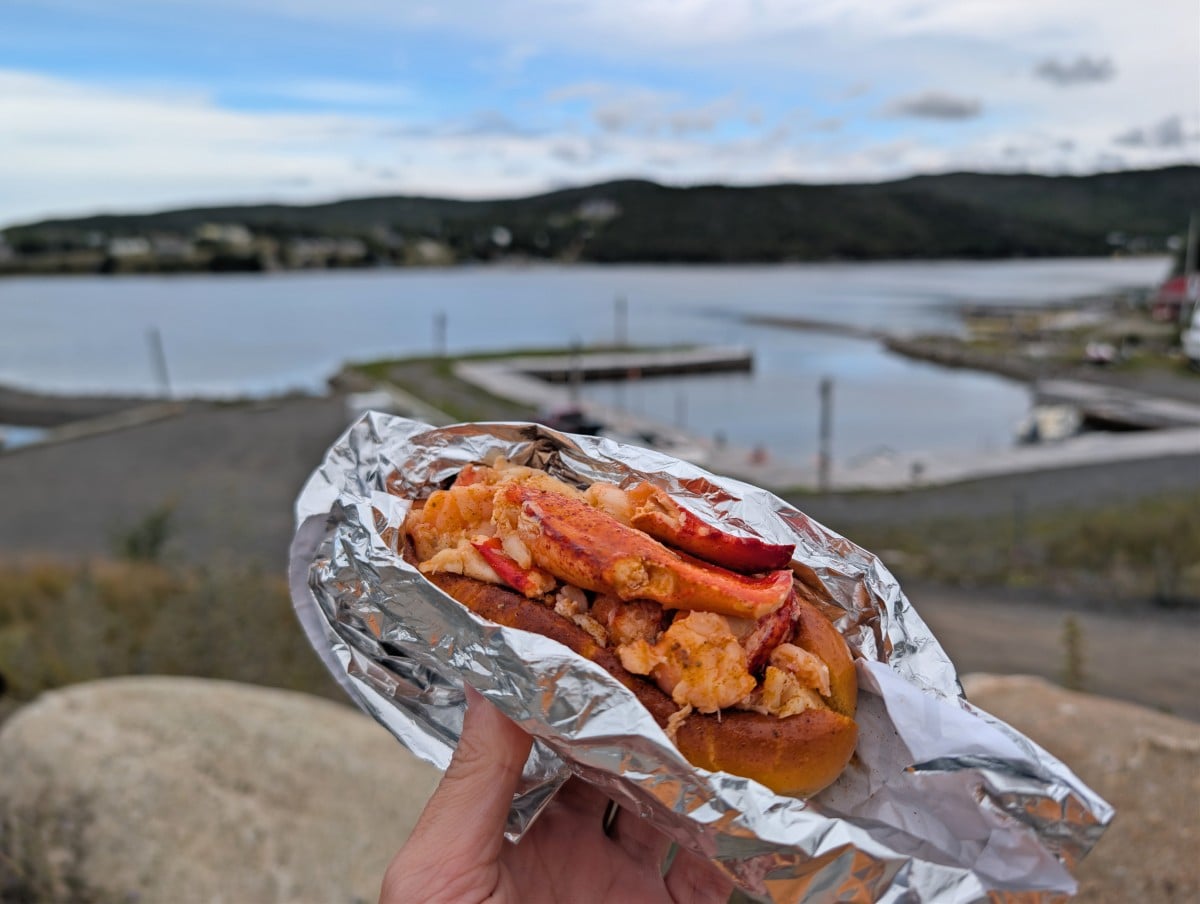
Built in the late 19th century using granite from a nearby quarry, the lighthouse was restored by the local community in 1999. Trails wind along the shoreline, offering beautiful views of the rugged coast and surrounding ocean. Don’t miss a lobster roll from the on-site Grub Box.
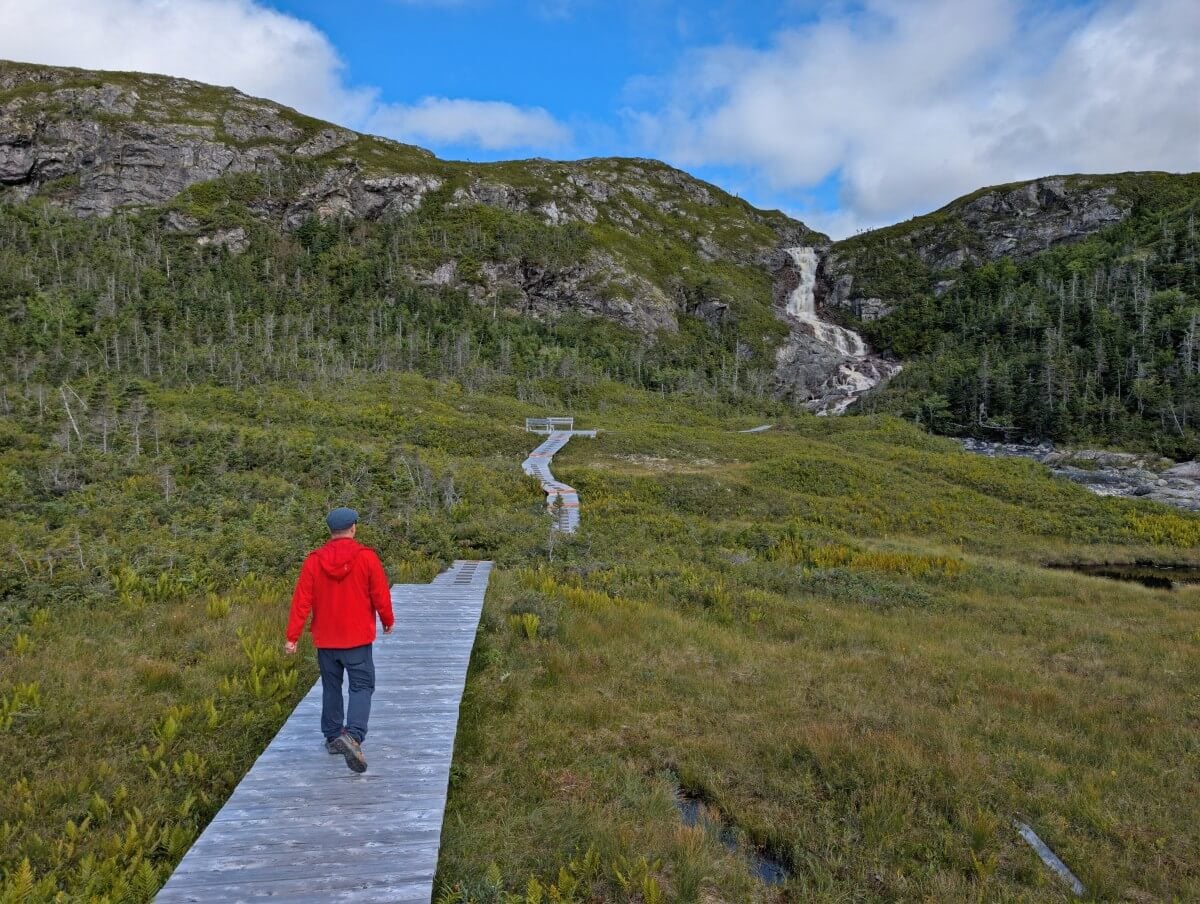
On the drive back to Port aux Basques, stop at Barachois Falls. Most of the 1.6km return trail follows a boardwalk across bogland filled with carnivorous pitcher plants.
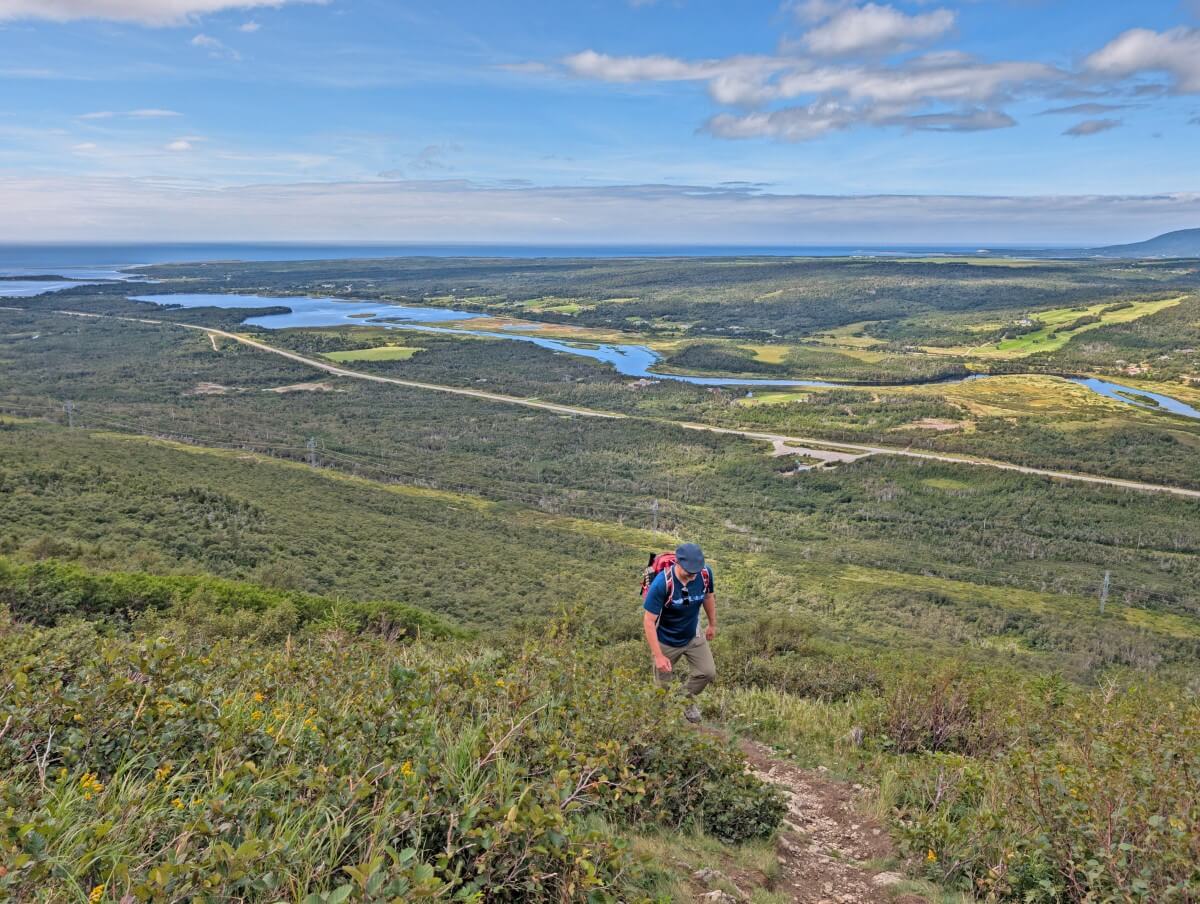
One of the best longer hikes in Port aux Basques is the Starlite Trail. This moderate 6.3km trail with 350m elevation gain starts just off Highway 1 and offers incredible ocean, mountain and waterfall views. The trail is currently being redeveloped and will become slightly longer and easier.
Where to stay
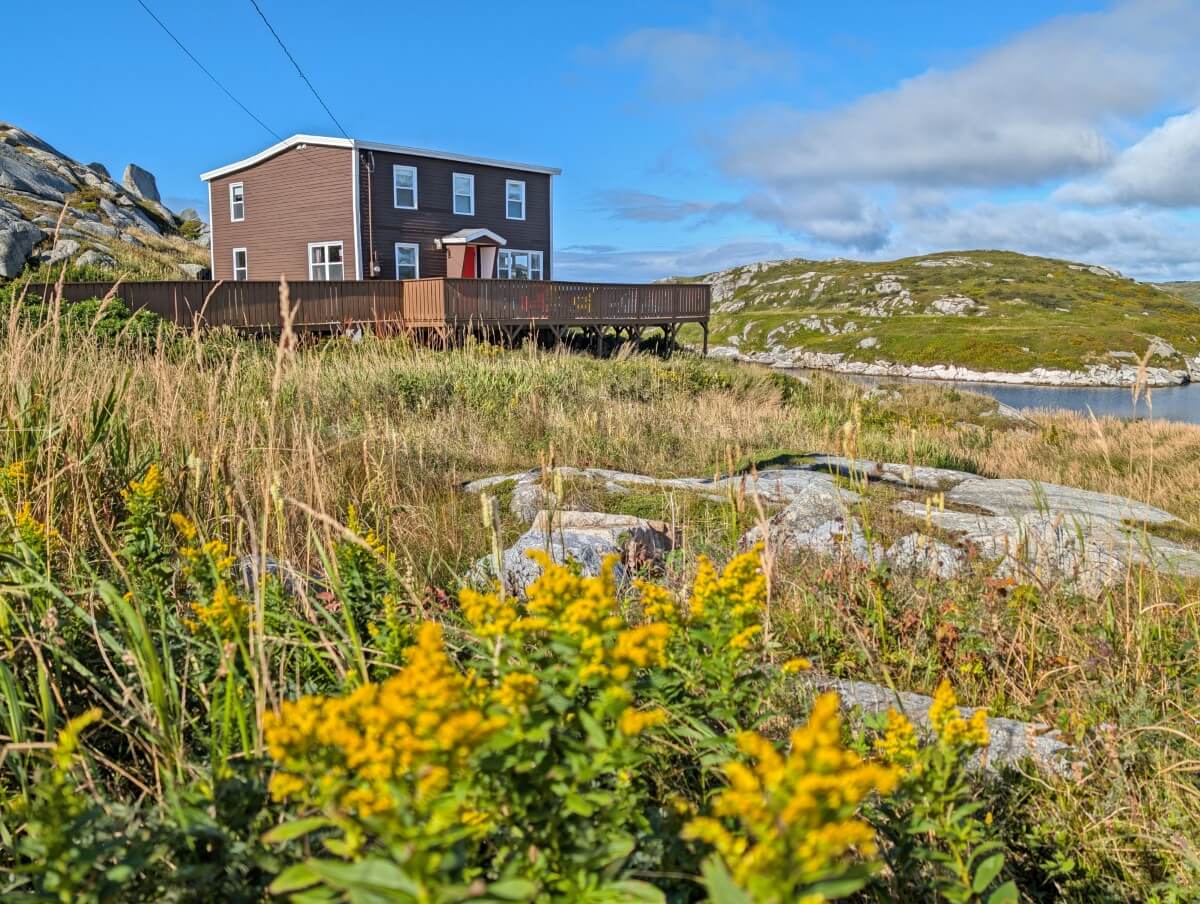
For a unique stay in the Port aux Basques, book a room at the Lightkeepers Inn B&B at Rose Blanche Lighthouse.
This renovated fisherman’s home has four double rooms, each with a private bathroom and shower, plus a shared kitchen and living area with ocean views. The patio is another great spot to enjoy the views over your included self-serve breakfast.
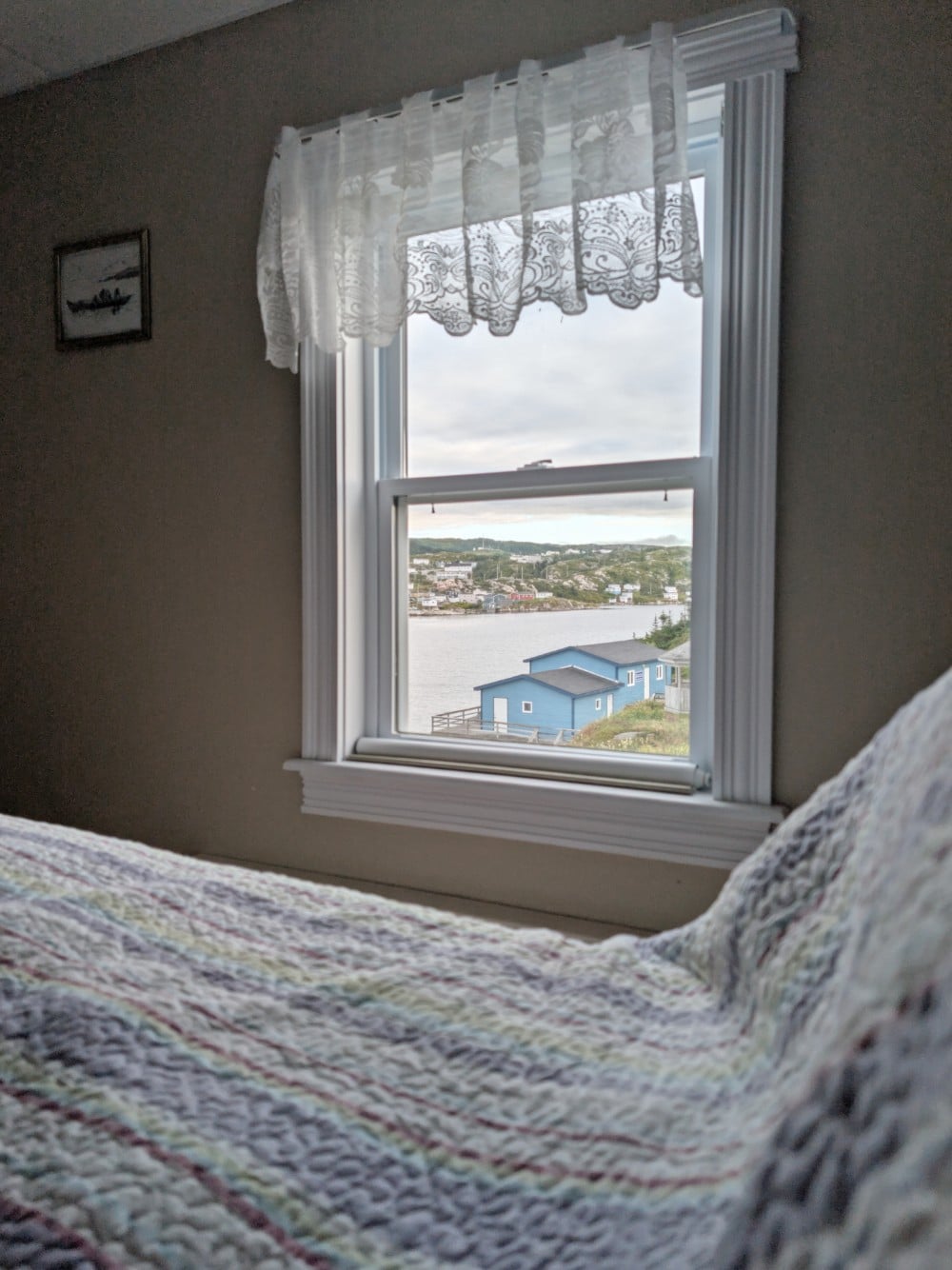
The rooms are on the smaller side, with creaky floorboards and plenty of character. But it’s not just the setting that makes this place special. The lighthouse and B&B are town-owned and operated as a non-profit, employing six local people. Staying here directly supports the local community.
For a more traditional hotel that is closer to the ferry terminal, check out Hotel Port Aux Basques.
Port au Port Peninsula
This triangular peninsula extends almost 40km into the Gulf of St. Lawrence from Newfoundland’s west coast.
Once an important centre for seasonal French fisheries in the 18th and 19th centuries, it is still home to the province’s largest Francophone community, including Acadians escaping deportation from Canada in 1755.
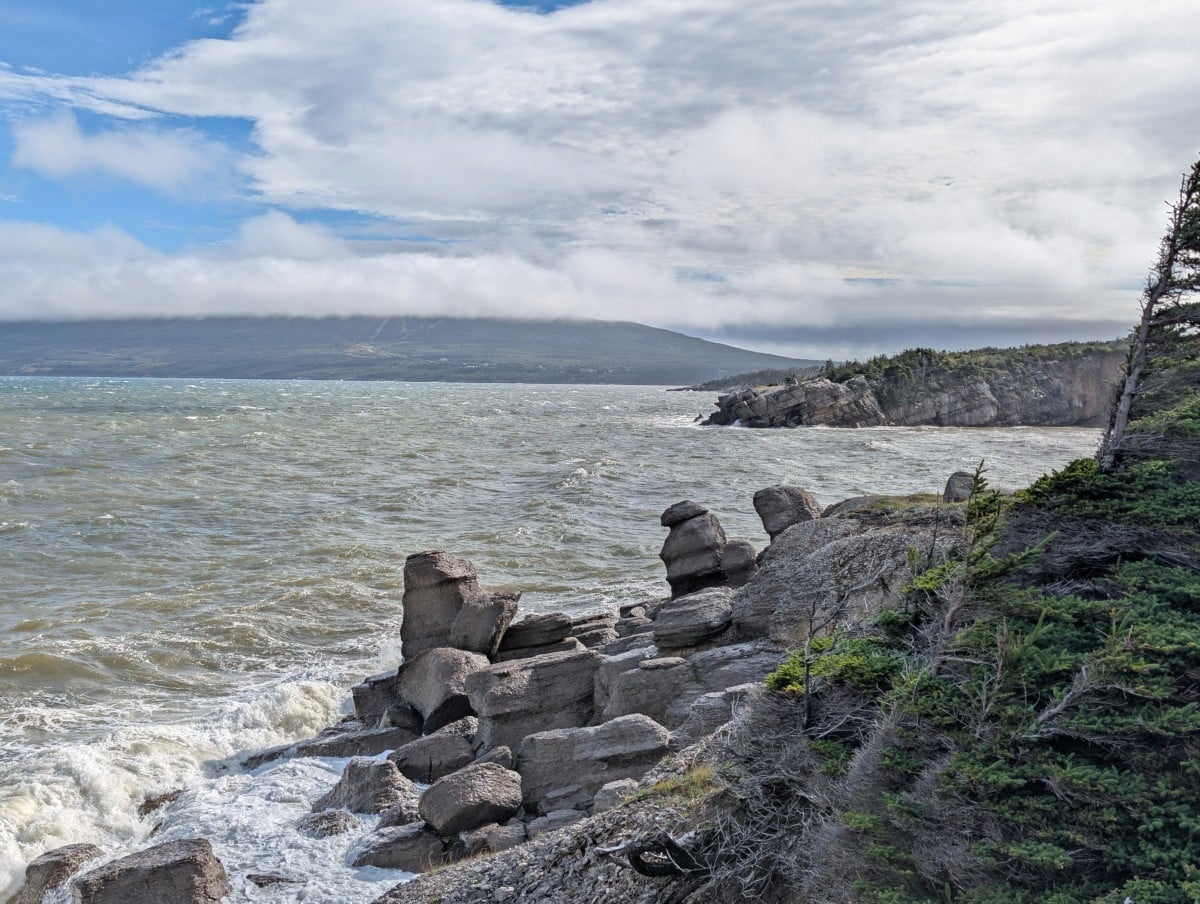
The French Ancestors Route is a 161km paved loop showcasing the scenery and communities of the Port au Port Peninsula. We stopped so many times while exploring this scenic drive so I’d recommend setting aside most of a full day if you can. Our highlights were:
- Danny’s Trail – 6.4km return coastal hike with unique limestone formations and mountain views
- Our Lady of Mercy Church – One of the biggest wooden structures in the province
- Hidden Falls – Huge waterfall and limestone formations on the coast
- Boutte du Cap Park – Acadian memorial plus traditional French bread oven (free bread 12pm to 2pm in July and August), huge cliffs, hiking trails and birding opportunities
- Sisters’ Dream School Museum – Old school building turned museum with tea room next door
- Secret Cove Brewing – Toast a good day on the road with some local craft beers!
Corner Brook
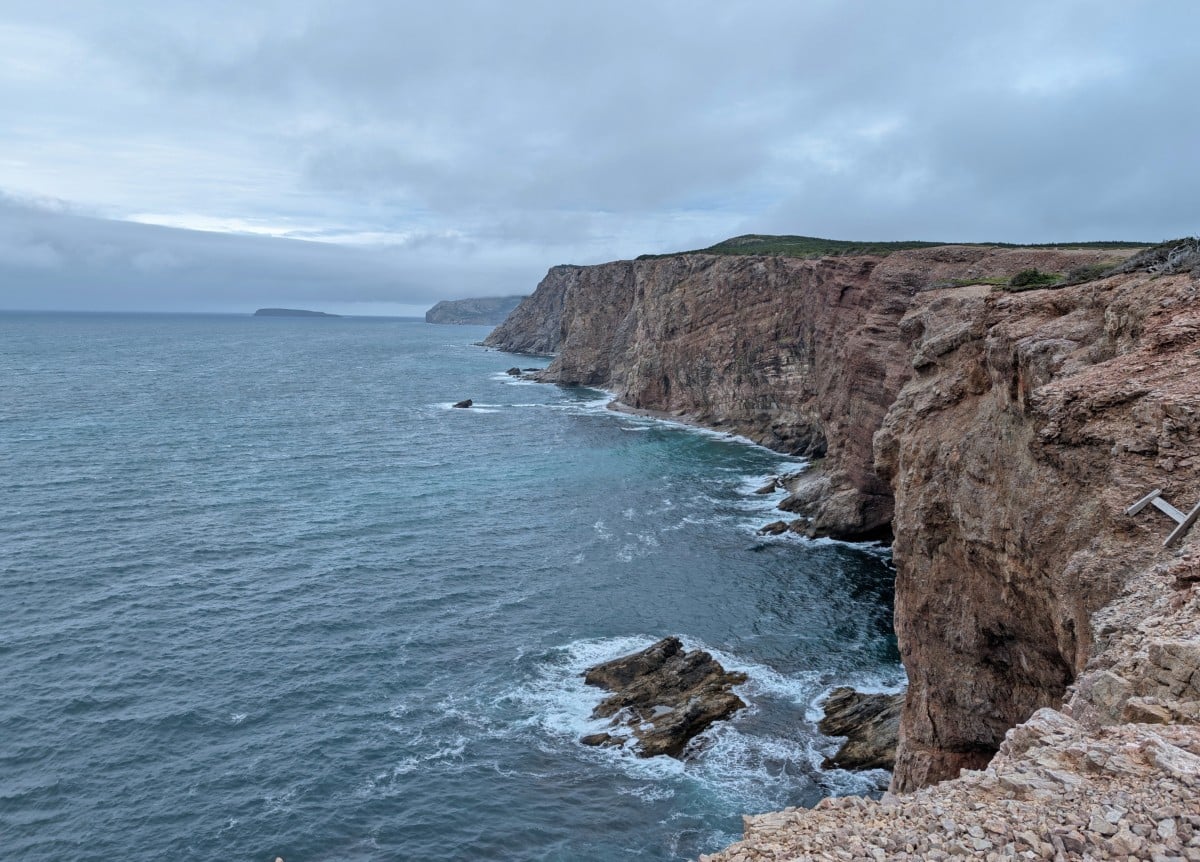
Corner Brook is the largest city in Western Newfoundland, with around 20k people call it home. Just an hour’s drive from Gros Morne, Deer Lake Airport and the Bay of Islands, Corner Brook makes for an ideal base for exploring Western Newfoundland while having access to a range of stores, restaurants and larger hotels.
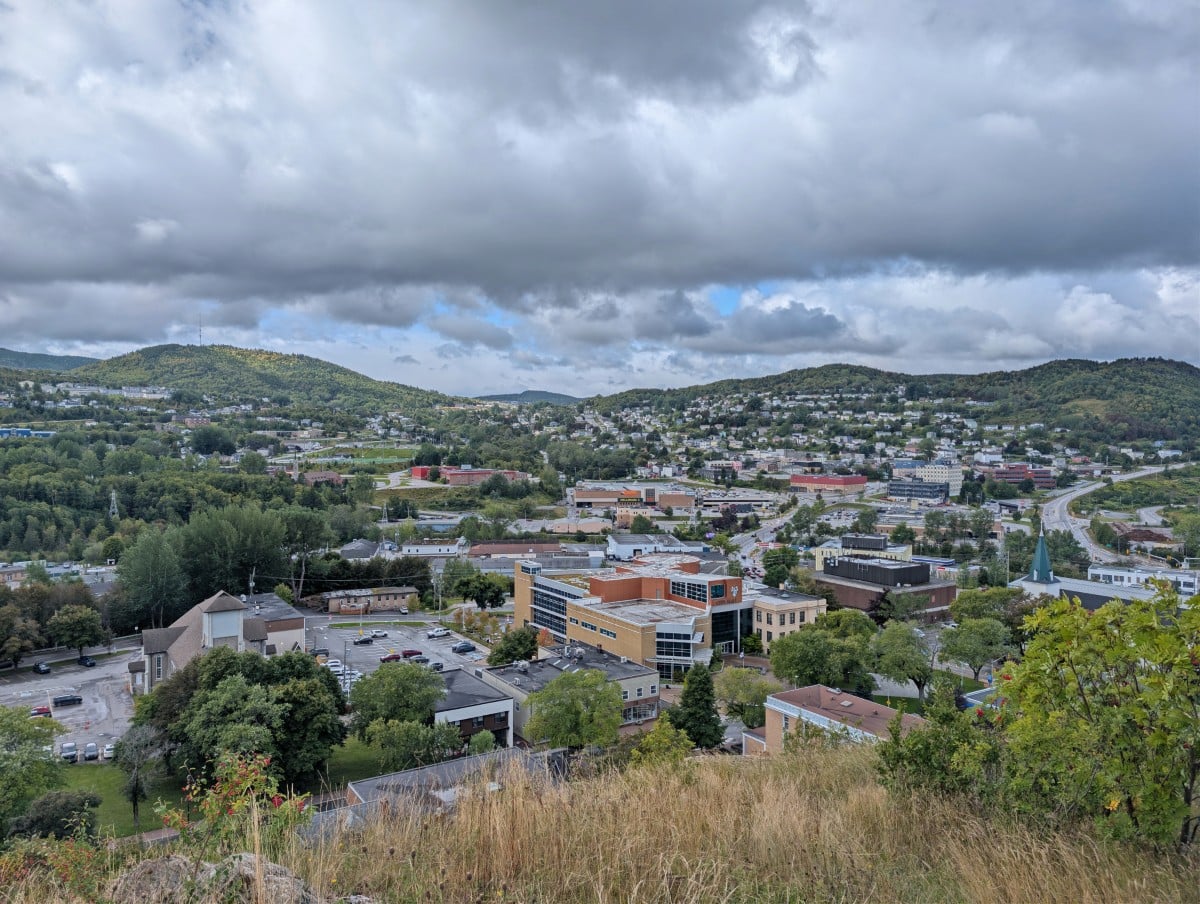
The city is also well worth visiting in its own right. Located at the end of an inlet and close to the Long Range Mountains, Corner Brook has a strong connection to the outdoors as well as a long history of resource-based industry. There’s a great range of local hiking trails as well as opportunities to go kayaking, ziplining and fishing.
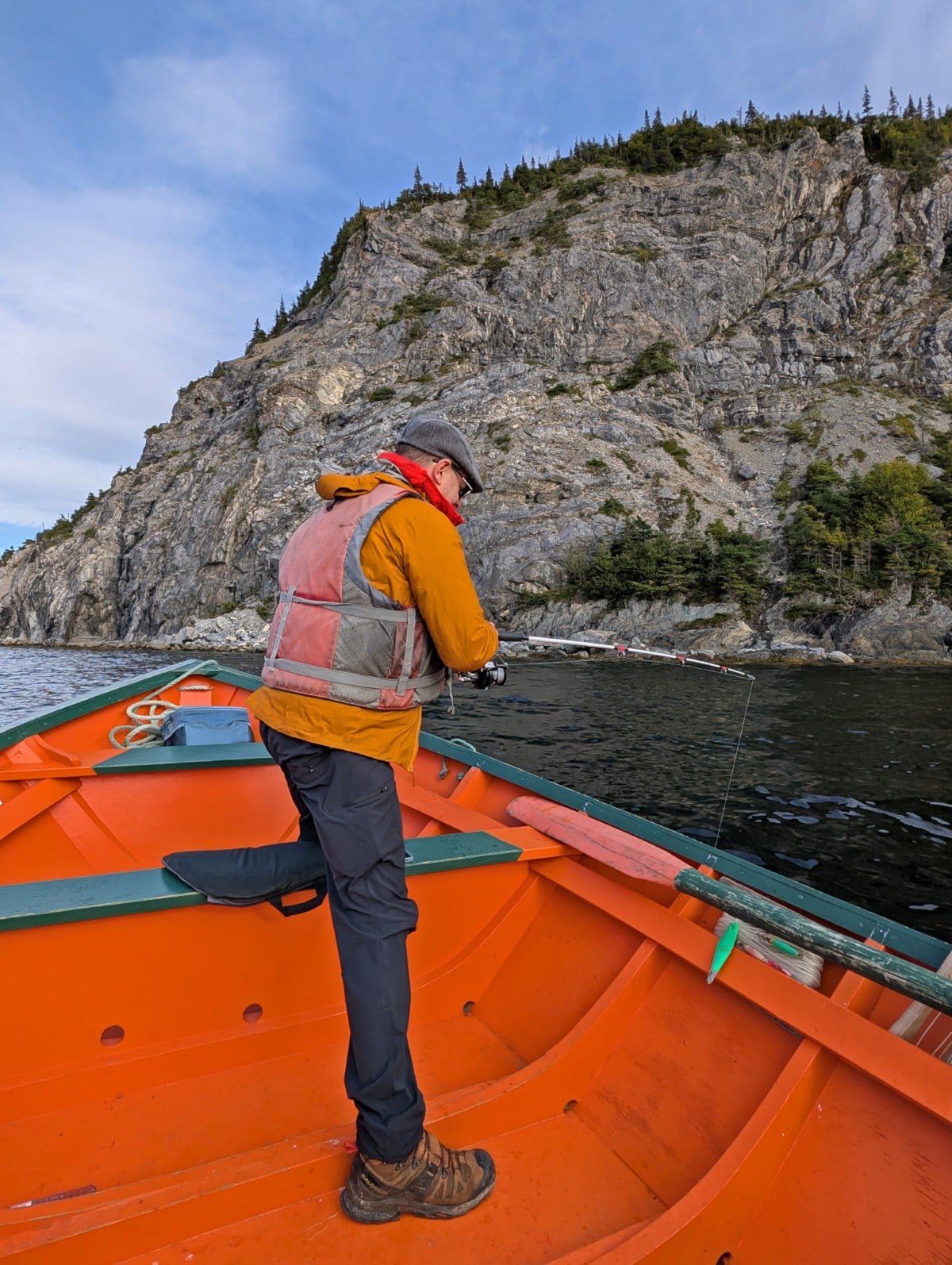
We went fishing in Cox’s Cove with down-to-earth Darren from Four Seasons Tours in a traditional, hand-built dory. Catching cod against a backdrop of mountains and rocky coastline, while listening to Darren’s stories of local life and fishing traditions, was a true Newfoundland experience. We even got to eat some freshly cooked cod on the beach as well!
Where to stay
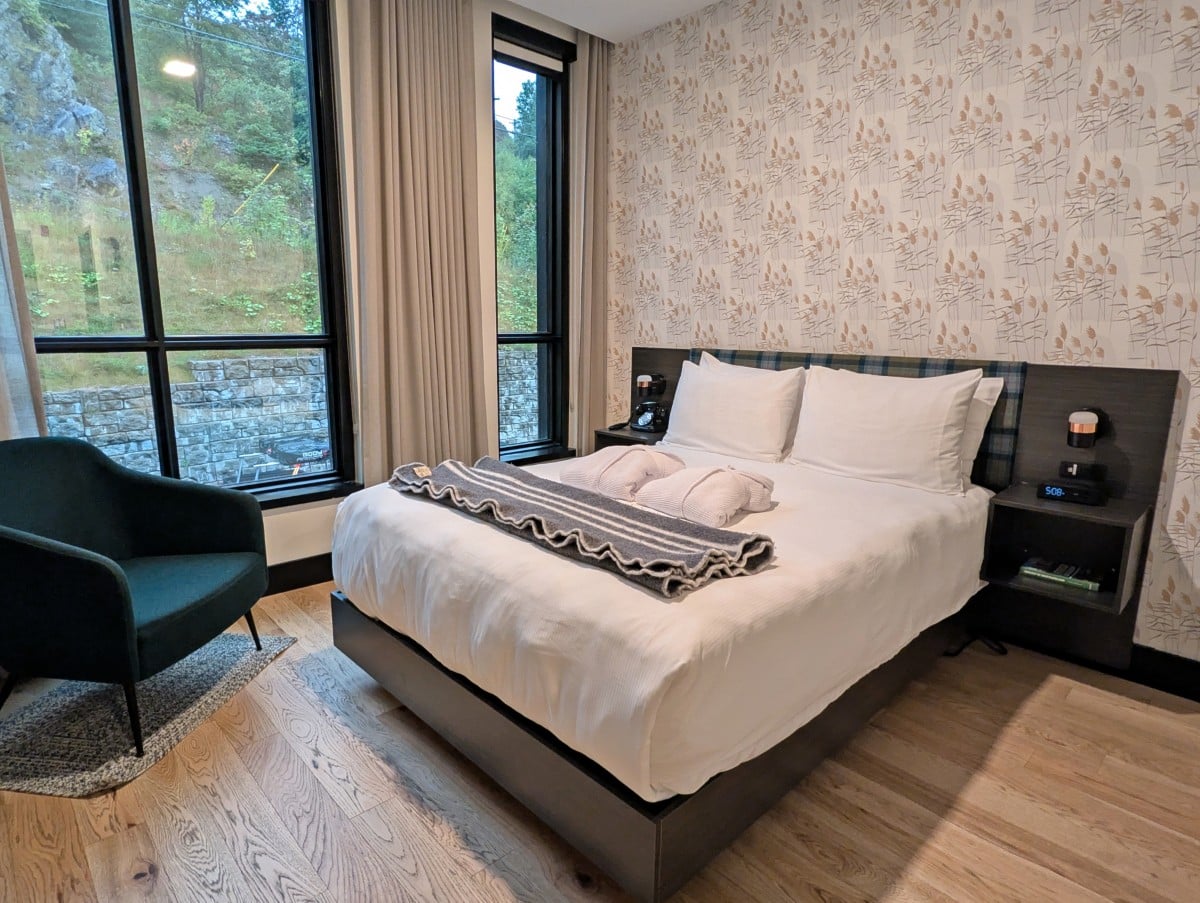
Without a doubt, the coolest place to stay in Corner Brook is the Hew & Draw Hotel. This hip boutique hotel has impeccably designed modern rooms and thoughtful details throughout. It’s located downtown, within walking distance of cafes, restaurants, stores and hiking trails.
The hotel is also home to Boomstick Brewing Co, where you can choose between 12+ craft beers alongside a menu that puts a modern spin on Newfoundland favourites.
I loved that a cooked-to-order breakfast was included every morning of our stay, served in the restaurant or delivered to our room. With all of the hiking we did, we also appreciated the rooftop hot tub and sauna plus free access to a washer and dryer.
The Bay of Islands
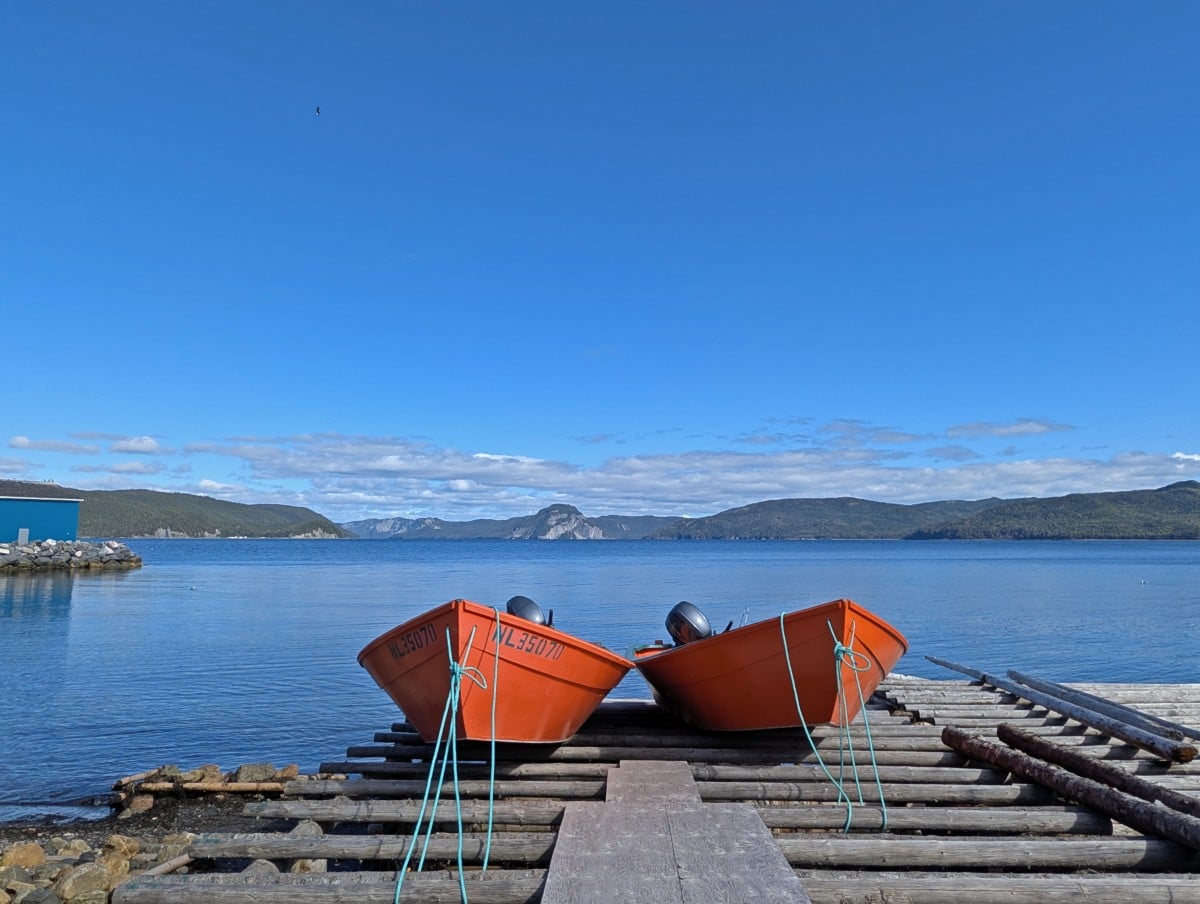
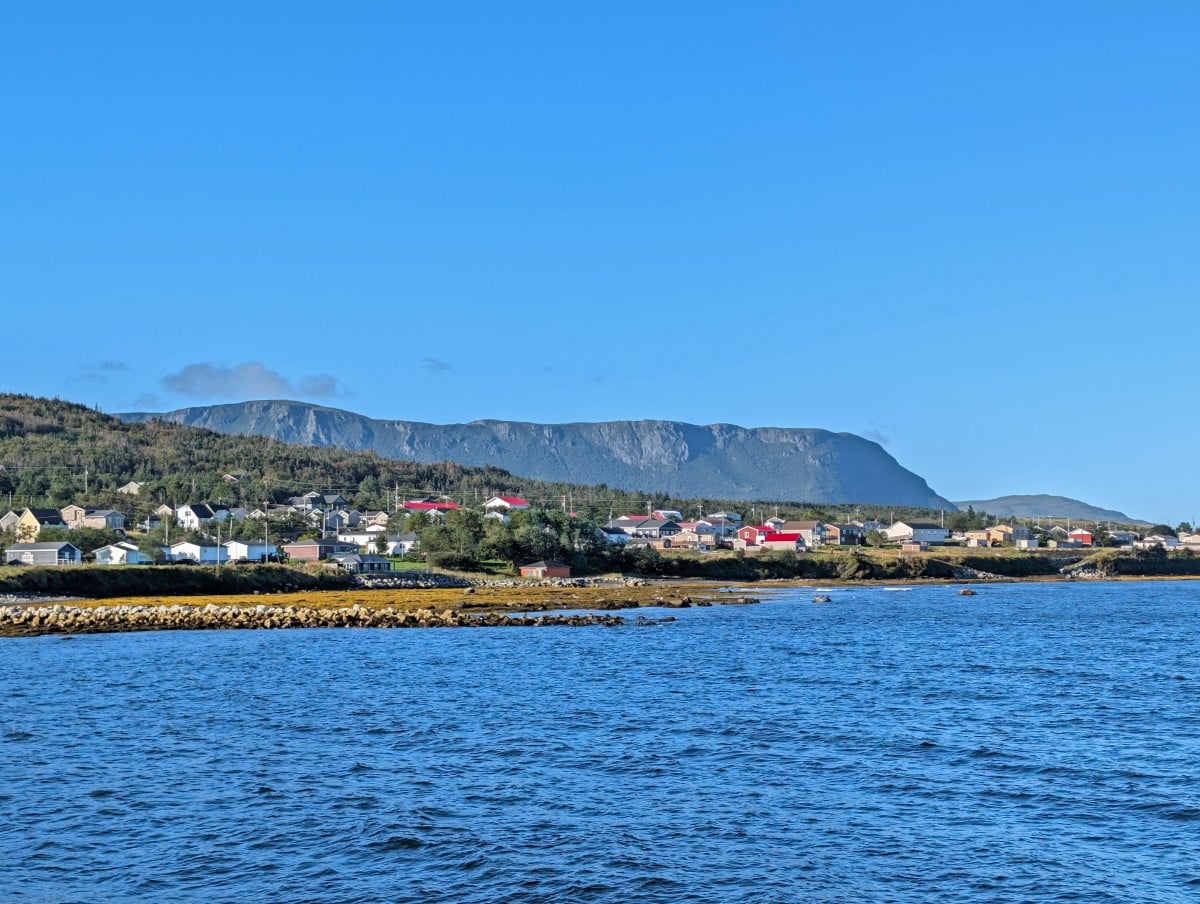
The Bay of Islands is one of Western Newfoundland’s most overlooked destinations, featuring a vast ocean inlet framed by mountains. The scenery rivals Gros Morne and the rock formations tell the same story, yet far fewer visitors make it here.
The area may soon receive UNESCO Global Geopark status for the Cabox Geopark, however (update coming November 2026!)
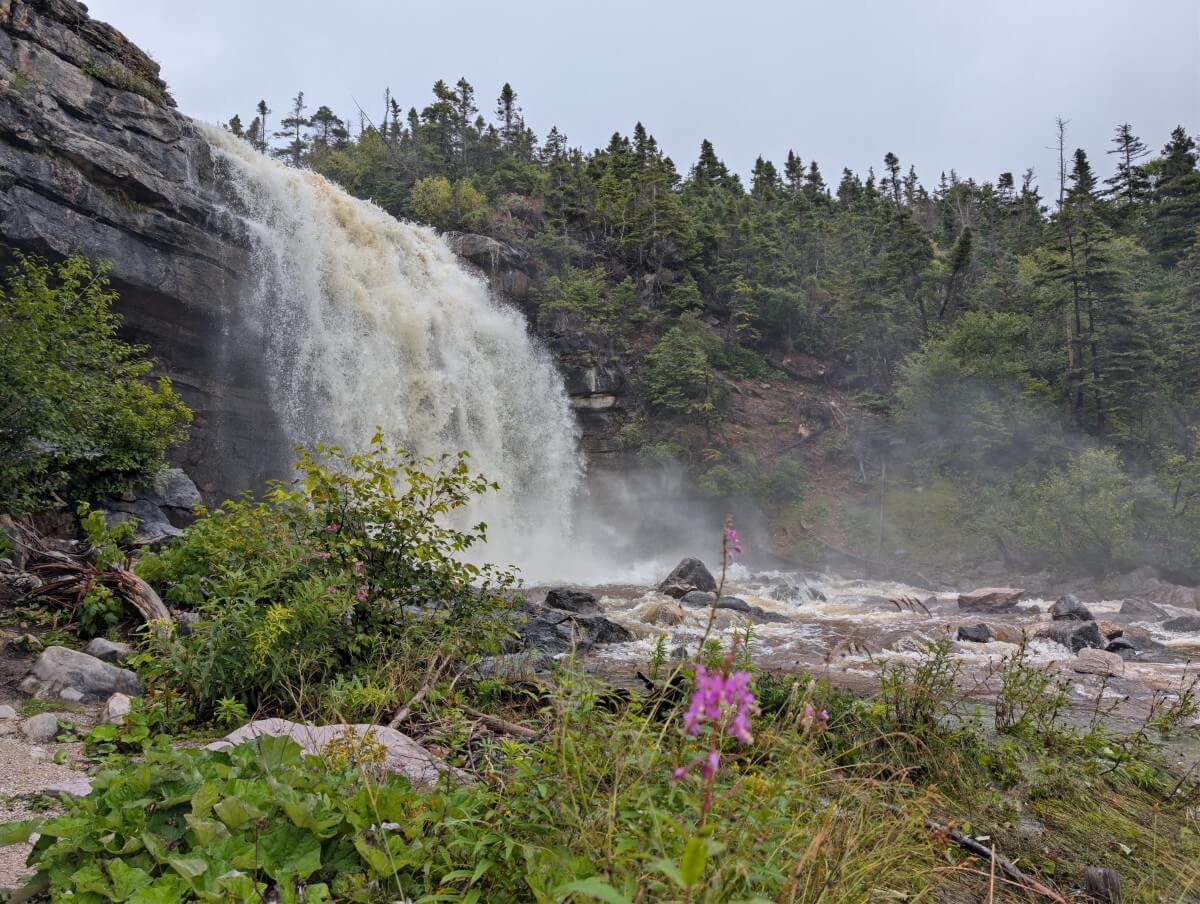
The drive along Highway 450 reveals many of the area’s wonders, with waterfalls, forested peaks and the ocean all competing for attention.
Stop at the The Saltbox along the way for a seafood lunch. At Bottle Cove, follow trails to viewpoints over sea caves, rugged cliffs and lighthouses.
On the way back, stop at the short but rewarding Copper Mine Falls Trail and look for handmade dory boats at Frenchman’s Cove Park. With more time, head into the Blow Me Down Mountains for a chance to see the Earth’s mantle. Guided hikes are available through EverOutdoors.
Gros Morne National Park
Gros Morne is Western Newfoundland’s most famous destination, drawing visitors from far and wide. That hype is well deserved, thanks to the park’s dramatic fjords, towering mountains and expansive coastline.
Beyond its spectacular scenery, the park offers a rare opportunity to explore millions of years of geological history. The landscapes here tell the story of the immense forces that shaped our planet as we know it today.
There’s a lot to explore in Gros Morne and these were our favourite activities:
- Discovery Centre – Visit here first to get the lowdown on the geological history of the park and guided tour times
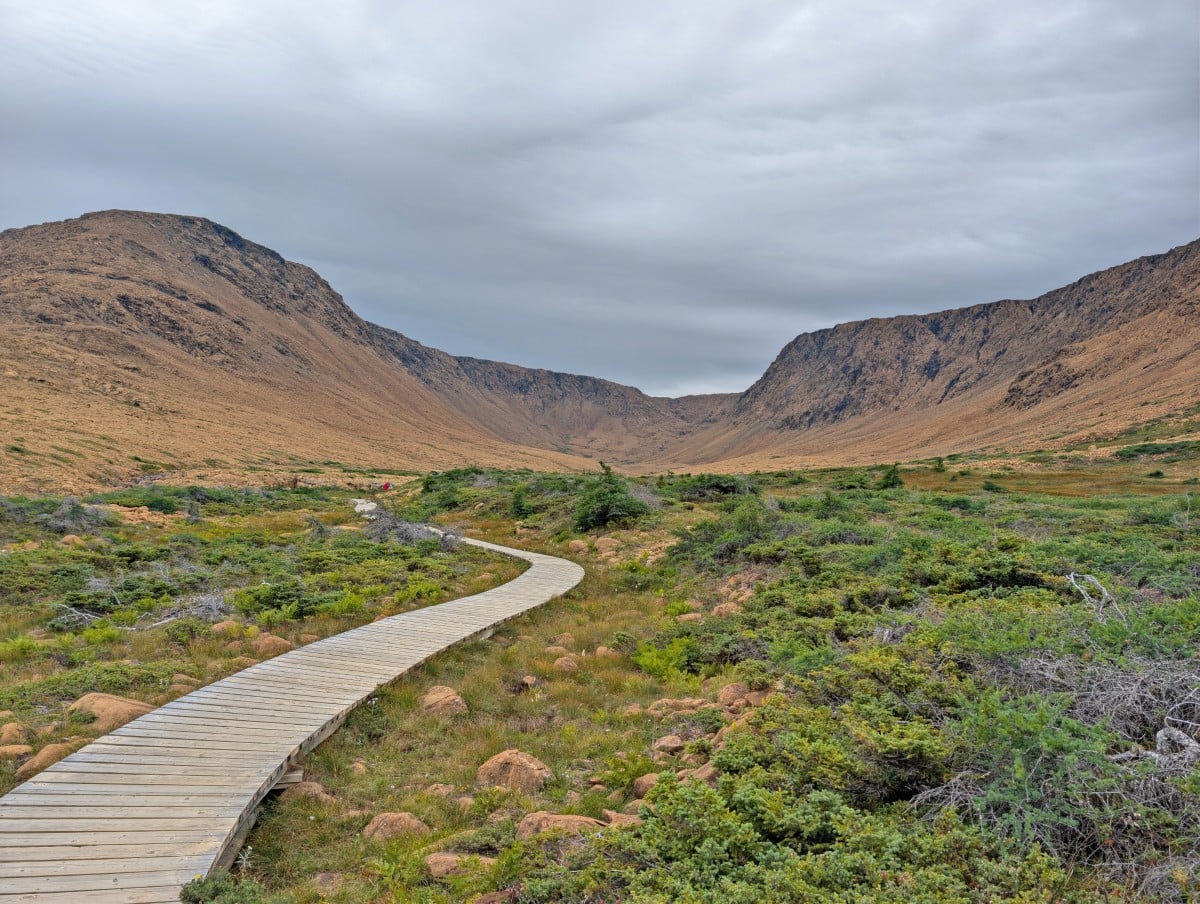
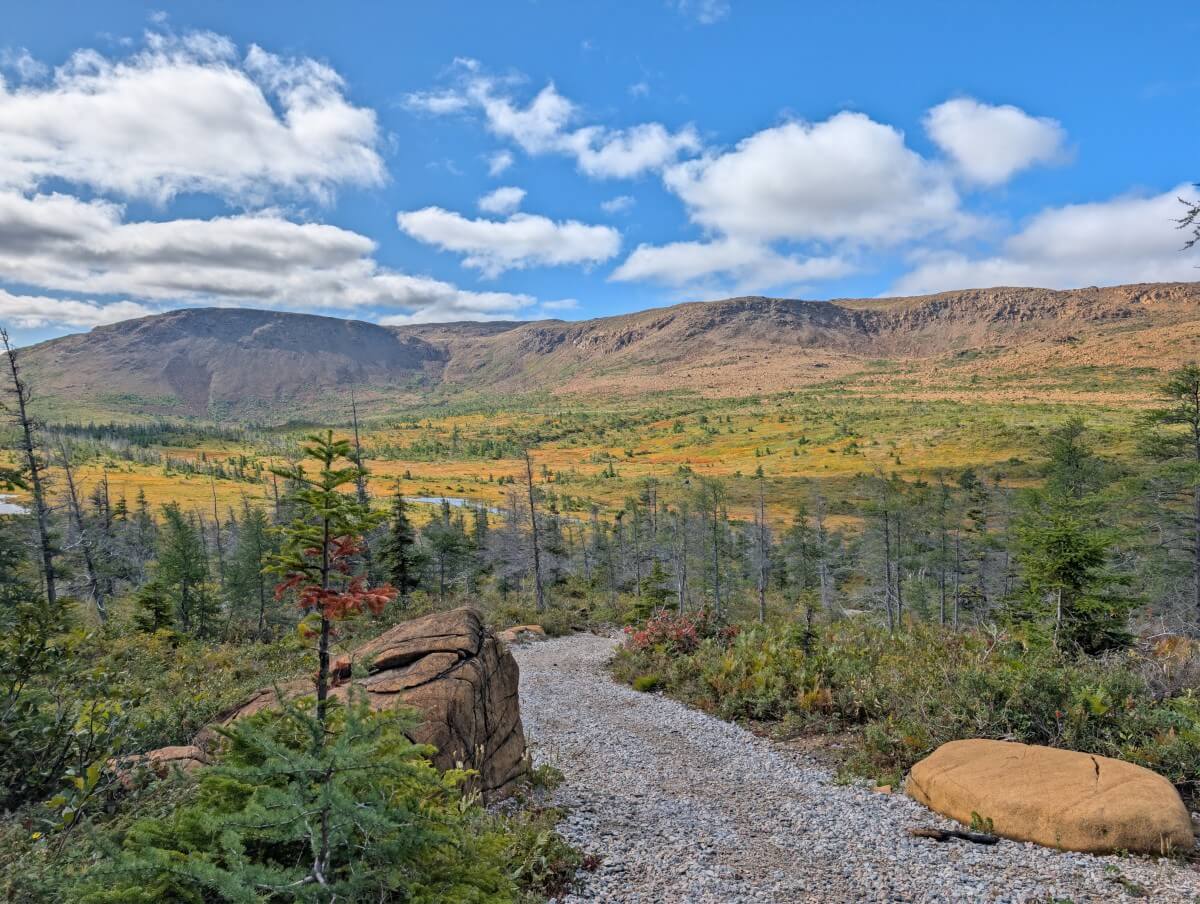
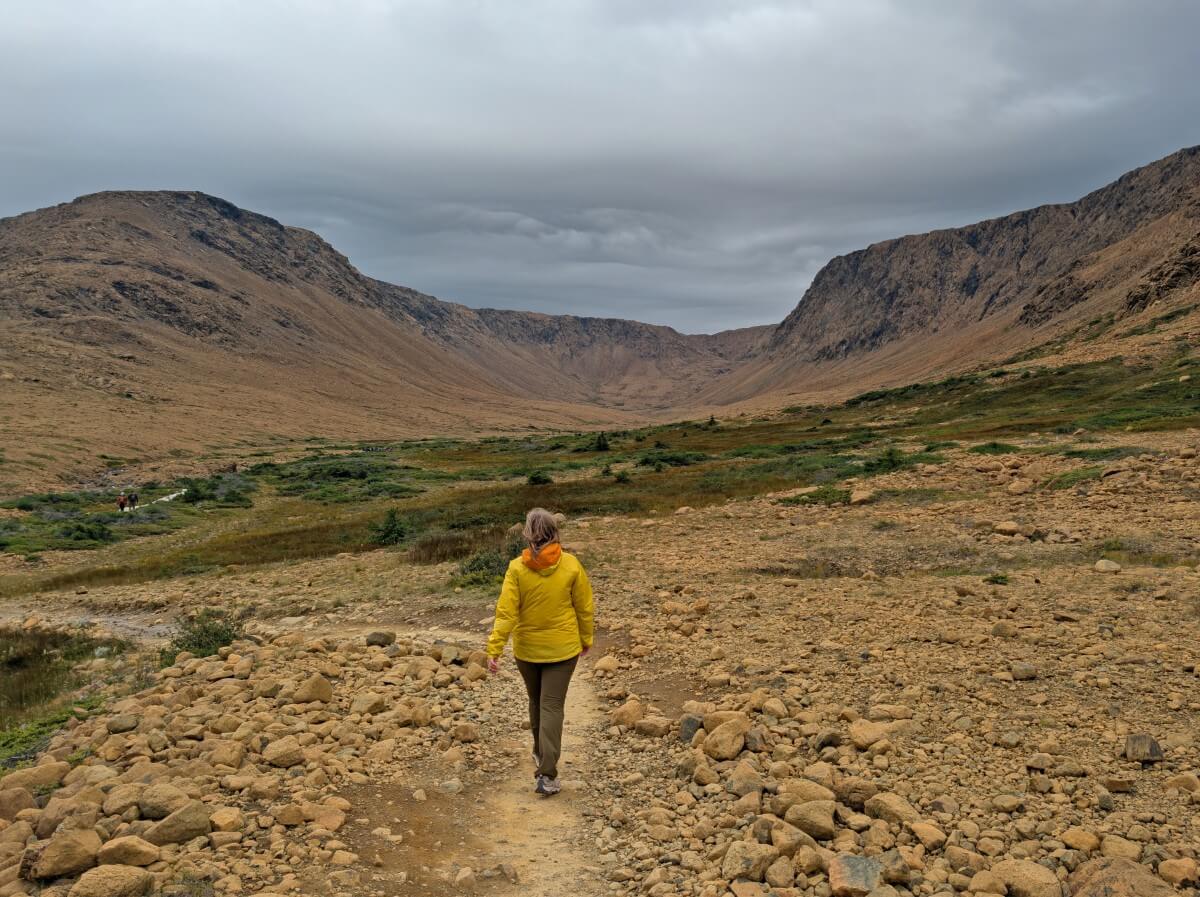
- The Tablelands – 4km return easy hike through a Mars-like landscape featuring peridotite rocks, usually only seen deep inside the Earth.
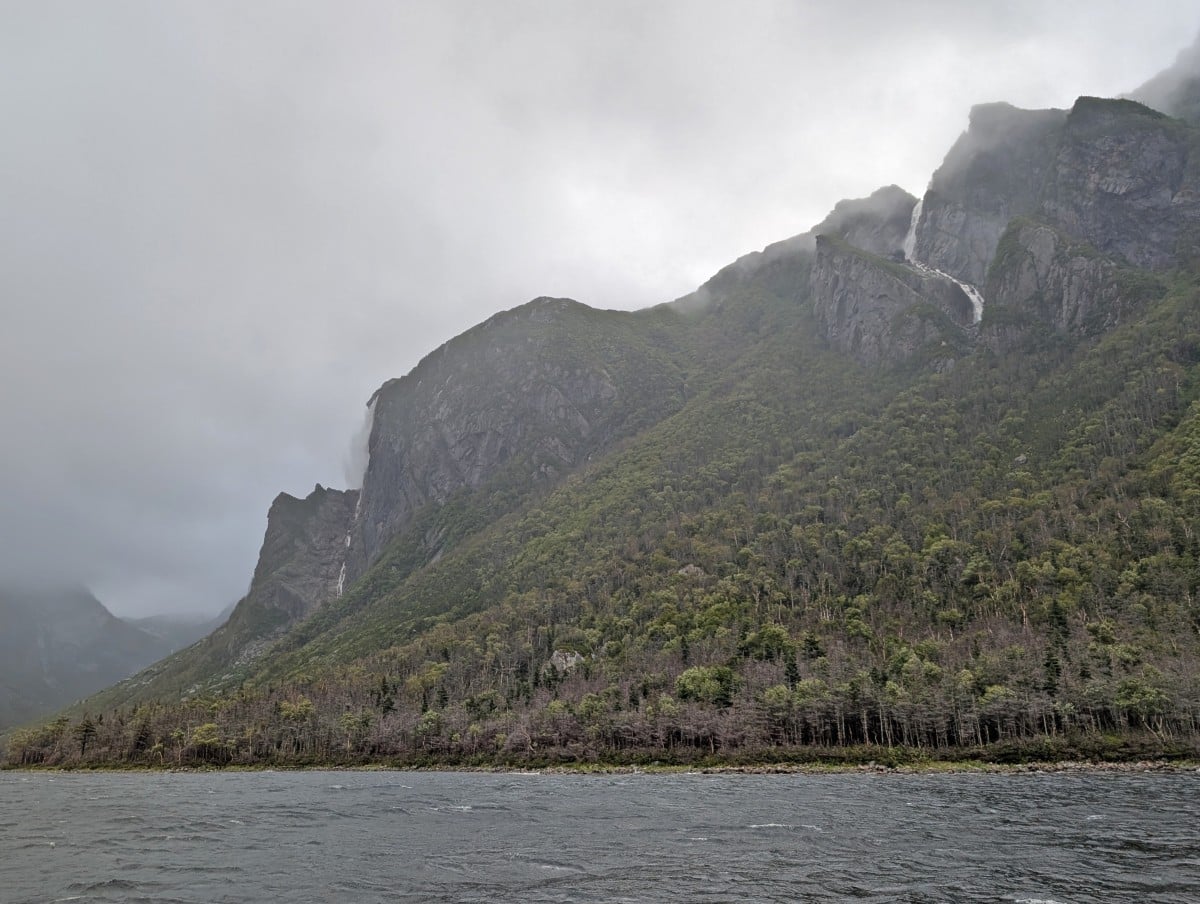
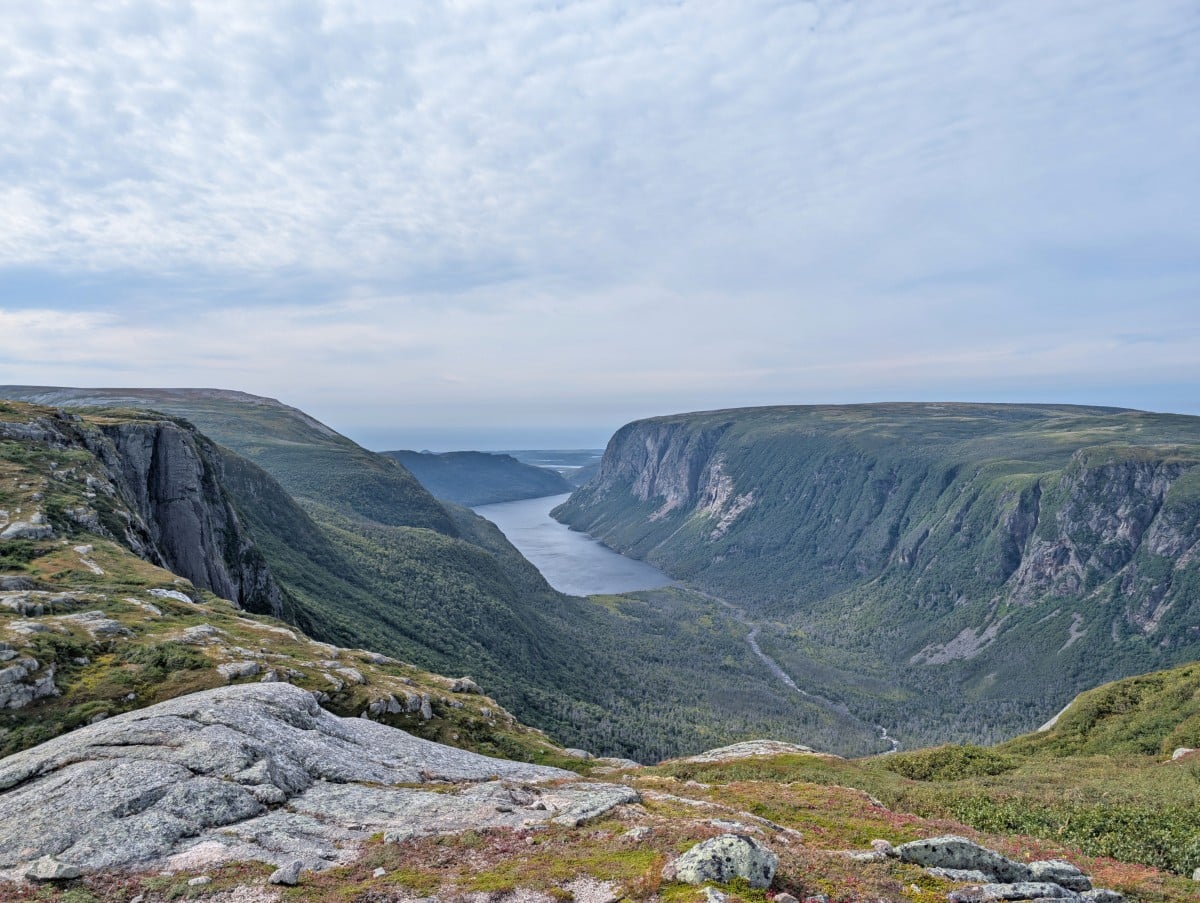
- Western Brook Pond – 6km return walk to ferry dock to take a boat tour on Gros Morne’s most spectacular inland fjord. Think tall granite cliffs, waterfalls and more.
- The Long Range Traverse – 3 to 4 day backcountry hike across the Long Range plateau, starting at the end of Western Brook Pond. Extraordinarily beautiful but challenging, as we found out
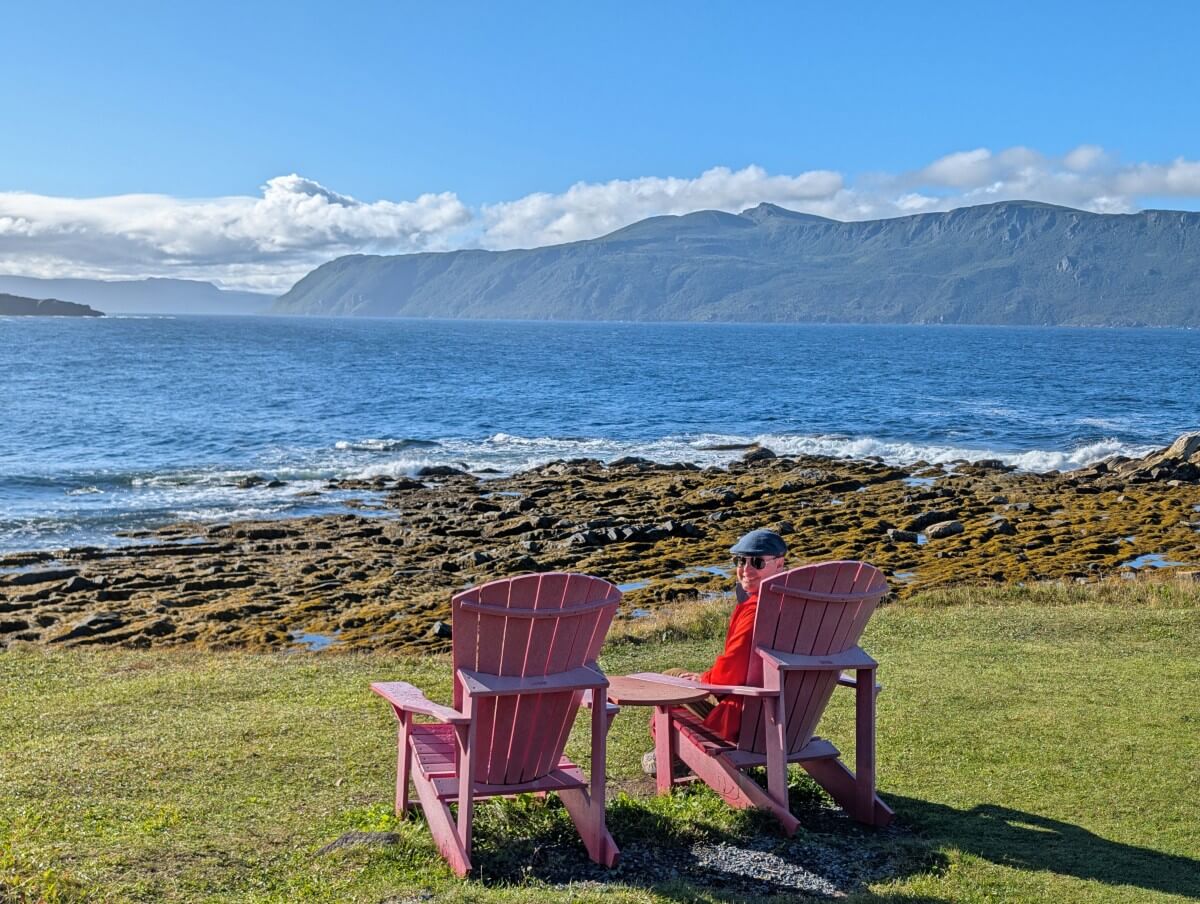
- Lobster Cove Head Lighthouse – Spectacular ocean and mountain views paired with stories from the fishermen who called this place home
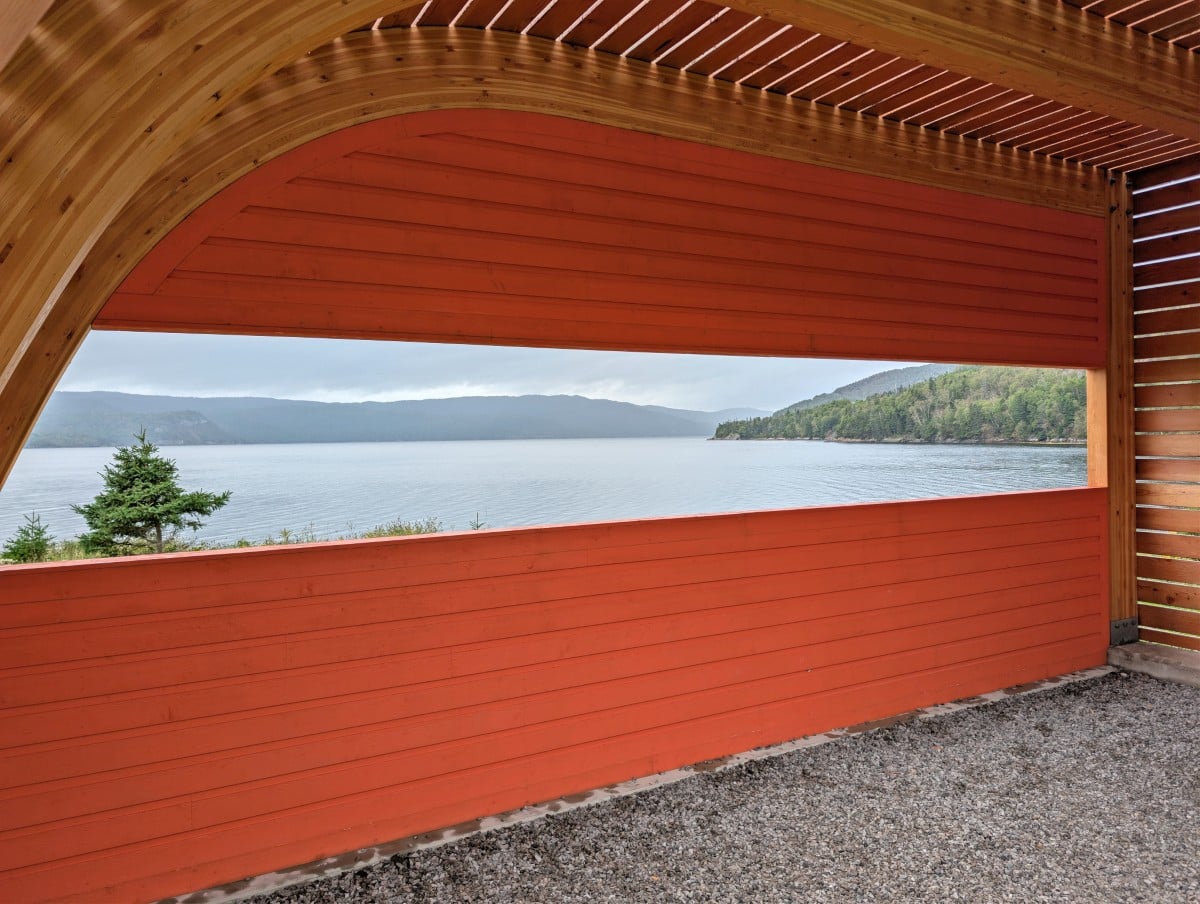
- Seven Corners – See Gros Morne from a different angle with these seven sheltered sites located across the park
- Green Gardens Trail – Contrasting forest and ocean landscapes on a 9km return moderate hike with sea stacks, meadows, coves and wildflowers
- Gros Morne Mountain Trail – Hike the Approach Trail (9km return) to enjoy great fjord and waterfall views. The Summit Trail is challenging and requires a full day commitment
- Green Point – Impressive seaside cliffs with layered rocks. Visit on a tour if you can to discover th geological importance
Where to stay
Base yourself in Rocky Harbour (largest community), Norris Point (surrounded by a fjord) or Woody Point (near the Tablelands). Rocky Harbour and Norris Point are closest to Western Brook Pond.
We loved Gros Morne BaseCamp Harbourside Suites in Norris Point for its ocean views, spacious rooms and next-door proximity to JC King Lobster, home to some of the best lobster rolls we’ve ever had. Seriously, it’s a must visit while in the area.
The Arches Provincial Park
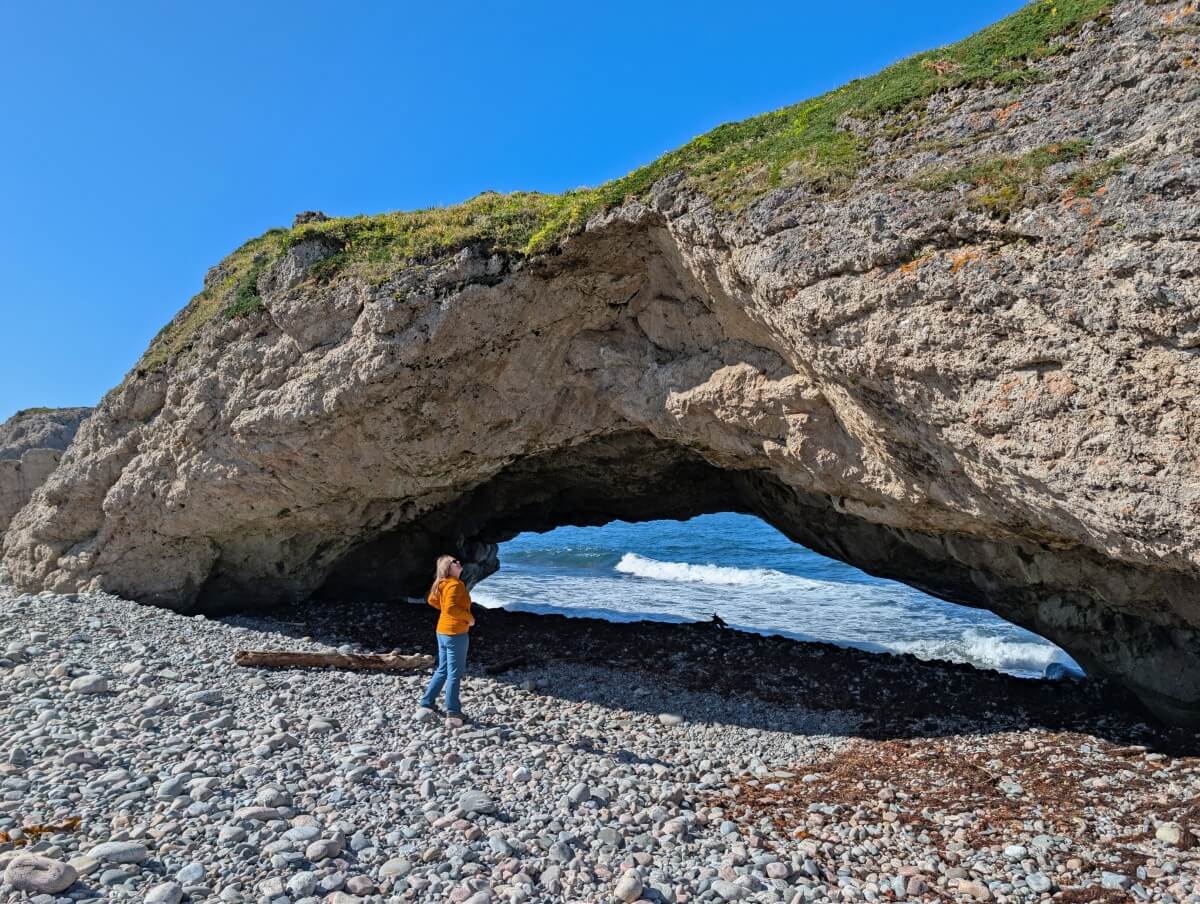
Millions of years of glacial activity and wave erosion have carved three natural rock arches at Arches Provincial Park, just north of Gros Morne National Park. There was once a fourth but it collapsed. These impressive coastal arches are just a short walk from the parking lot.
Before reaching the beach, spot the row of tuckamore – stunted trees that have been bent and shaped into a thick mass by the strong ocean winds. There’s a lovely picnic area overlooking the arches, making it a great spot to stay a while if the weather is warm.
Port au Choix National Historic Site of Canada
For thousands of years, Indigenous people were likely drawn to the Port au Choix area by its abundant natural resources, including seafood, forests, wild game and berries, as well as the safety offered by the peninsula.
The local limestone bedrock and alkaline soils helped preserve evidence of these cultures.
Port au Choix National Historic Site features several archaeological sites, including a Maritime Archaic burial ground and Phillip’s Garden, a Dorset settlement with 50+ dwelling depressions (6km return hike).
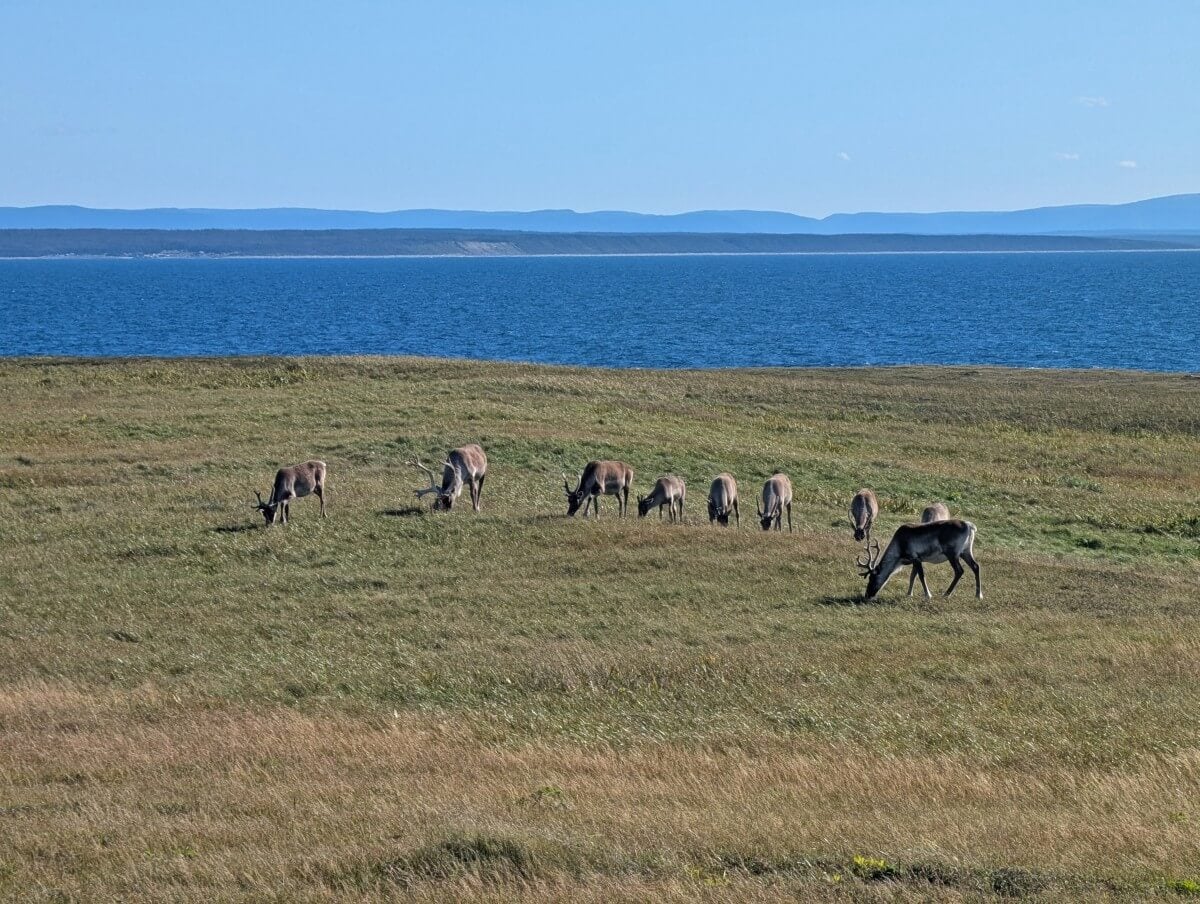
Port au Choix is significant for a few other reasons, with one being its caribou herd. They like to hang out about the Pointe Riche Lighthouse, which is also a worthy destination.
Another worthwhile stop is the French Rooms Bread Oven, where freshly baked rolls from the outdoor oven are served at 2pm with jam, tea and traditional music.
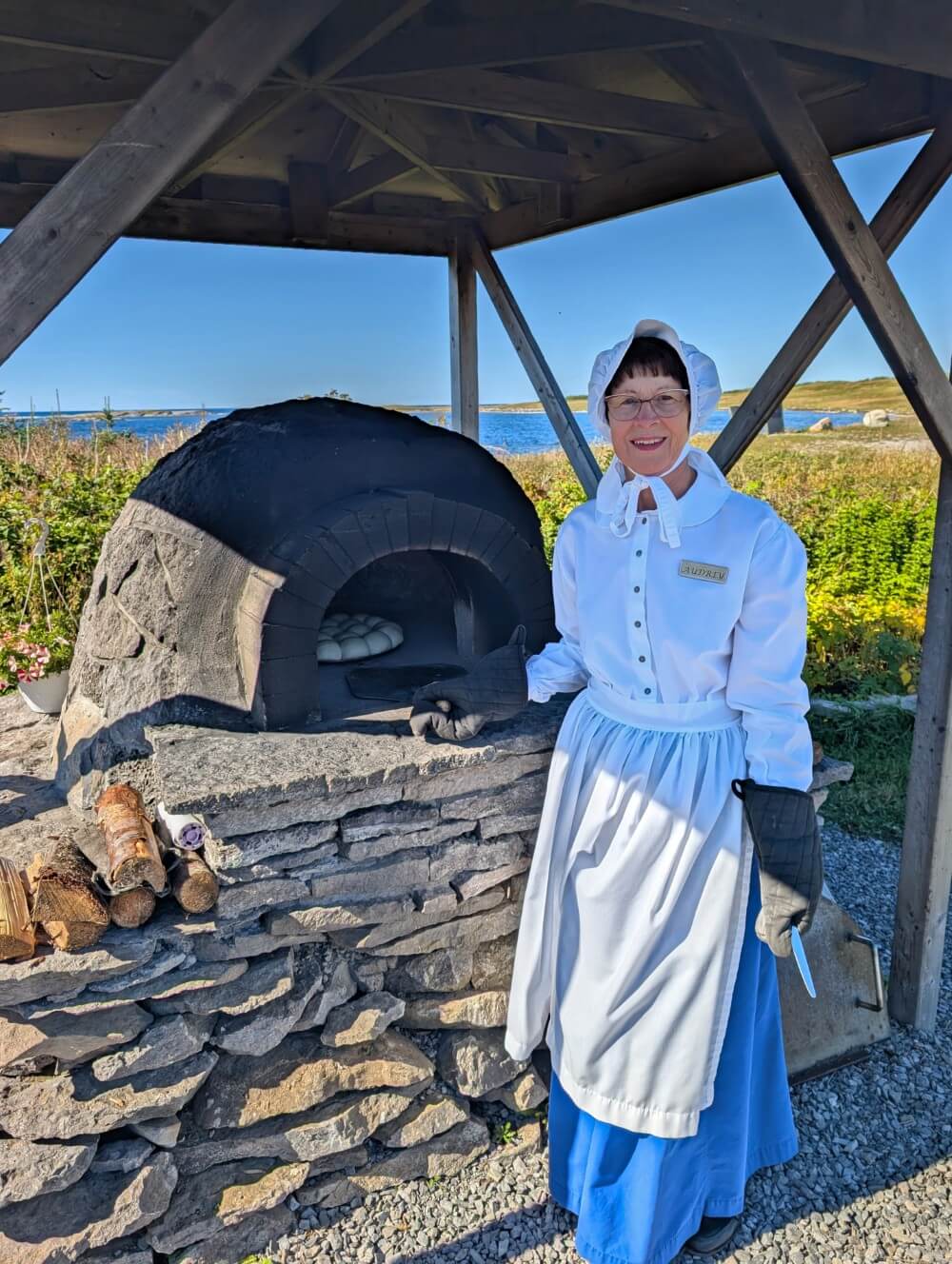
Thrombolite Trail
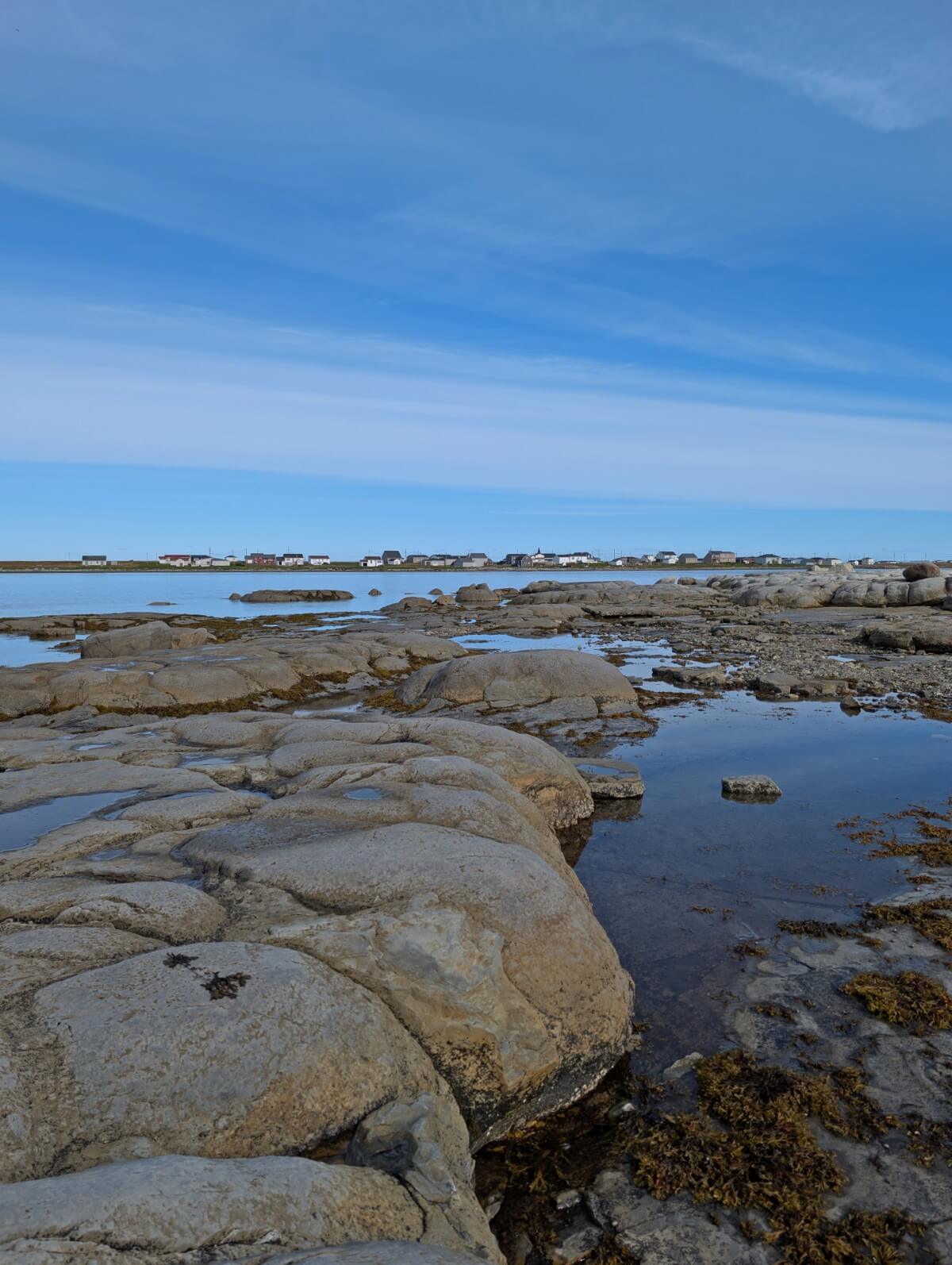
Have you ever heard of thrombolites? If so, you’re in luck – this is one of only two places in the world to see them! For those unaware, thrombolites are rock-like structures formed by communities of microorganisms, representing some of the earliest forms of life on our planet.
The community of Flower’s Cove has a short 2km return trail to see a collection of oceanside thrombolites. The only other location in the world with them is south of Perth in Western Australia (which, funnily enough, we have also visited!)
Conche
With a population of just 150 people, Conche is a tiny coastal community with a surprising amount to see and do. It’s definitely a bit off the beaten path but we certainly felt rewarded by making the detour.
Conche is part of Newfoundland’s French Shore, a coastline with centuries of French fishing history. Like so many other local communities, Conche was accessible only by boat until a road was built in 1969. It’s so much easier now to explore and I’d suggest starting at Sailor Jack’s Hill for the views.
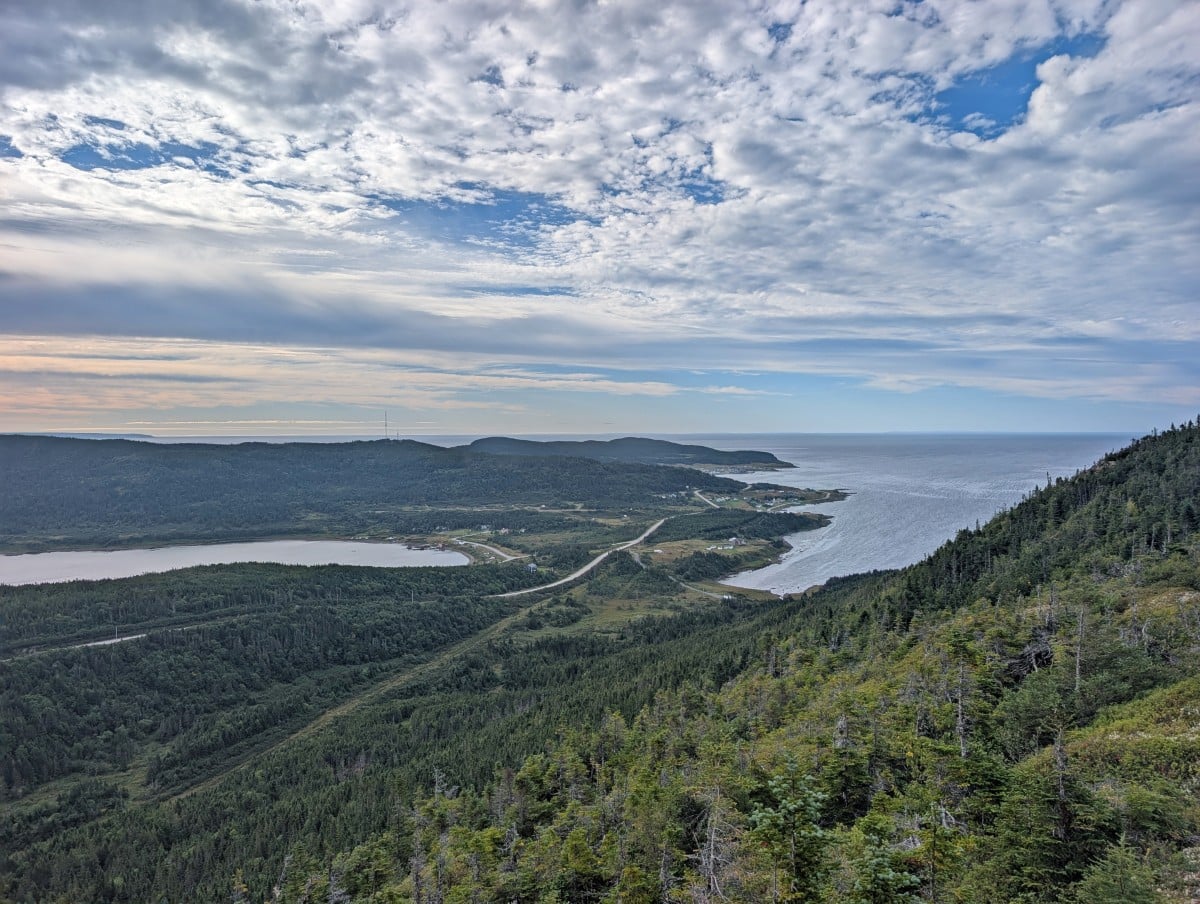
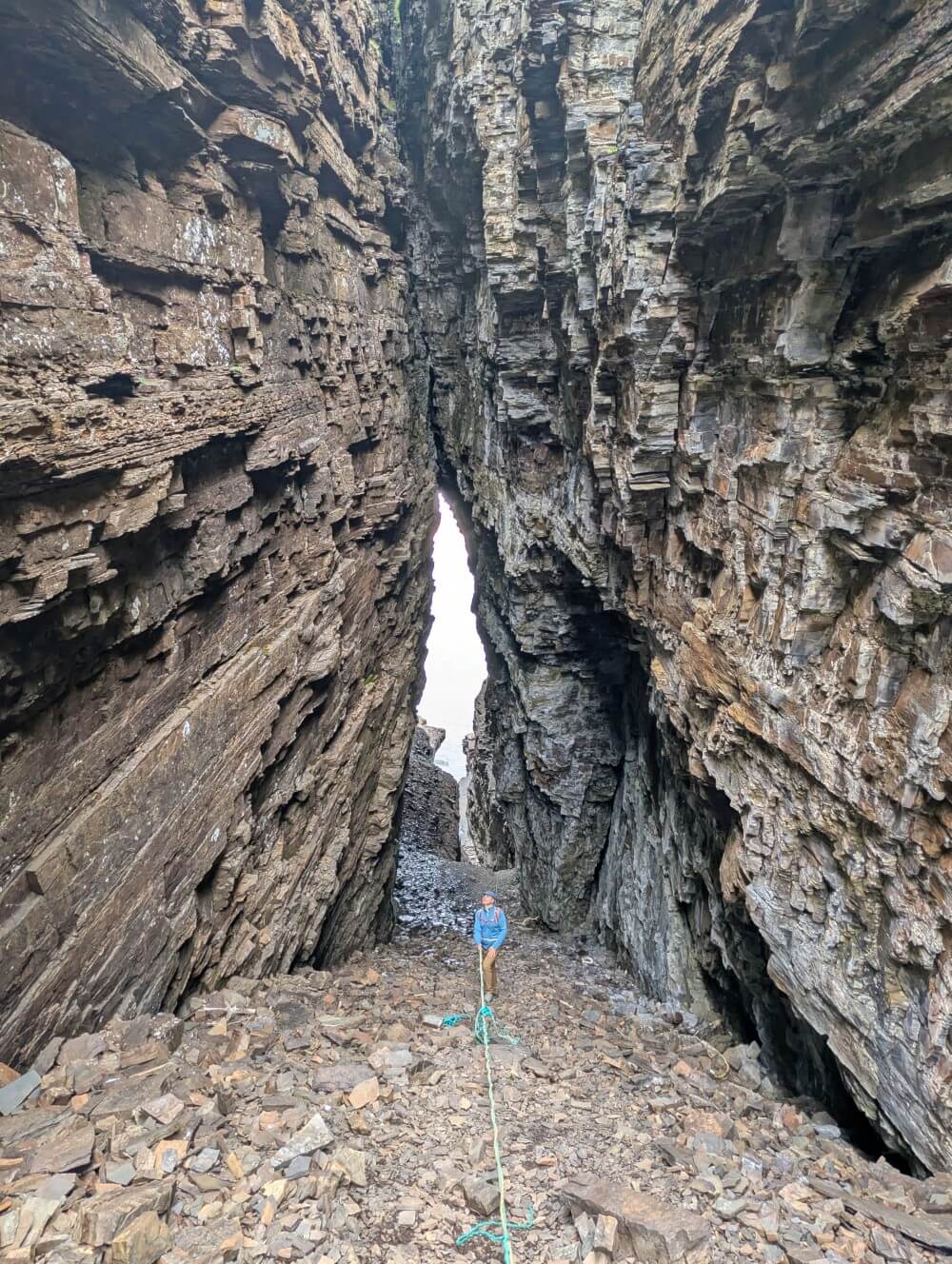
Then, hike the amazing Glass Hole Trail to a deep sea cave (allow 2-3 hours for the loop), which also passes the 1942 crash site of a Douglas DB-7 bomber plane.
Head to the Boutitou Coffee food truck (get the chocolate chip cookies!) for a late lunch before swinging by the French Shore Interpretation Centre to see the incredible 66m long French Shore Tapestry, made by the local community.
On the way out of Conche, drop by the Underground Salmon Pool – the only known place in the world where salmon migrate through an underground cave. Note that the 2.5km access road is unpaved.
Raleigh, Cape Onion and Burnt Cape
Raleigh is another peaceful coastal community on the Northern Peninsula, with a few unique local attractions worth checking out.
The limestone peninsula of Burnt Cape Ecological Reserve may look barren, but it’s actually one of the best places to find rare arctic-alpine plants. Around 300 different species (with around 10% being considered rare) grow in the calcium-rich soil despite the very cold surrounding temperatures.
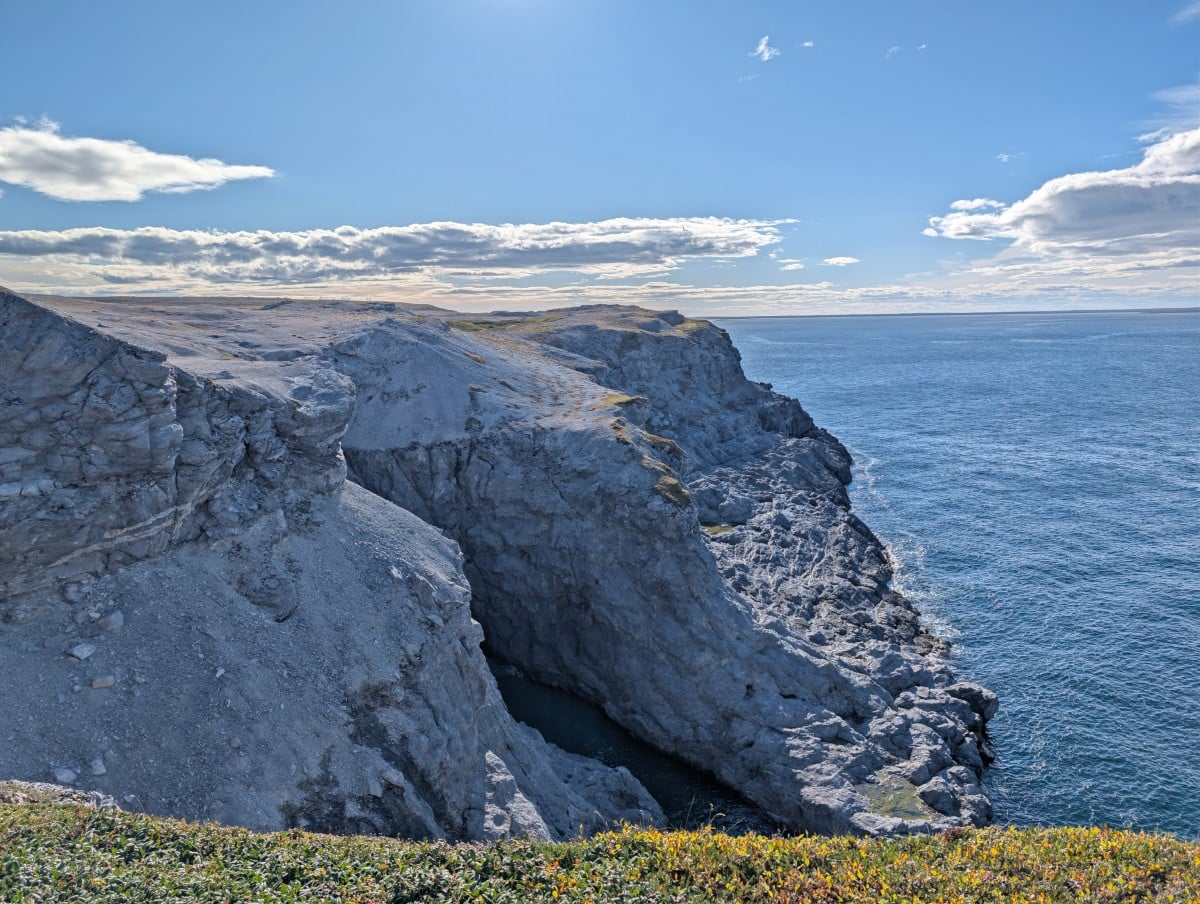
The Cape is also known for its caves, located near the tip of the peninsula at the end of an unpaved road. Visitors can either drive or walk the 5.2 km return route to reach them.
Road conditions can vary, according to locals. We drove it in an SUV in mid-September without any major problems, though we had to take it slowly and carefully, averaging around 30–40 km/h.
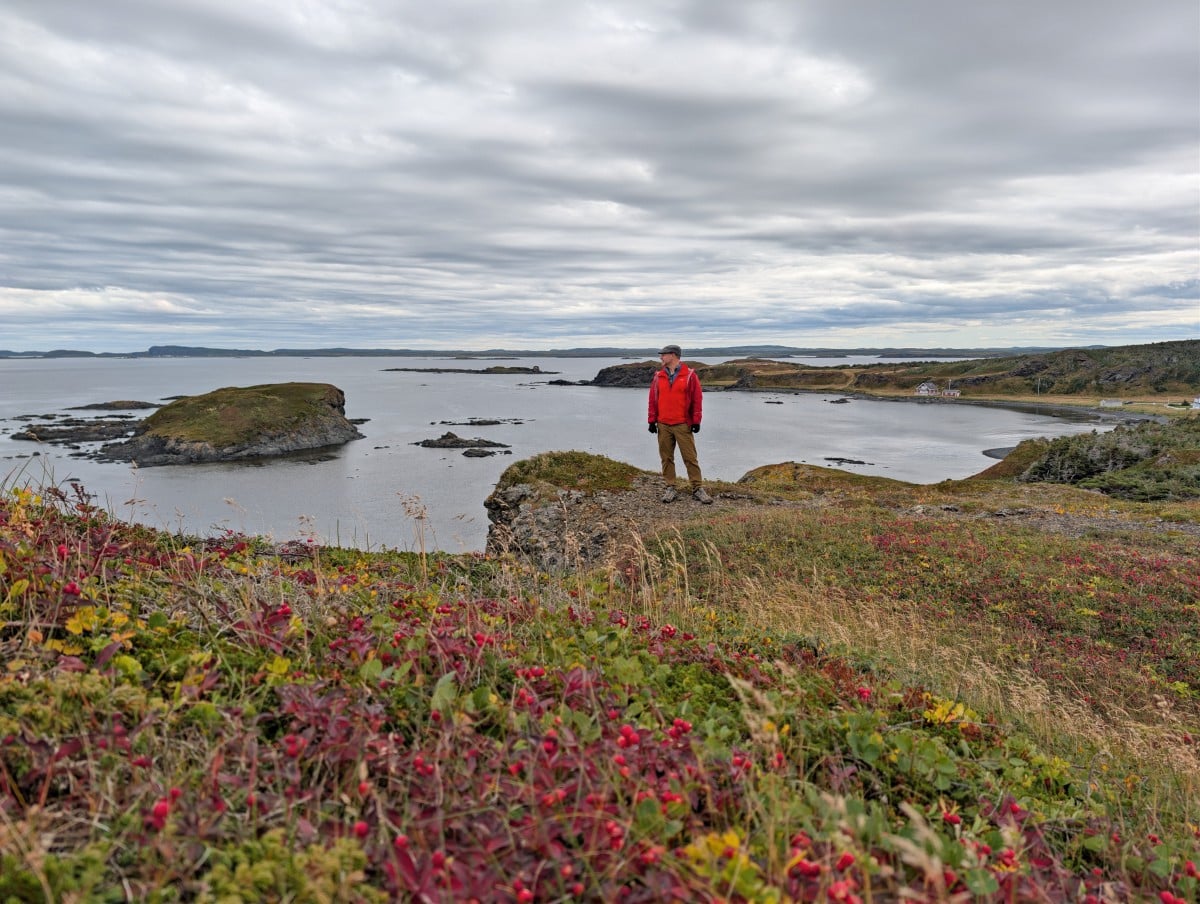
Another great place to go is Cape Onion. Right at the end of Cape Onion Road (also labelled Highway 437), we hiked a section of Treena’s Trail, part of the Great Northern Trail Network. It quickly led us along the coast up to the rugged Cape, with stunning views the whole way.
Where to stay
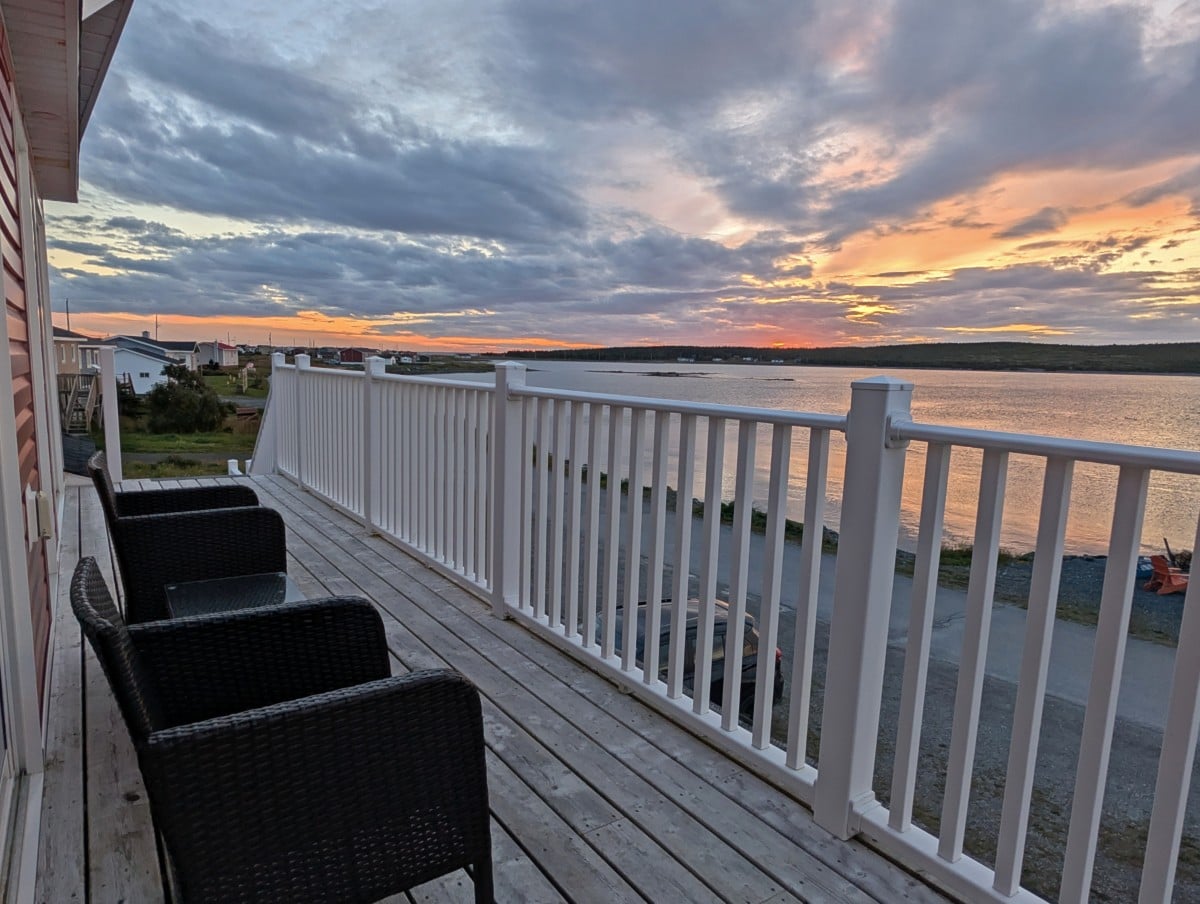
The Raleigh Rooms is a great no-fuss base for exploring this part of Western Newfoundland. The spacious rooms have ocean views, balconies and outdoor seating areas. Food options are limited, so we ate in St. Anthony and Saint Lunaire-Griquet (plan ahead!)
St. Anthony
St. Anthony is the largest town on the Northern Peninsula. That means it is the only place with services like Tim Hortons, full size grocery stores, a choice of hotels and even a dollar store. If you need to stock up on supplies or want more dining and accommodation options, this is the place!
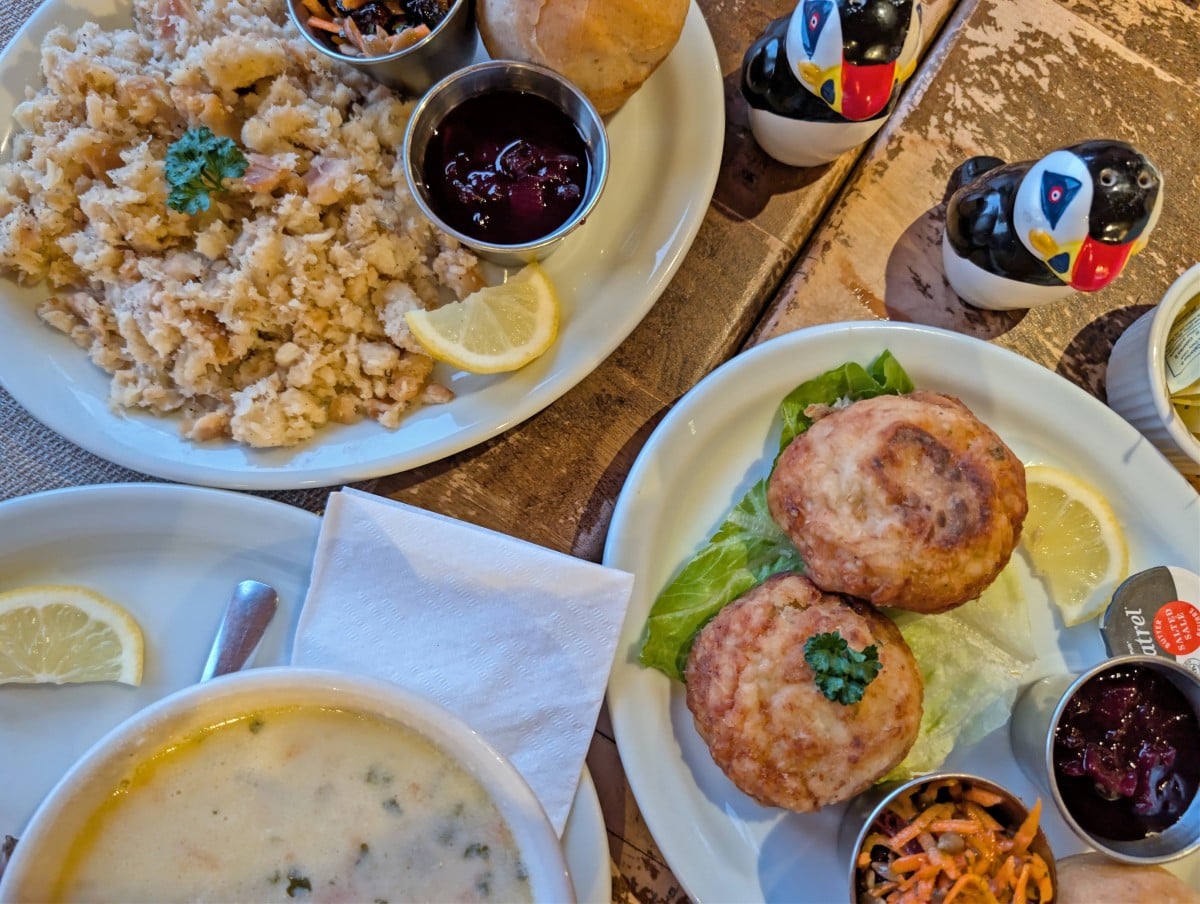
But St. Anthony has other reasons to visit too. Fox Point Lighthouse is a wonderfully scenic spot, with a chance to see whales and icebergs during summer. We enjoyed seafood chowder and fish cakes at the nearby Lightkeepers Cafe.
St. Anthony’s most famous resident was Sir Wilfred Grenfell, a doctor and missionary who dedicated 50 years to serving isolated communities in the region. He campaigned to secure funding for numerous humanitarian projects, including the hospital in St. Anthony. There are several museums.
Where to stay
Though we didn’t stay in St. Anthony, I’ve read good things about the Crows Nest Inn as well as the Grenfell Heritage Hotel and Suites. The latter offers free breakfast and is located right in town, within a walkable distance to both stores and the ocean.
L’Anse aux Meadows National Historic Site
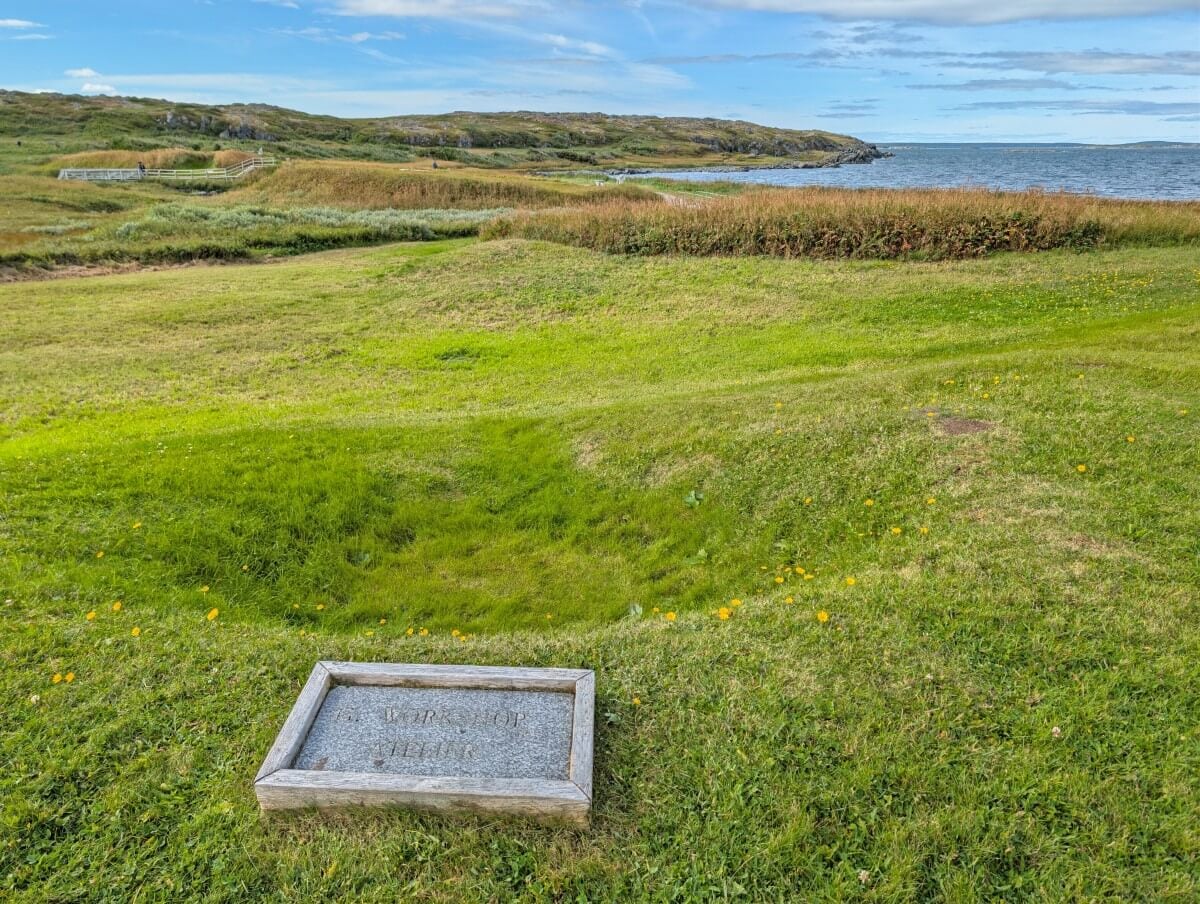
The site of the earliest verified European arrival in North America, Norsemen travelled to L’Anse aux Meadows from Greenland around 1020AD. It is believed that they used the area as a seasonal base camp to explore further south as well as a place to repair boats for the return trip.
L’Anse aux Meadows National Historic Site, operated by Parks Canada, features the original archeological site and a reconstruction of what the sod buildings would have looked like, complete with costumed interpreters.
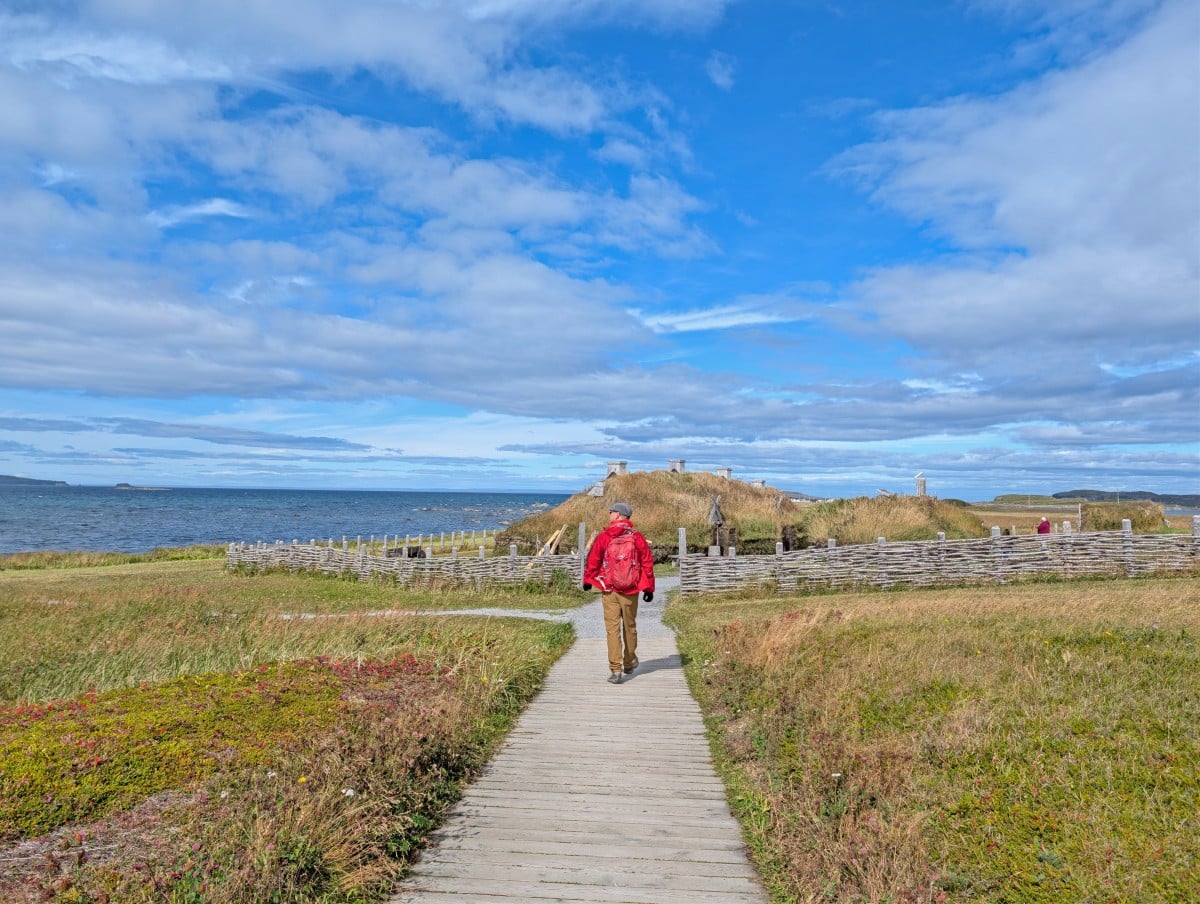
I’d recommend joining a free guided tour to learn about the discovery story and how the temporary settlement functioned. The archeological site doesn’t have a lot of signage so the interpretation was really helpful to bring it to life. We caught the 10am English tour.
Before visiting, I always wondered how they could confirm that the Norse were here. After all, Indigenous people also utilised the site for centuries. It all comes down to iron-working, a technology that the Norse brought with them.
Before leaving L’Anse aux Meadows, make the drive to the End of the Road. It’s the northernmost point of Newfoundland you can reach by car! A fitting end to this Western Newfoundland road trip guide. I’d also recommend eating at Café Nymphe in Saint Lunaire on the way back.
Western Newfoundland road trip planning essentials
Inspired to take road trip Western Newfoundland? Before you start planning your itinerary in detail, you may find the following tips helpful.
When to go
The best time to visit Western Newfoundland depends on what you want to see and do during your trip.
Keep in mind that most of the below estimates vary from year to year, based on ocean and/or weather conditions. And, of course, the weather can be unpredictable!
- Icebergs – May to mid June
- Whales – Mid June to late August
- Hiking – Late June to the end of September/early October
- Warmest, driest weather – July and August
- Fall colours – Late September to early/mid October
- Off peak travel periods – May, June, September, early October
Our two-week trip in mid-September brought a mix of weather, from bright, sunny days to cloudy skies and a couple of very rainy days.
We had some kind of wind most days, especially when we were right on the coast. Boat tours, including kayaking, fishing trips and the Western Brook Pond boat tour, may be cancelled on particularly windy days.
Average daytime temperatures during our trip ranged from 10°C to 16°C. Locals told us that it was a bit cooler than normal.
Hiking was our main priority, so September was an ideal time for our trip. The trails and most of the places we visited were very quiet, with the majority of tourists concentrated around Gros Morne and L’Anse aux Meadows.
Western Newfoundland road trip itinerary
Not sure where to begin? Here’s a couple of sample Western Newfoundland road trip itineraries, based on our own experiences.
For the most part, I’ve tried to suggest routes that include multiple days at the same accommodation, rather than moving every night. Although you’ll still be covering a lot of ground, returning to the same place makes a road trip feel a bit more relaxed.
8 day itinerary by plane
- Day 1 – Fly into Deer Lake Airport, hire vehicle, travel to Corner Brook
- Day 2 – Explore Bay of Islands, overnight in Corner Brook
- Day 3 – Travel to Gros Morne National Park, overnight in Rocky Harbour/Norris Point
- Day 4 – Gros Morne National Park, return to same accommodation
- Day 5 – Travel to Saint Lunaire-Griquet/St. Anthony/Raleigh area
- Day 6 – L’Anse aux Meadows National Historic Site, return to same accommodation
- Day 7 – Travel to Rocky Harbour/Norris Point or Deer Lake
- Day 8 – Fly out from Deer Lake
We rented a vehicle at Deer Lake Airport. Since our flight arrived around 1.30am, we stayed in a hotel nearby and then returned by taxi the next day ($15) to pick it up. Some of the major rental companies are open 24/7, however, so we could have picked it up at the time of our arrival.
10 day off the beaten path itinerary by plane
- Day 1 – Fly into Deer Lake Airport, hire vehicle, travel to Corner Brook
- Day 2 – Explore Bay of Islands, return to Corner Brook
- Day 3 – Explore Port au Port area, return to Corner Brook
- Day 4 – Travel to Gros Morne National Park, stay in Woody Point/Rocky Harbour/Norris Point
- Day 5 – Gros Morne National Park, return to same accommodation
- Day 6 – Travel to Saint Lunaire-Griquet/St. Anthony/Raleigh area
- Day 7 – L’Anse aux Meadows National Historic Site, return to same accommodation
- Day 8 – Travel to Port au Choix via Conche
- Day 9 – Travel to Rocky Harbour/Norris Point or Deer Lake
- Day 10 – Fly out from Deer Lake
If you have another couple of days to spare, I’d recommend going further south to Port aux Basques, Rose Blanche and/or the Port au Port Peninsula.
10 day off the beaten path itinerary, arriving by ferry
- Day 1 – Evening arrival, stay in Port aux Basque or Rose Blanche
- Day 2 – Explore Rose Blanche Lighthouse, travel to Port au Port Peninsula
- Day 3 – Explore Bay of Islands, stay in Corner Brook
- Day 4 – Travel to Gros Morne National Park, stay in Woody Point/Rocky Harbour/Norris Point
- Day 5 – Gros Morne National Park, return to same accommodation
- Day 6 – Travel to Saint Lunaire-Griquet/St. Anthony/Raleigh area
- Day 7 – L’Anse aux Meadows National Historic Site, return to same accommodation
- Day 8 – Travel to Port au Choix via Conche
- Day 9 – Travel to Rocky Harbour/Norris Point or Deer Lake
- Day 10 – Travel to Port aux Basque (if returning by ferry) or continue east
Travellers taking the overnight ferry from Nova Scotia will have an ‘extra’ day to play with. Personally, I’d spend another night in Corner Brook as there is so much to see and do in the local area.
Essential items to bring
- Warm clothing/layers, even in the summer months. Coastal temperatures are always cooler than you may expect and Newfoundland is known for its windy and changeable conditions.
- Rain jacket. Even in the summer months, it’s a must!
- Bug repellent. We didn’t have any problems in September but I understand that mosquitoes, no-see-ums and blackflies are present in late spring and summer, especially in wooded areas, bogs and other inland locations
- Parks Canada Discovery Pass. Already have a Parks Canada annual pass? Be sure to bring it with you to receive free admission into Gros Morne National Park and L’Anse aux Meadows
- Ferry reservation. In the summer months, a ferry reservation for the Port aux Basques route is essential if you want to travel on specific sailing
- Binoculars. Bring a pair of these to search for whales or get a better look at birds, caribou and other wildlife in Western Newfoundland!
Local food and drink to try
I’d recommend sampling as many regional specialties as you can during your visit to Western Newfoundland.
As you might expect, seafood is the star of the show and rightly so. Don’t leave Western Newfoundland without eating cod at least once. This fish has shaped Newfoundland’s history, economy and culture for centuries
- Fish and chips is one of the most popular ways to eat cod and you can usually choose between battered (deep fried) or pan fried.
- Cod tongues are a local delicacy made from the fleshy muscle at the back of the cod’s throat. Usually pan-fried until golden, they are a delicious crispy bite-sized appetiser
- Boiled salt cod is combined with scrunchions (salted pork) and hard bread/hard ‘tack‘ (dense cracker) to make fish and brewis. It is similar to a deconstructed fish cake
- Fish cakes are a common menu item and usually include onions and potatoes
- Seafood chowder is a classic Newfoundland dish and we ate many different versions featuring a mix of local fish, salmon, shrimp, scallops, lobster, potatoes and other root vegetables
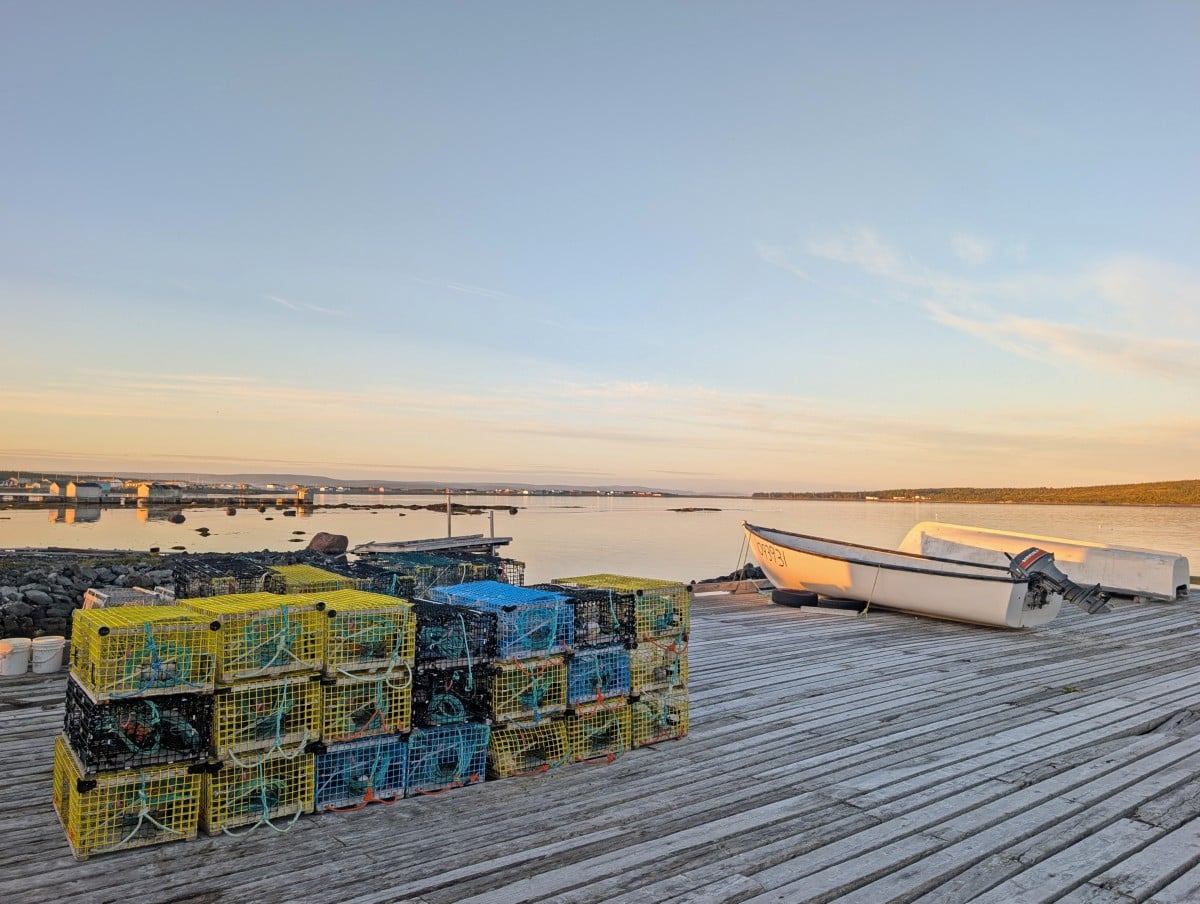
- Western Newfoundland’s lobster season runs from mid April to late June or mid July, depending on the area. It’s usually still possible to find boiled lobster or lobster rolls outside of this time
- When it comes to meat, moose is often available alongside more familiar options. Look out for moose tacos, stews, burgers and sausages
- For sweet treats, local berries take centre stage. Look out for tart bakeapples (also known as cloudberries) as well as partridgeberries (lingonberries) and squashberries (highbush cranberry). Purchase jams from Dark Tickle in Saint Lunaire
- There are two local craft breweries – Boomstick in Corner Brook and Secret Cove in Port au Port
Keep in mind when planning your trip that vegetables (beyond potatoes and carrots) don’t feature prominently on menus at most Western Newfoundland restaurants. It is understandable due to the local growing limitations and the cost of importing fresh produce.
Final tips
- Don’t wait too long to fill up on gas. Services can be limited outside the main towns. This is especially true when driving the Northern Peninsula up to L’Anse aux Meadows
- Phone signal is limited in some areas, particularly on the Northern Peninsula and in some areas of Gros Morne National Park . Download maps before setting off and don’t rely on mobile data for navigation
- Travel with snacks and drinks. There are long stretches of road in this region with limited food options. It’s a good idea to have a back-up, especially in the shoulder season months and if you plan to hike a lot
- Look out for moose. Western Newfoundland has one of the highest moose population densities in North America. Be particularly careful at dawn, dusk and after dark. We met many locals who do not drive after sunset
- Check seasonal opening dates and hours. Most attractions, museums and visitor facilities are open from late June to early September. Outside this period, expect reduced hours, fewer operating days and possible closures in rural areas. Most Gros Morne services are open until early October
- Book accommodation in advance. Many of the communities in Western Newfoundland are small and accommodation is therefore limited. Book ahead, especially in summer
- Build in some flexibility into your schedule. This is a laid back, relaxed place. Don’t rush. Chat with the people you meet along the way, explore side trails and take the time to follow local recommendations. Your trip will be all the better for it!
Other Newfoundland posts you may find helpful
48 Hours in St John’s, Newfoundland: Best Things to Do
East Coast Trail Hiking and Camping Guide, Newfoundland
Long Range Traverse, Gros Morne National Park: Complete Backpacking Guide
Check out these recently published posts:

One half of the Canadian/British couple behind Off Track Travel, Gemma is happiest when hiking on the trail or planning the next big travel adventure. JR and Gemma are currently based in the beautiful Okanagan Valley, British Columbia, Canada. Consider buying us a coffee if you have find any of our guides helpful!