
On the road in Saskatchewan and curious about what to see along the way? There are plenty of unique and interesting places to explore beyond Highway 1, many of which will give you a whole new perspective on this underrated province.
While we may not be Saskatchewan travel experts, JR and I have explored a wide range of local destinations and activities over the years.
In our experience, this province is anything but flat and boring. Anyone who says otherwise needs to get off Highway 1 ASAP!
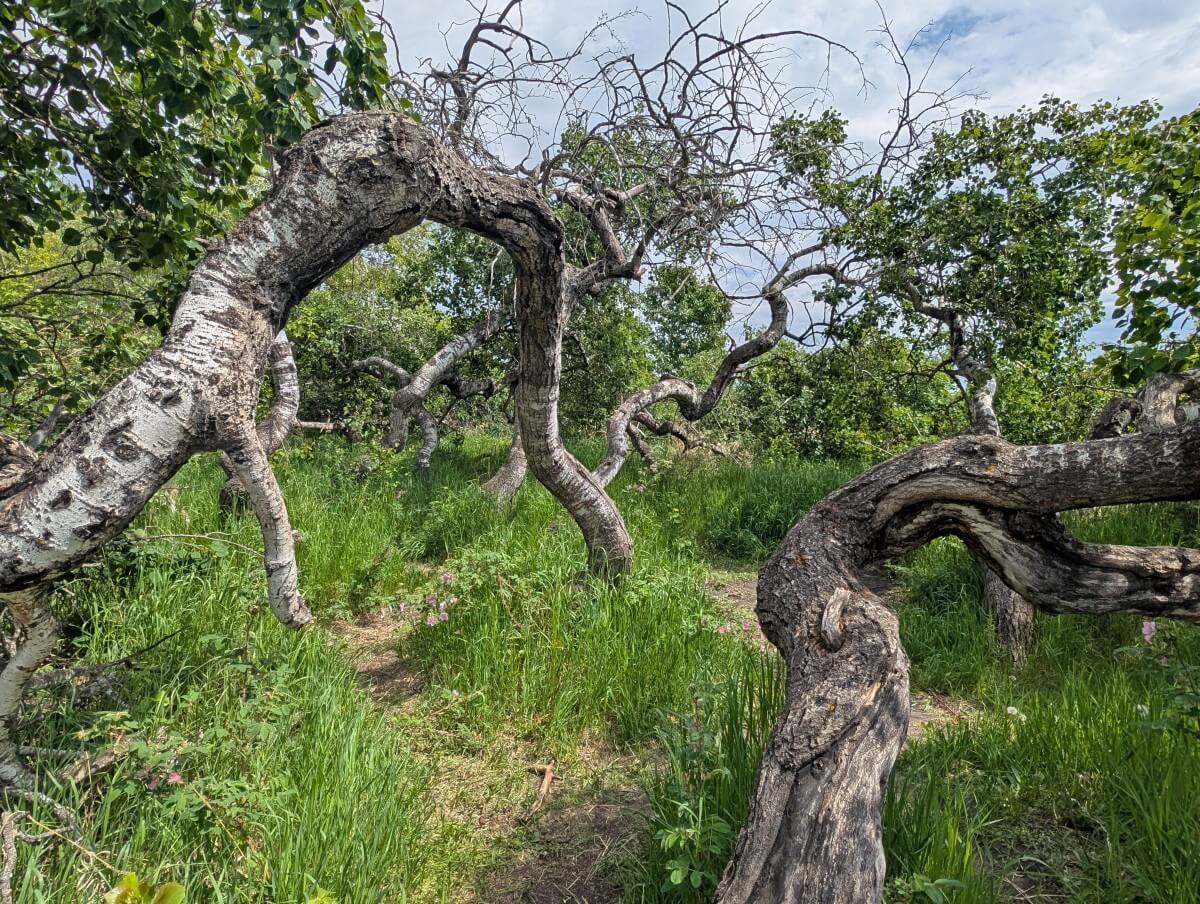
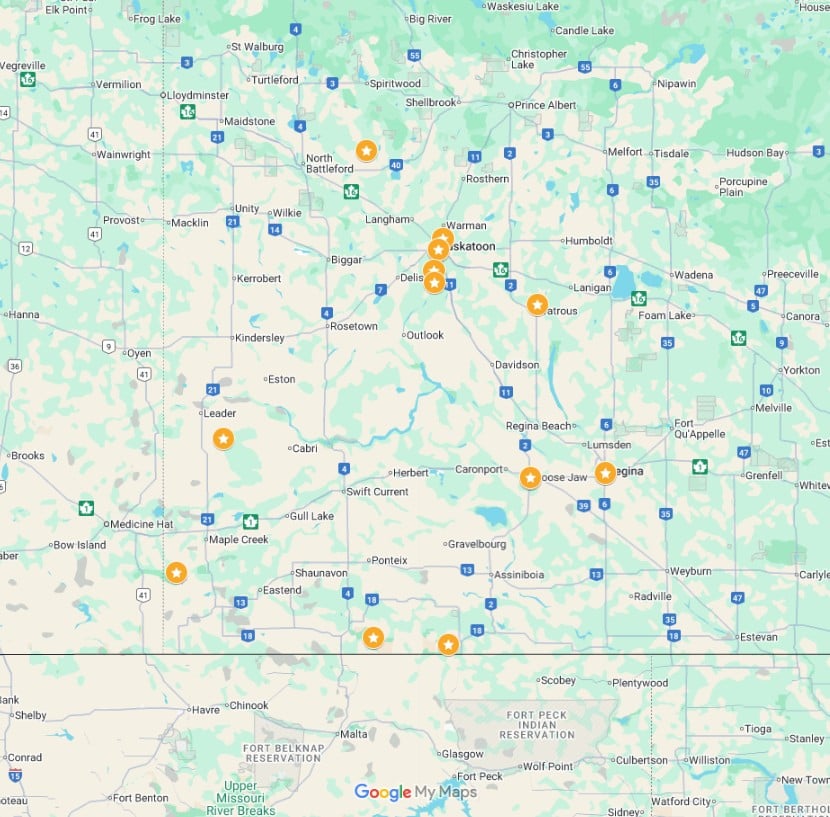
This post showcases our favourite unique attractions in Saskatchewan. The following destinations all have a nature or cultural focus, with a few leaning into the province’s historical roots.
With one exception, these unique spots are all within 2.5 hours drive of Highway 1. I chose this limit to keep things practical for anyone travelling through the province. Let’s get started!
We visited some of these locations with the assistance of Tourism Saskatchewan. There are affiliate links in this post. If you make a qualifying purchase through one of these links, we may receive a small commission.
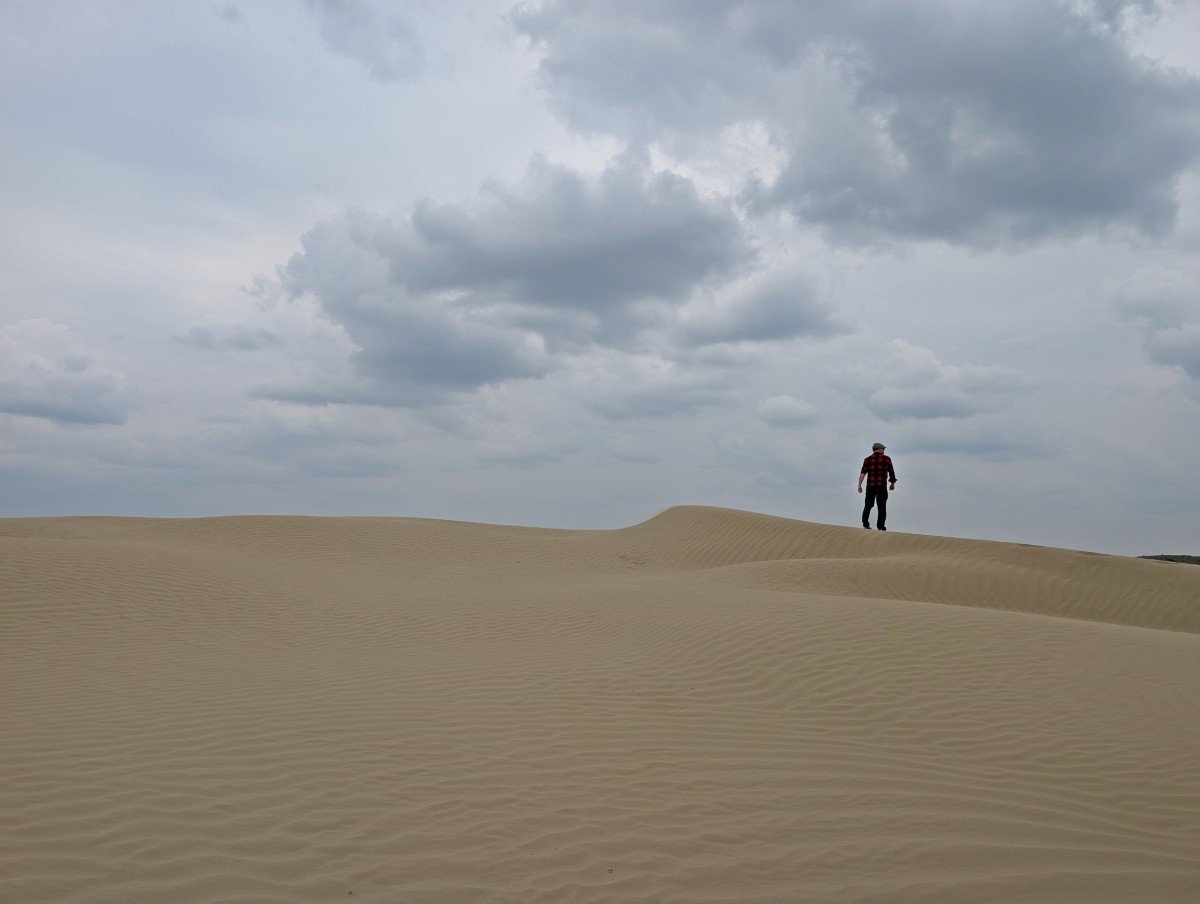
The Great Sand Hills
Sand dunes in Saskatchewan? Yes, really! The Great Sand Hills cover an incredible 1,900 km², with some of the dunes rising as high as 20 metres. The incredibly fine sand was deposited here about 12,000 years ago as the last glaciers retreated.
Visiting the Great Sand Hills is a truly one-of-a-kind experience. It’s also pretty remote, which makes getting there feel like quite an adventure. To reach the area, first drive to Sceptre. The approach roads are better from the north. Sceptre is also home to the Great Sandhills Museum & Interpretive Centre.
Grasslands National Park – East Block
Grasslands truly stands apart from any other national park I’ve visited in Canada. Separated into two blocks, this park protects the endangered mixed-grass prairie ecosystem as well as a host of rare animals (head to our Grasslands guide for all the details).
The East Block showcases dramatic badlands scenery and is also one of of the richest fossil sites on the continent. If you can, plan a trip for the annual Fossil Fever event (early August) and join a guided tour with student paleontologists. JR and I were able to dig up actual dinosaur bones!
The Badlands Parkway is the best way to get an introduction into the park. This 11km long scenic drive provides panoramic views of steep ravines and canyons with a backdrop of rolling hills. It’s absolutely stunning and makes the long detour from Highway 1 worth every second.
Grasslands National Park – West Block
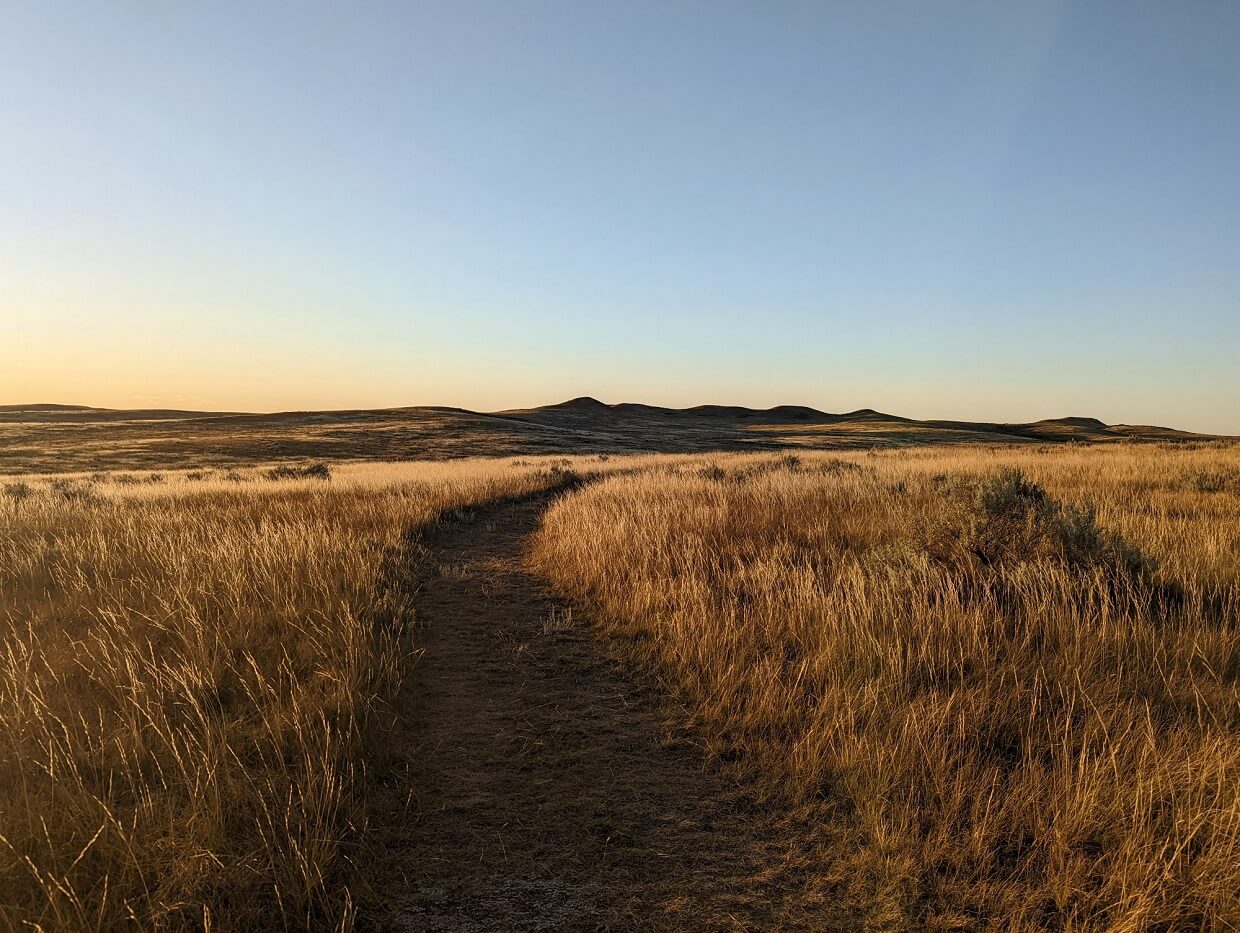
Grasslands’ West Block is best known for wildlife watching opportunities and calming prairie landscapes. It is 160km from the East Block, around a two hour trip.
The West Block has its own scenic drive – the 20km long Ecotour. It showcases the sweeping prairie scenery, with plenty of stops for trails, wildlife spotting and historical sites. On our own cruise of the Ecotour, we saw bison, badger, rattlesnake, coyote and hundreds of cute prairie dogs.
A designated Dark Sky Preserve, Grasslands is the ideal place to spend the night and stargaze. Each Block has a frontcountry campground with RV and tent sites, plus a choice of A-frame oTENTiks.
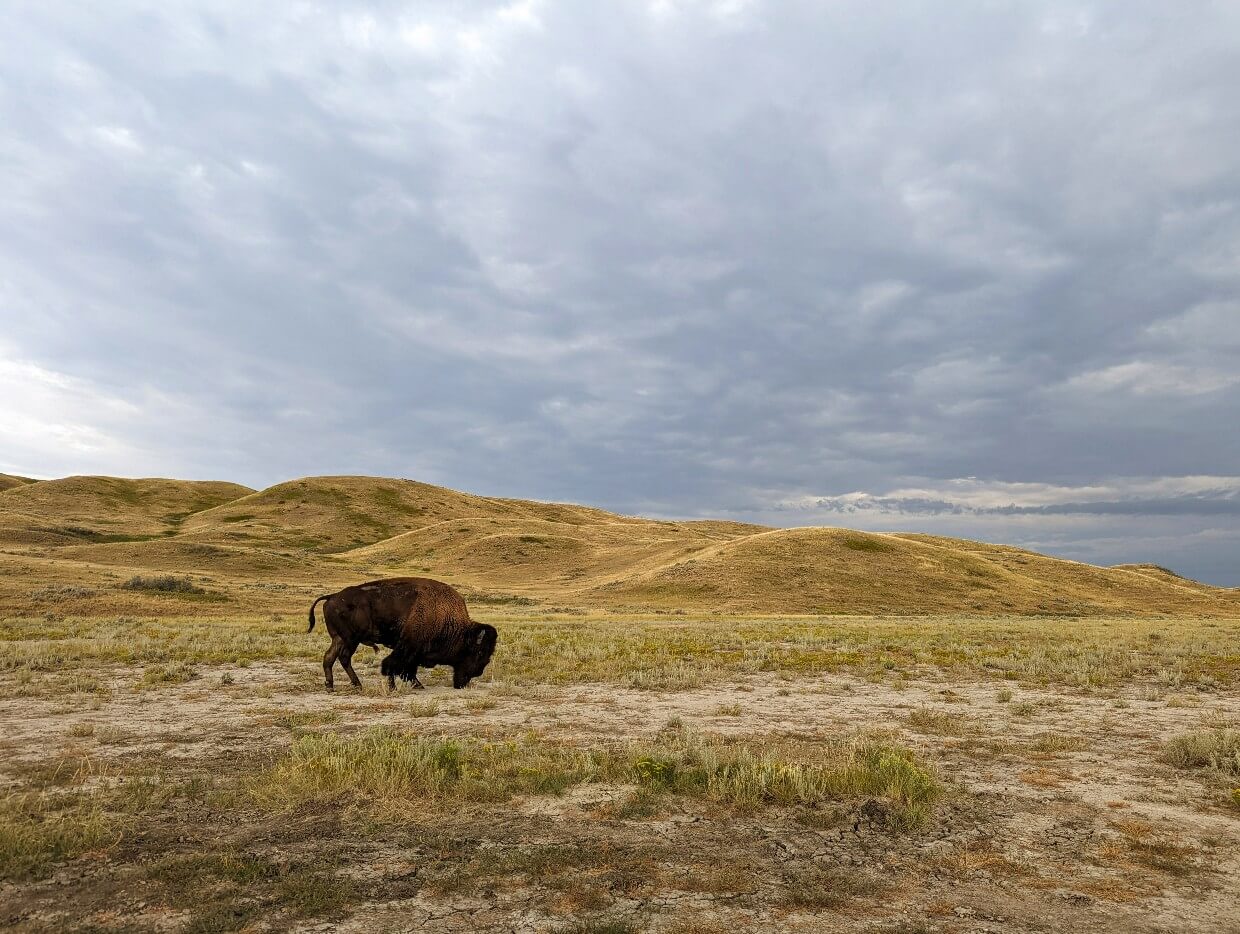
Wanuskewin, Saskatoon
Spanning 57 acres, Wanuskewin is a cultural park north of Saskatoon (my favourite city in Saskatchewan) that preserves and shares the history of the Cree, Assiniboine, and Blackfoot peoples of the Northern Plains. A gathering place for millennia, it is also a National Historic Site.
There are many different experiences on offer at Wanuskewin. For me, the highlights were the indoor cultural exhibits, the walking trails and the chance to see the resident bison herd.
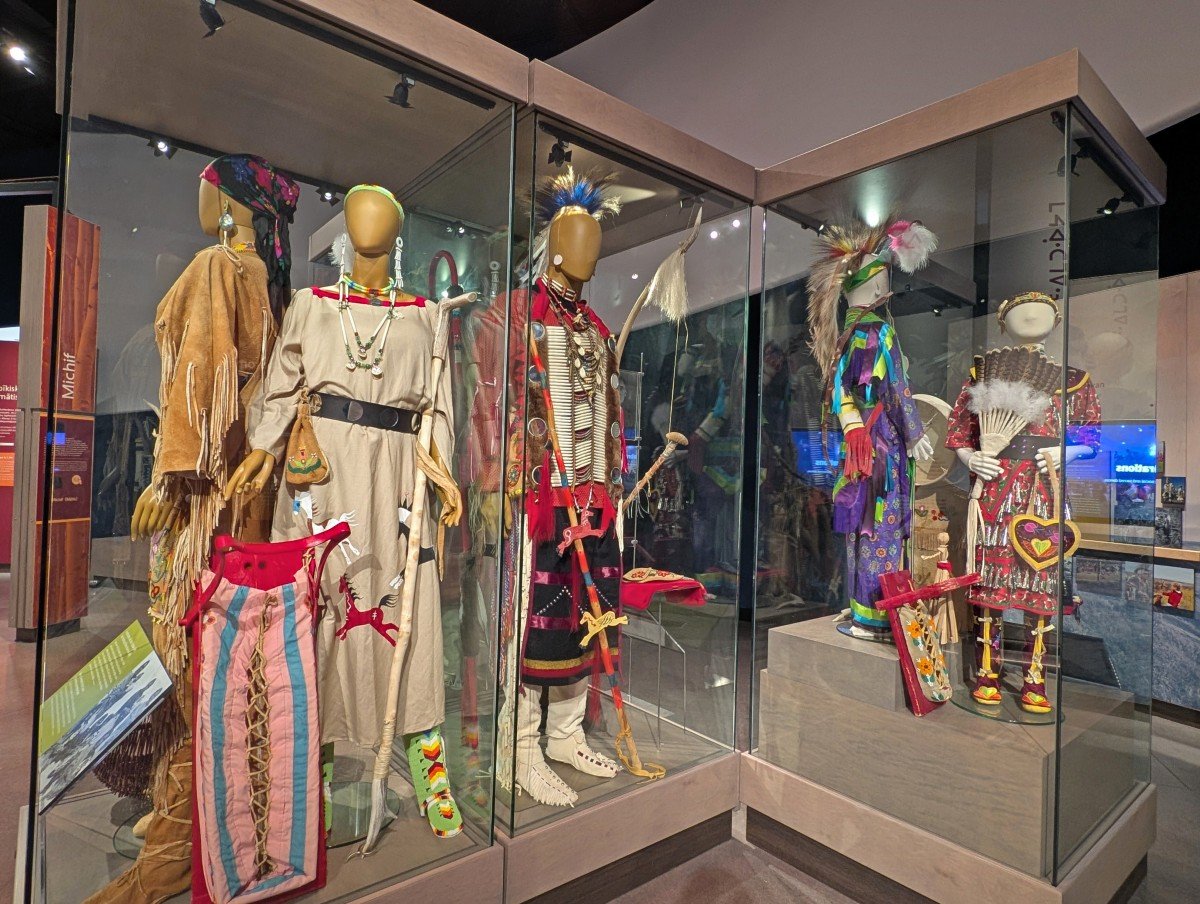
The bison are part of the effort to restore the endangered native grasslands. We were also able to see some traditional dance on our visit. Be sure to check the programming schedule after arriving.
To the south of Saskatoon is Dakota Dunes Resort, which is owned and operated by the Whitecap Dakota Nation. Hosting a full service hotel and casino, the resort will soon also have a thermal spa. They also offer cultural activities, such as guided canoe trips and tipi construction.
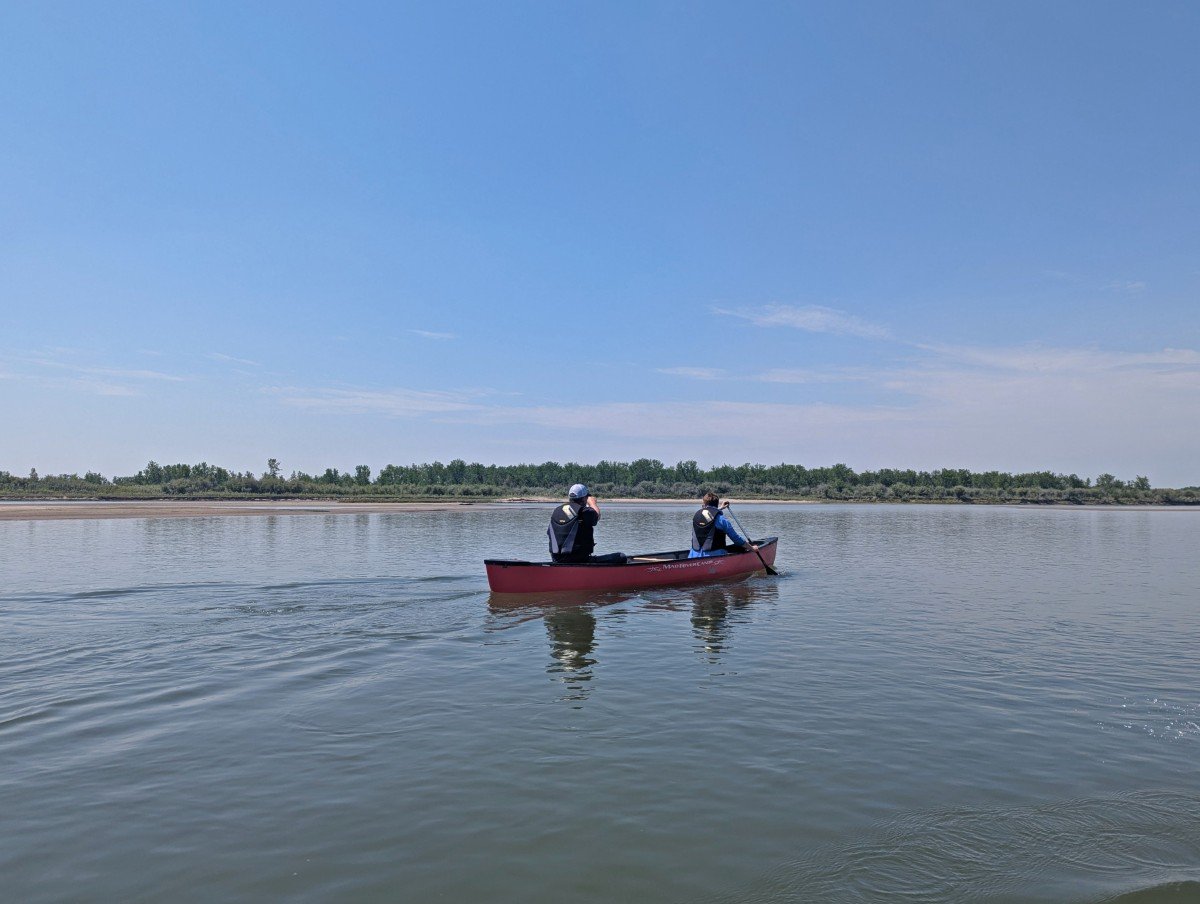
Meewasin Trail, Saskatoon
The Meewasin Trail is as impressive as it is unique. There are not many Canadian cities that have such an expansive and accessible trail network, especially through a major city and along a main waterway.
Located in and around Saskatoon, the multi-use Meewasin Trail (Cree for beautiful) stretches over 105km along both sides of the South Saskatchewan River.
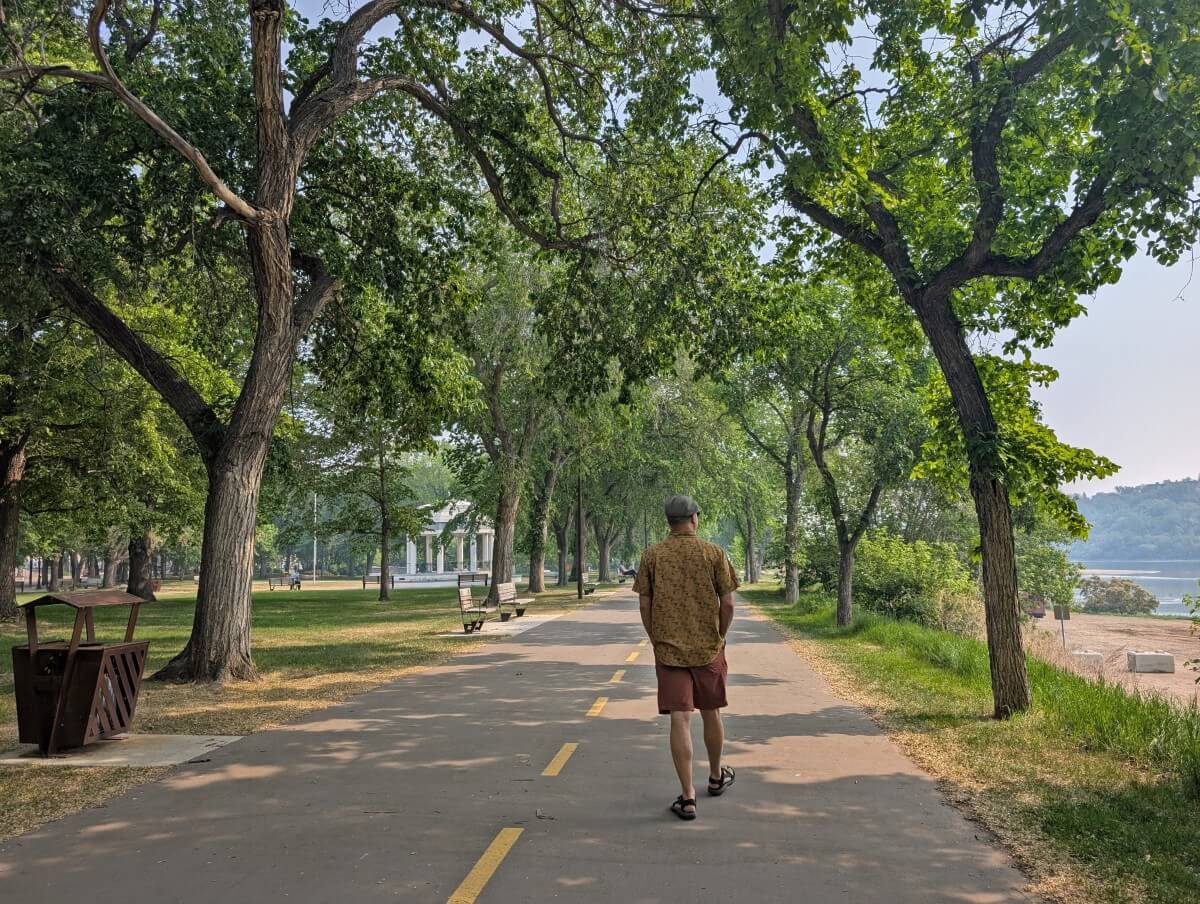
A large part is also part of the Trans Canada Trail. The trail travels through the city to prairie, forest and riparian landscapes.
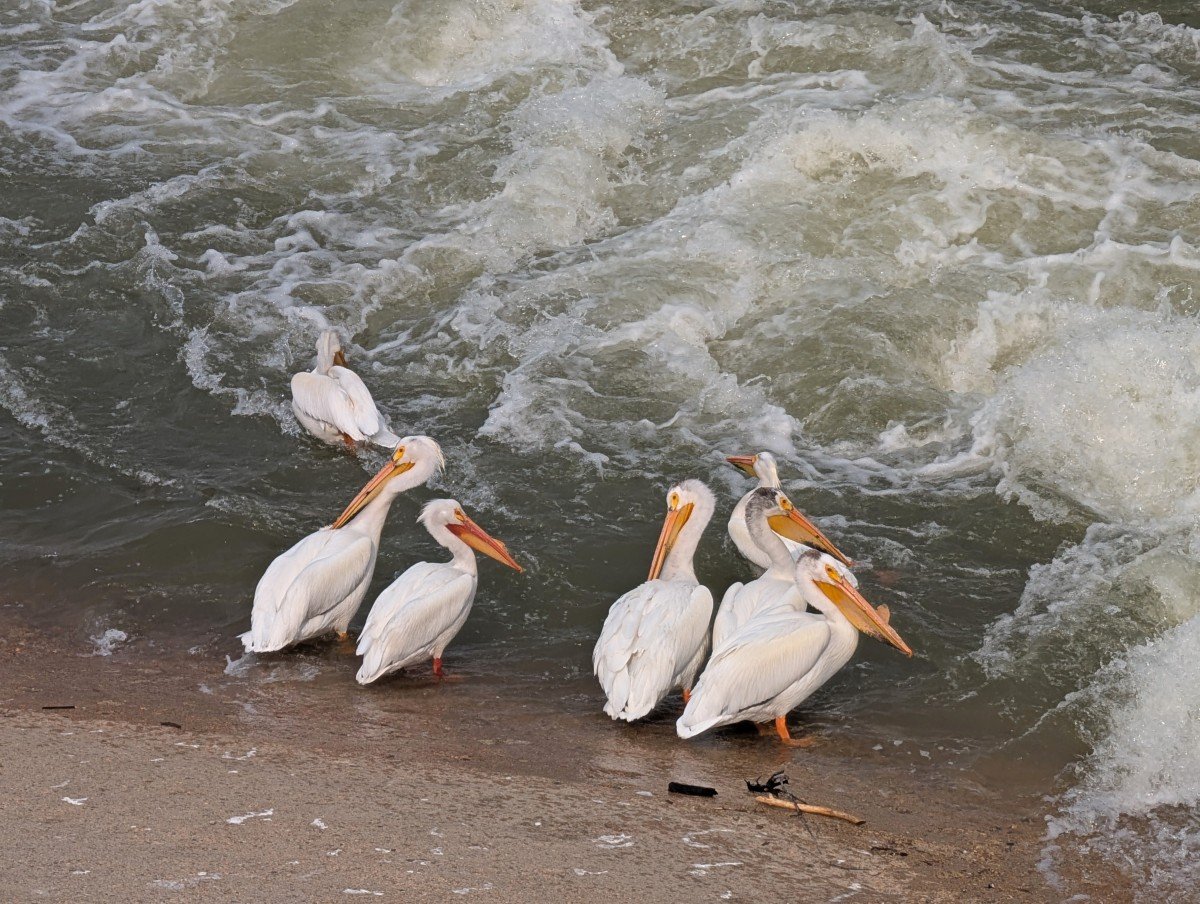
One of my favourite sections is by the CPR Bridge north of downtown Saskatoon – I loved watching the pelicans hunting for fish in the weir. These huge migatory birds have nesting grounds in Redberry Lake, about one hour from Saskatoon.
Ukrainian Museum of Canada, Saskatoon
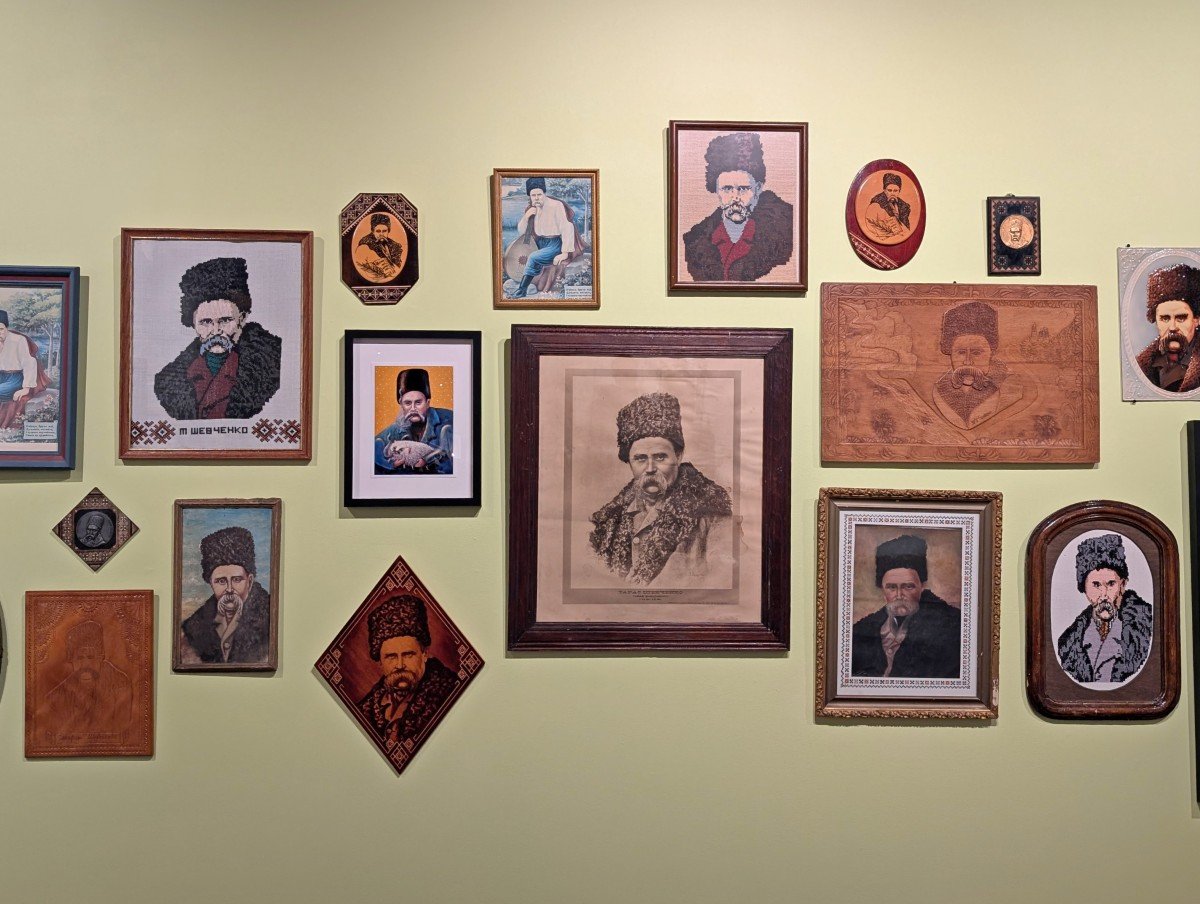
Around 12% of Saskatchewan’s population claim Ukrainian heritage, with Saskatoon having the highest percentage of anywhere in Canada (nearly 16%!) The Ukrainian Museum of Canada is a worthwhile stop to understand more about this community and how it has shaped Saskatchewan.
While housed in a relatively small building, the museum cares for 12,000 artifacts, including the biggest collection of Ukrainian textiles in North America. The exhibits are contemporary and regularly updated, showcasing the evolving stories of Ukrainian heritage in the city.
I found it most interesting to learn about the connections between early Ukrainian settlers and the local Métis and Indigenous peoples. Shared cultural elements can be seen in clothing (beading styles, patterns) as well as in food and farming practices.
Beaver Creek Conservation Area
Did you know that Saskatchewan is a hot spot for birding? With its varied ecosystems and position on key migratory flyways, Saskatchewan hosts many unique birds.
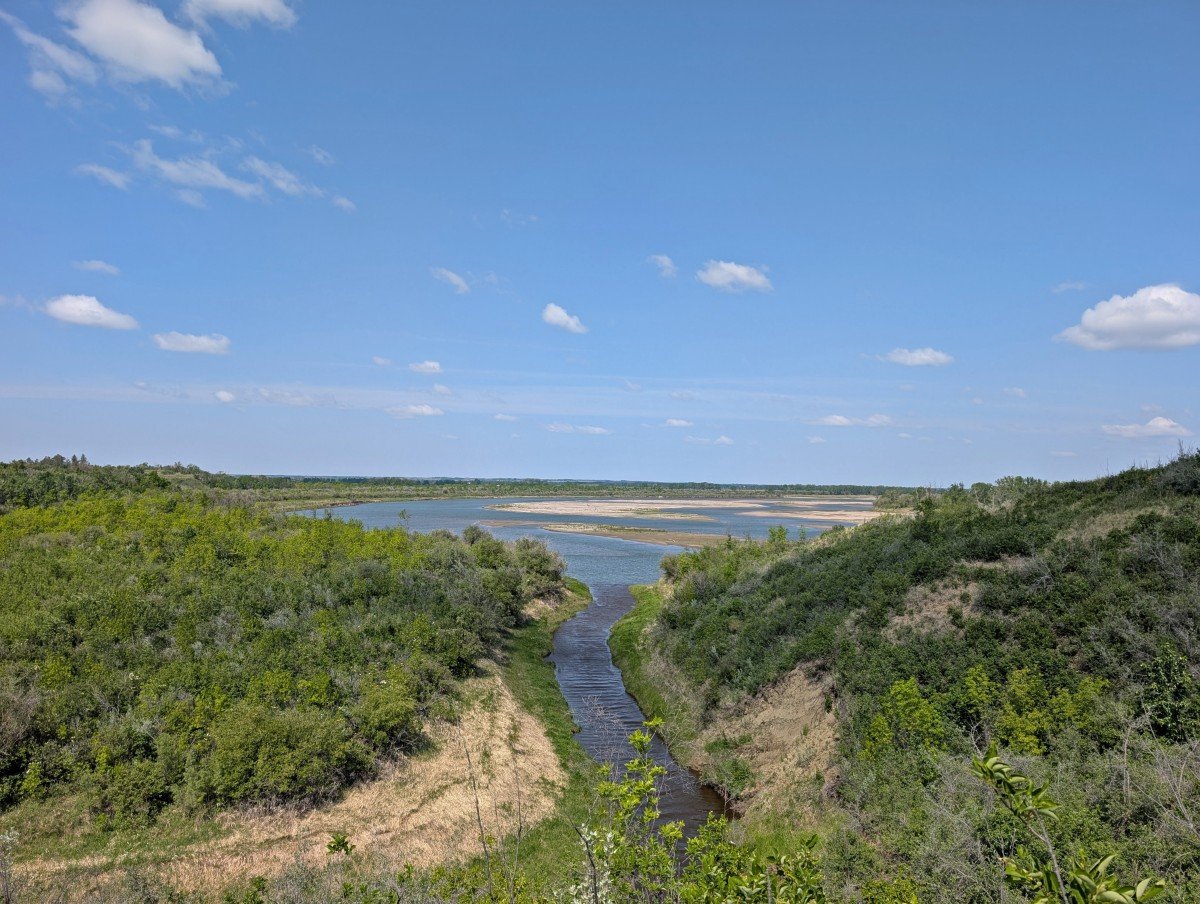
One of the best places to go to see and learn about birding is the Beaver Creek Conservation Area near Saskatoon.
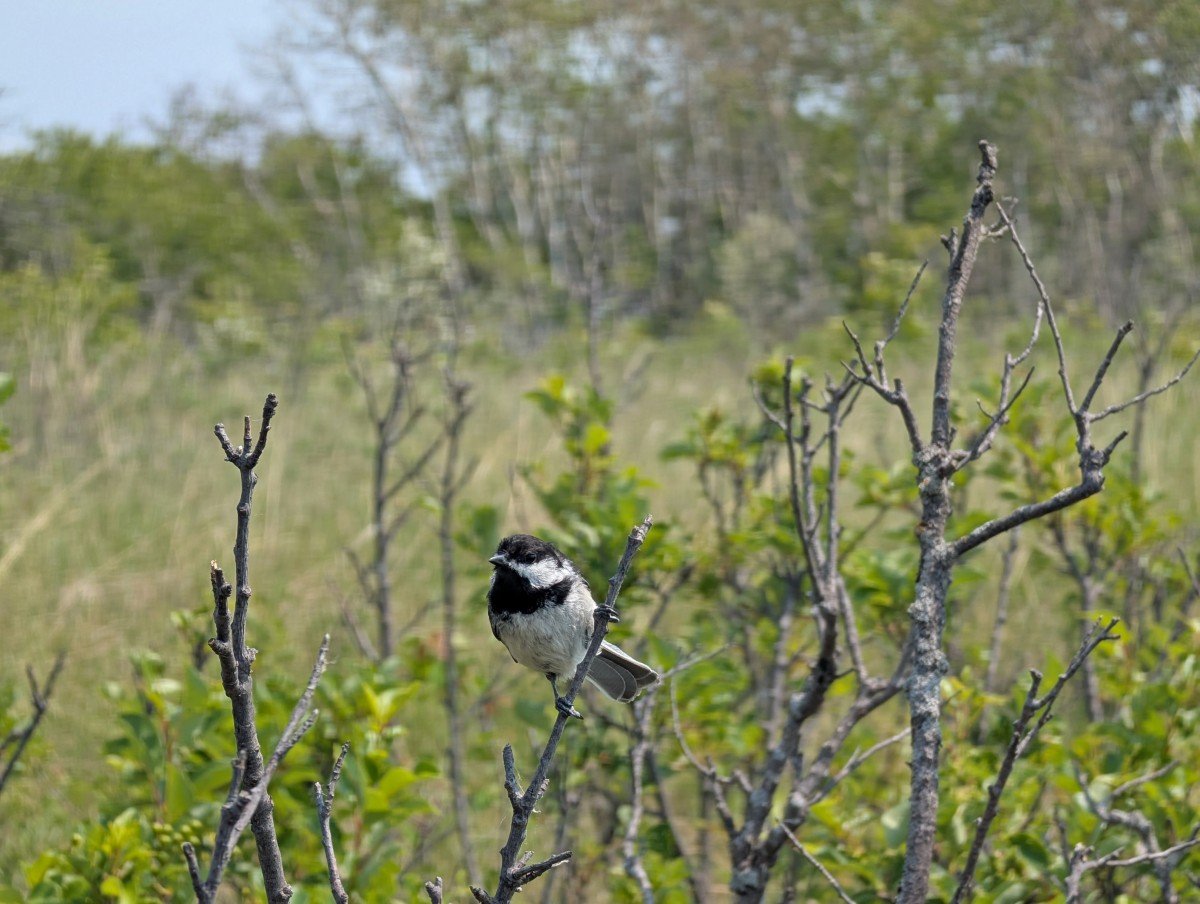
This 130+ acre natural area is home to a variety of birds, including the Yellow-rumped Warbler, Western Meadowlark and Gray Catbirds. Of course, we spotted plenty of Black-capped Chickadees as well (below photo).
To get the most out of your visit, consider joining a guided tour. The ‘Breakfast with the Birds’ tour is ideal for new birders as it covers the basics of identification and tracking. It also includes use of binoculars and a local breakfast box. We were even able to see a bird get banded.
For more great birding spots, head to my friend Stephanie’s Saskatoon birding guide.
The Crooked Bush
This one stretches the two and a half hour driving limit from Highway 1, but it’s too unique to leave out. Being only 30 minutes from the Yellowhead Highway, it’s a perfect detour for anyone travelling between Saskatoon and Edmonton.
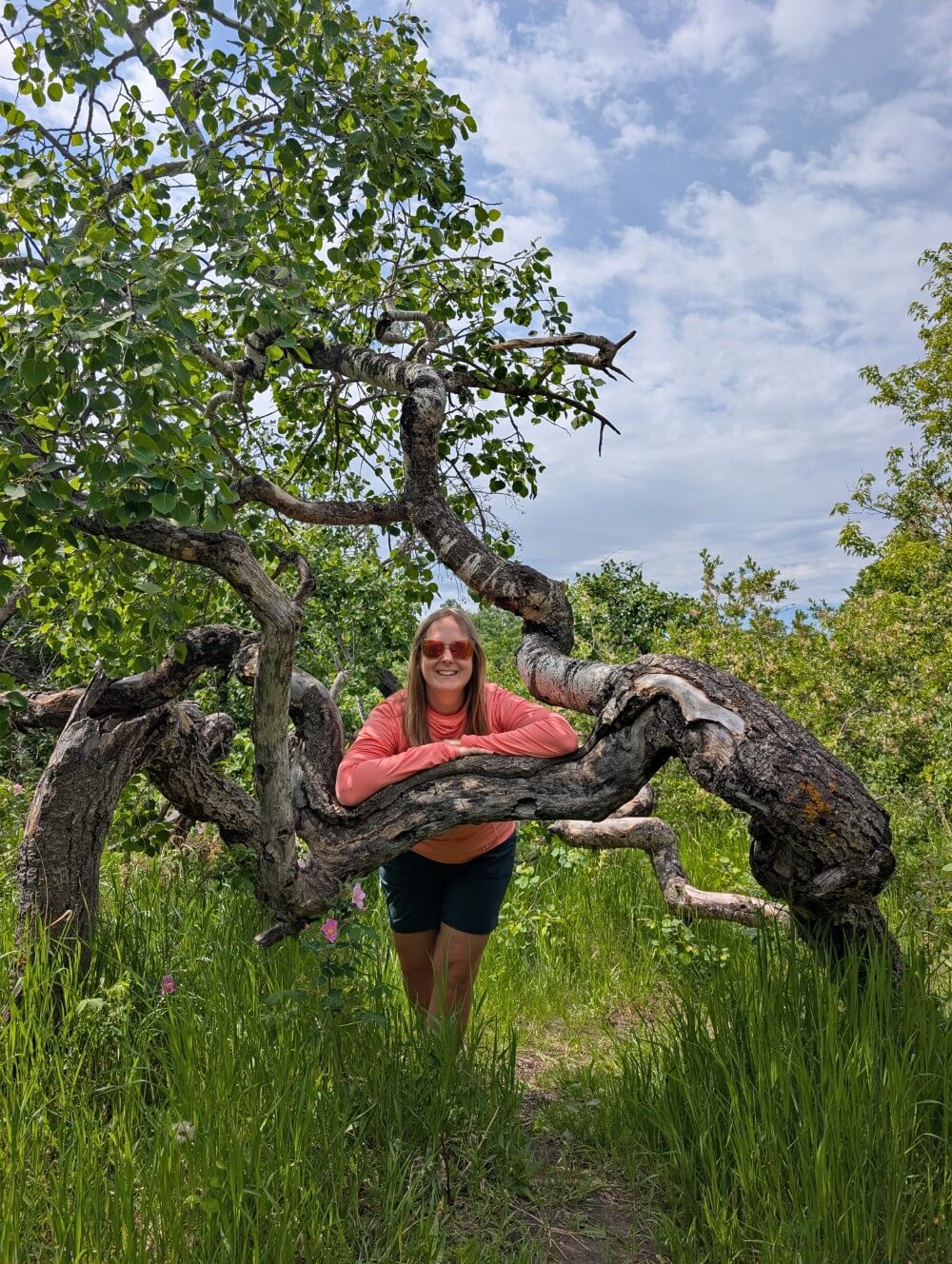
The Crooked Bush is a grove of unusually twisted aspen trees. These fast growing trees typically have a thin trunk and grow tall. Not these ones. The aspens of the Crooked Bush are thick and gnarled, twisting all over the place. The effect is both eerie and magical.
A short trail leads through the grove, offering many opportunities for photos. It’s not very big – expect to spend 15-20 minutes here. There is an outhouse in the parking area.
Moose Jaw Tunnels and Temple Gardens Mineral Pools
The small city of Moose Jaw (pop. 33k) hides a fascinating secret – a labyrinth of underground tunnels and passageways.
Built in the late 19th century to support the nearby railway, these tunnels took on a more illicit role during Prohibition and became a hotspot for alcohol smuggling.
While never confirmed, legends say Al Capone may have been involved in the bootlegging operations here. Today, the Tunnels of Moose Jaw bring this colorful history to life, with guided themed theatrical tours. It’s interesting, fun and definitely unique!
The tunnels aren’t the only unique attraction in Moose Jaw. The Temple Gardens Hotel has mineral pools, fed by a source of mineral-rich hot water from well. There are two pools, one of which is outside. Open all year round, it’s a great place to relax while travelling Saskatchewan.

Royal Saskatchewan Museum (RSM), Regina
The Royal Saskatchewan Museum is the ideal introduction to Saskatchewan’s history, both natural and human. Think Indigenous culture, wildlife, geology, ecosystems and more. Admission to the RSM is by donation, something we always appreciate for accessibility.
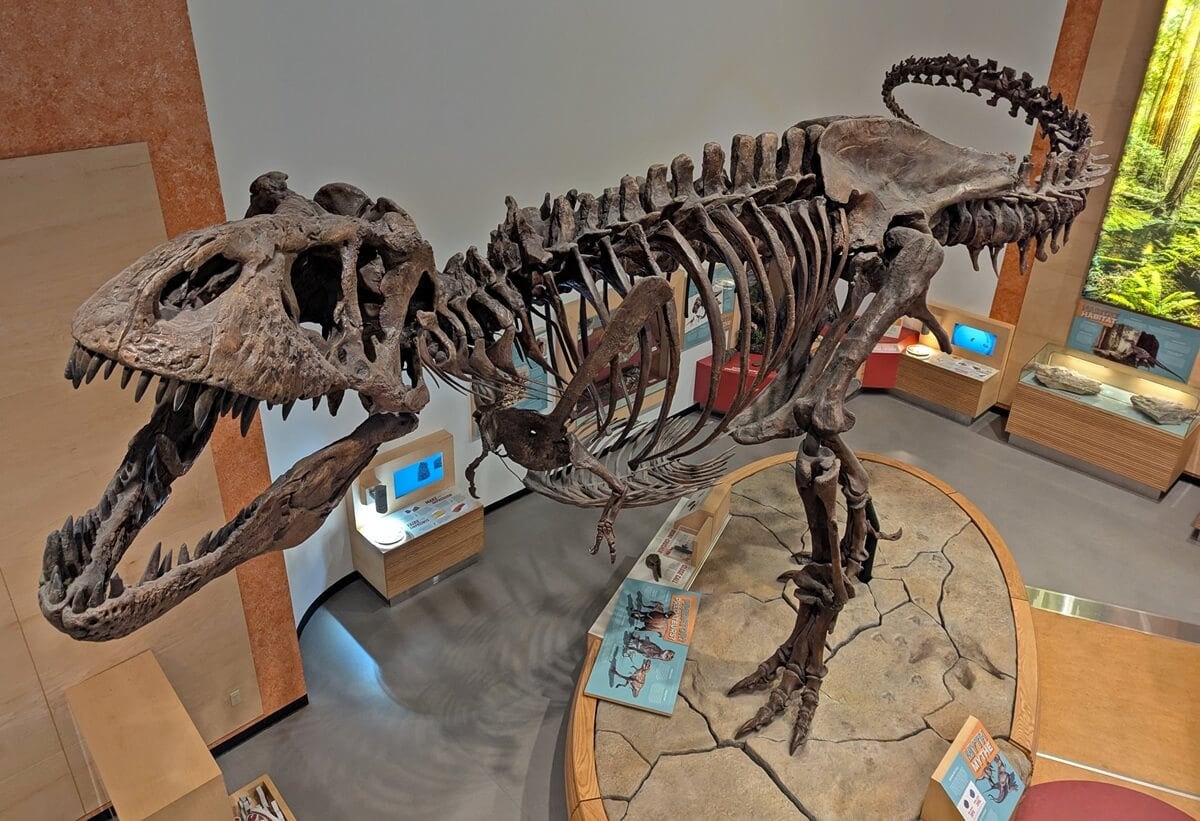
The highlight of the RSM, and why it belongs on this list, is “Scotty.” This 13 metre long Tyrannosaurus rex skeleton is both the largest and oldest of its kind ever found. With 65% of its skeleton preserved, Scotty is also the most complete T. rex on record.
After touring the museum, I’d also recommend checking out the Sakatchewan Legislative Building. Built with a type of limestone called Tyndall Stone, the exterior is studded with 450 million year old fossils. Look for corals, sponges and cephalopods (marine animals with tentacles).
Other unique places to visit in Saskatchewan
We haven’t explored Saskatchewan as much as I’d like (yet) and the following places are high on my travel list.
Little Manitou Lake
Often referred to as Saskatchewan’s Dead Sea, Little Manitou Lake known for its buoyant salty waters. About five times saltier than the ocean, it’s a place where floating feels effortless!
Little Manitou Lake is 120km from Saskatoon and just a little further from Regina (180km). Enter the lake from the sandy public beach or visit the Manitou Springs Resort which has three mineral pools, two of which are heated. Hotel guests receive free entry into the pools.
Head to my friend Ashlyn’s website, the Lost Girl’s Guide to the World, for more details on things to do around Little Manitou Lake.
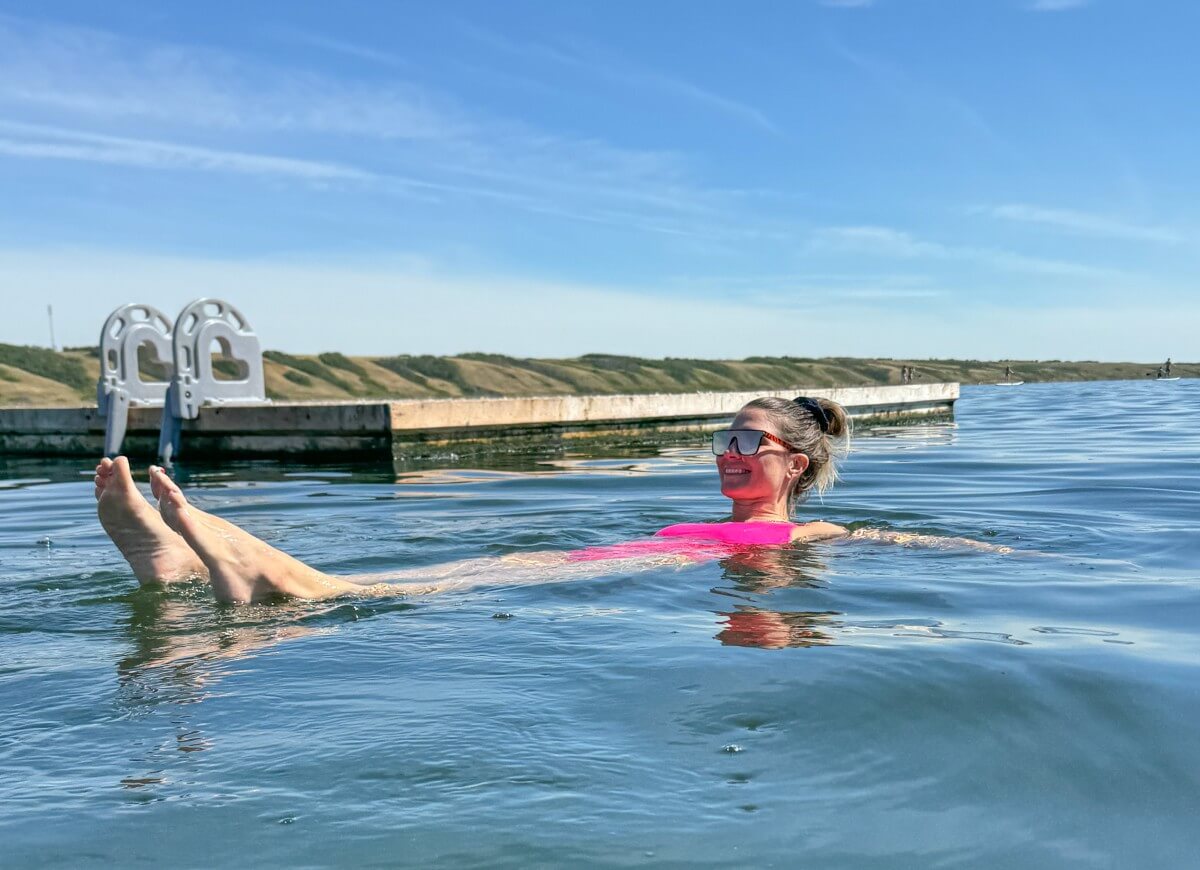
Photo by Ashlyn George from the Lost Guide’s Guide to Finding the World (used with permission)
Conglomerate Cliffs
Here’s yet another example of Saskatchewan’s one-of-a-kind landscapes – the striking Conglomerate Cliffs. Located in Cypress Hills Interprovincial Park, these cliffs rise 600m above the surrounding flat prairie.
Formed from a mixture of gravel, smaller rocks and rounded stones that have compacted and cemented together over millions of years, the Conglomerate Cliffs are part of the ‘cap-rock’ (hard protective layer) that crowns the Cypress Hills plateau.
It’s possible to check out the cliffs from several different areas – my friends Sue and Dave from Travel Tales of Life describe five of the best viewpoints in this Conglomerate Cliffs article.
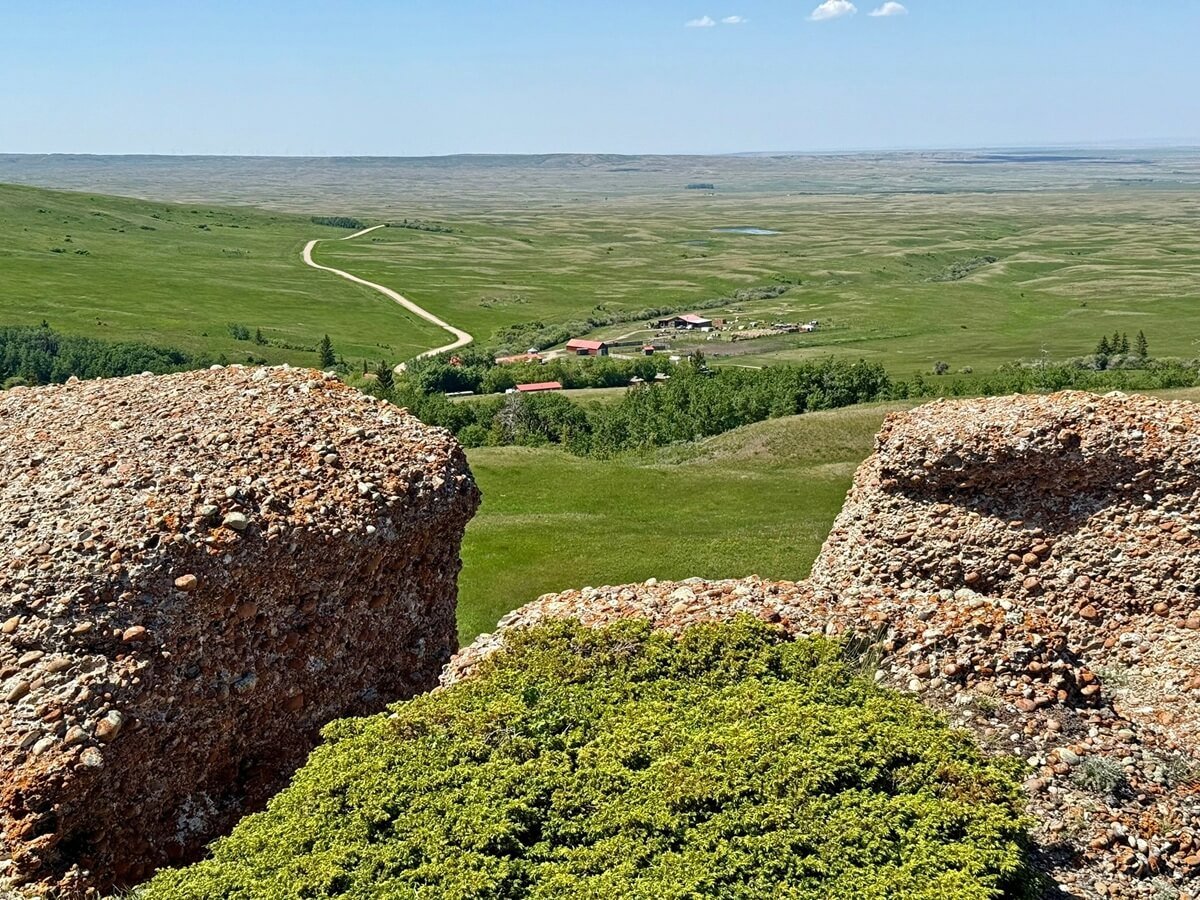
Photo by Sue and Dave Slaght from Travel Tales of Life (used with permission)
Other related posts you may find helpful
Grasslands National Park, Saskatchewan: What to Do & Why You Need to Go
48 Hours in Saskatoon, Saskatchewan: Best Things to Do
Toronto to Vancouver Road Trip: 24+ Great Places to Stop
Best Places to Visit in Canada: Travel Ideas and Inspiration for Each Province and Territory


One half of the Canadian/British couple behind Off Track Travel, Gemma is happiest when hiking on the trail or planning the next big travel adventure. JR and Gemma are currently based in the beautiful Okanagan Valley, British Columbia, Canada. Consider buying us a coffee if you have find any of our guides helpful!